

Precision CNC machining services for tight tolerance custom parts multi axis milling turning rapid prototyping and certified production.
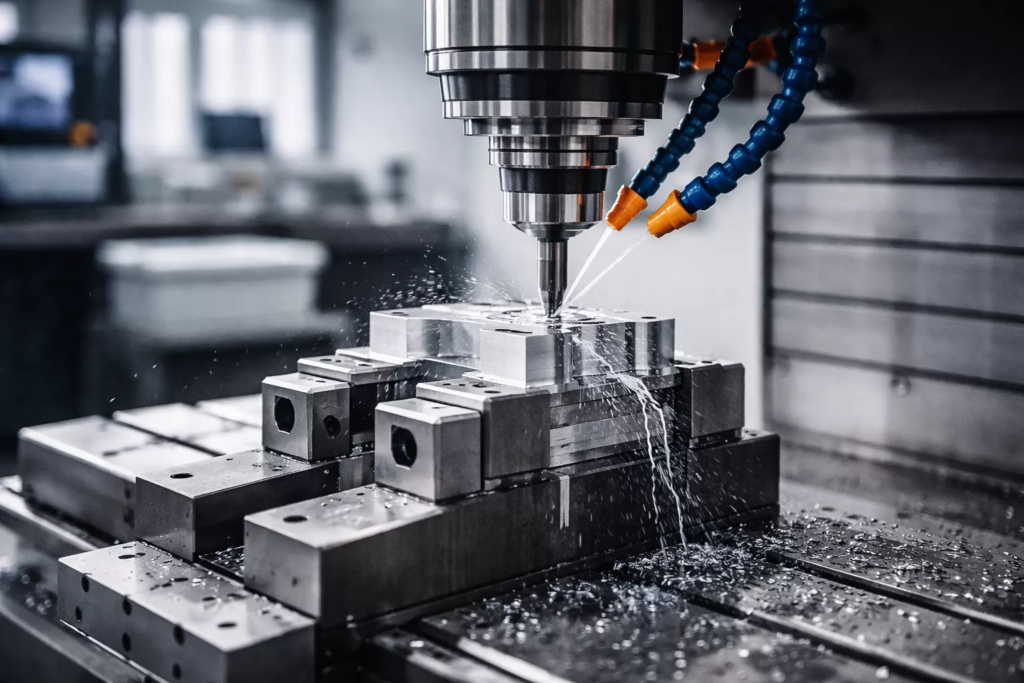
Our Precision CNC Machining Capabilities & Equipment Fleet
When your engineering designs demand absolute accuracy, our precision CNC machining services deliver. At Precisionvast, we operate a state-of-the-art facility equipped to handle complex geometries, strict design specs, and demanding production schedules. We combine advanced hardware with deep manufacturing expertise to turn your digital files into high-precision metal machining realities.
Multi-Axis CNC Milling (3-Axis, 4-Axis, and Continuous 5-Axis)
We configure our milling setups based on the complexity of your part geometry to optimize cycle times and cut costs:
- 3-Axis Milling: Ideal for straightforward components that require heavy material removal, prismatic shapes, and flat geometries.
- 4-Axis Milling: Utilizes a rotary axis to machine features around a cylinder or on multiple sides of a part without manual flips.
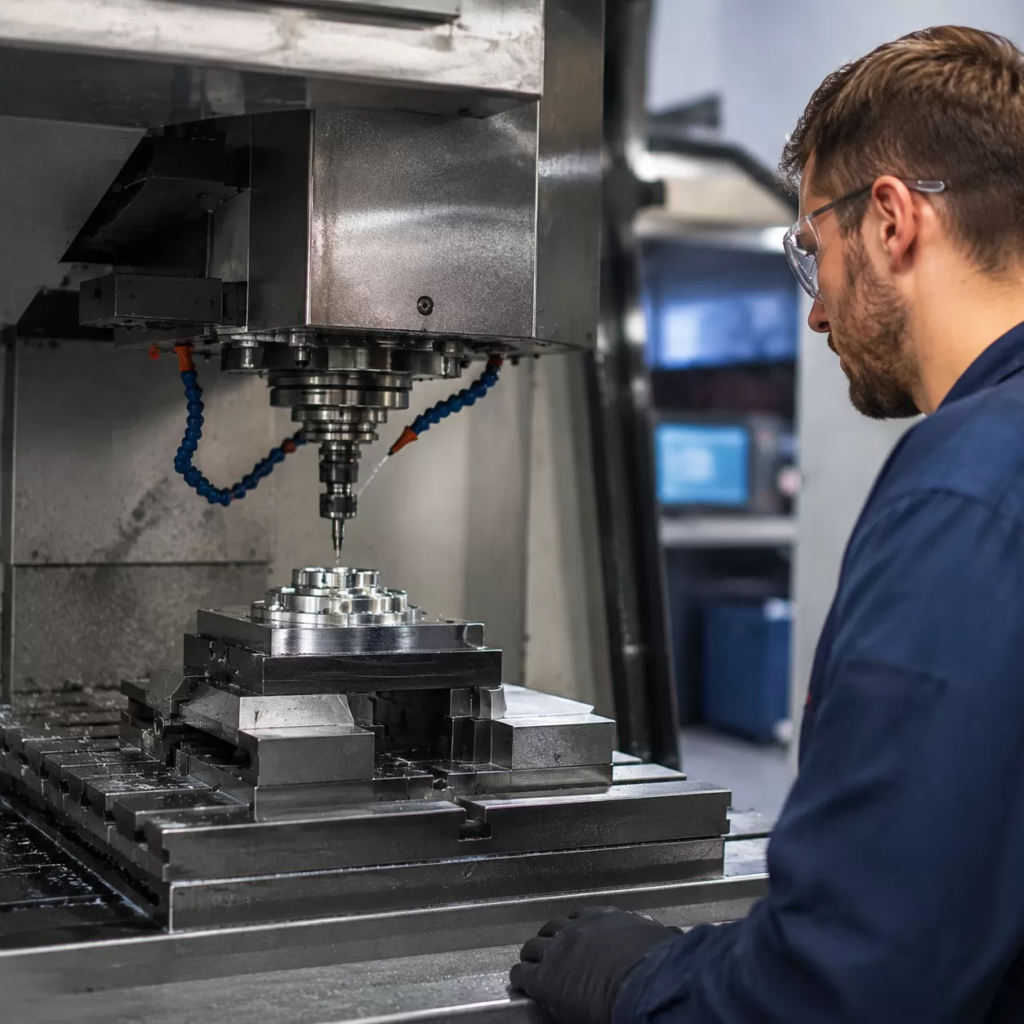
- Continuous 5-Axis CNC Milling: Subtractive manufacturing services at their peak. By moving the cutting tool and workpiece along five different axes simultaneously, we machine highly intricate aerospace, medical, and defense components in a single setup, eliminating human error and maximizing efficiency.
High-Speed CNC Turning & Live Tooling Mill-Turn Centers
For cylindrical and rotational parts, our precision turning and milling capabilities yield flawless results. We utilize advanced CNC mill-turn services that merge the rotational power of a lathe with the indexing and cutting capabilities of a milling machine.
- Live Tooling: Our turning centers do not just spin parts; they feature driven rotary tools that drill off-center holes, mill flats, and tap threads directly on the lathe.
- One-and-Done Production: By producing custom CNC turned parts on a single machine, we eliminate stacked tolerances and part transfer errors, resulting in identical CNC machined components every single run.
Ultra-Tight Tolerances & Dimensional Fidelity
We specialize in tight tolerance machining, meeting dimensional requirements that standard machine shops turn away.
| Metric | Capability Specs | Best Suited For |
|---|---|---|
| Linear Tolerances | Down to ±0.005mm (±0.0002″) | Critical mating surfaces, aerospace valves, surgical tools |
| Geometric Tolerances | Expert control over true position, flatness, and cylindricity | High-wear mechanical assemblies and robotics |
| Surface Finish | As-machined finishes down to 0.4 Ra (µm) without extra post-processing | Sealing surfaces and fluid dynamic applications |
Our climate-controlled production floor ensures thermal stability, so every piece of precision machined hardware matches your CAD model perfectly.
Production Scale: From Rapid Prototyping to High-Volume Runs
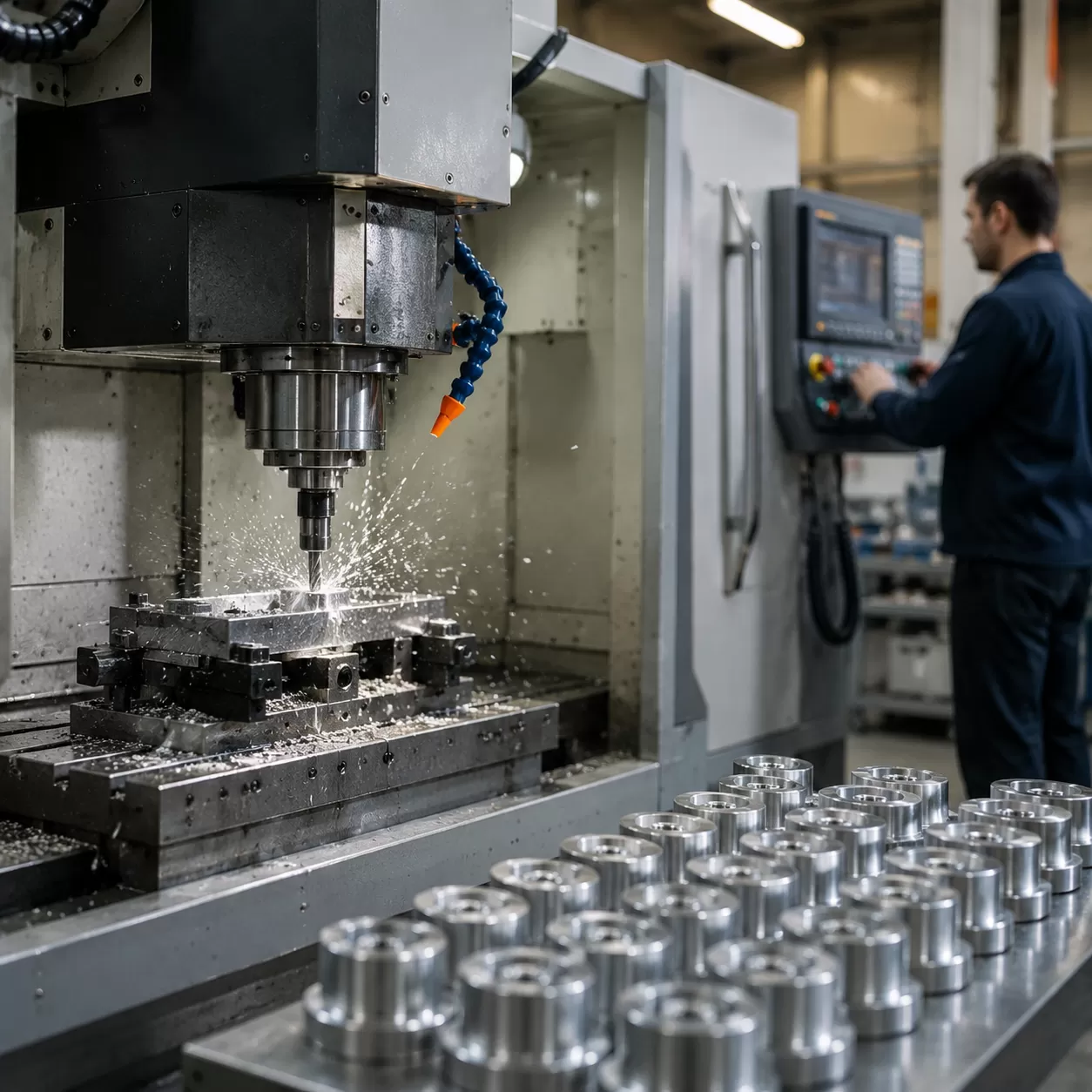
We scale our operations to meet your exact product lifecycle demands. Whether you need a single proof-of-concept or a massive production run, our facility balances speed, cost, and absolute precision.
Low-Volume & Rapid Prototyping
When you are testing forms, fit, and function, you cannot afford to wait weeks for parts. Our rapid CNC prototyping services deliver functional, end-use components in days. We optimize this stage for speed and flexibility, allowing engineers to iterate designs rapidly without the burden of high upfront tooling costs.
- Fast Turnaround: Prototypes ready in as little as 3 to 5 business days.
- Bridge Production: Smooth out the gap between product development and full market launch.
- No Minimum Order Quantities (MOQ): Get exactly what you need to validate your design, even if it is just a single complex component.
Medium to High-Volume Scaling
Transitioning from a prototype to a massive rollout requires predictable consistency. Our production CNC machining shop utilizes automated cells and pallet changers to maintain identical, tight tolerances across thousands of parts. We specialize in contract CNC manufacturing for domestic supply chains that demand reliable delivery schedules.
| Scale Category | Typical Volume | Primary Focus |
|---|---|---|
| Rapid Prototyping | 1 – 10 parts | Design validation, fit testing, and material trials |
| Low-Volume Production | 10 – 100 parts | Specialized machinery components and market entry |
| Medium to High-Volume | 100 – 10,000+ parts | Unit cost optimization, automated runs, and strategic supply |
By utilizing continuous toolpath optimization and robust process controls, we reduce cycle times and pass the cost savings directly to you. For projects requiring high-strength components alongside machined parts, you can explore our advanced capabilities in structural die casting to find the ideal manufacturing method for your high-volume needs. We ensure that every part, from the first off the line to the ten-thousandth, matches your digital twin down to the micron.
Comprehensive Material Selection & Technical Properties
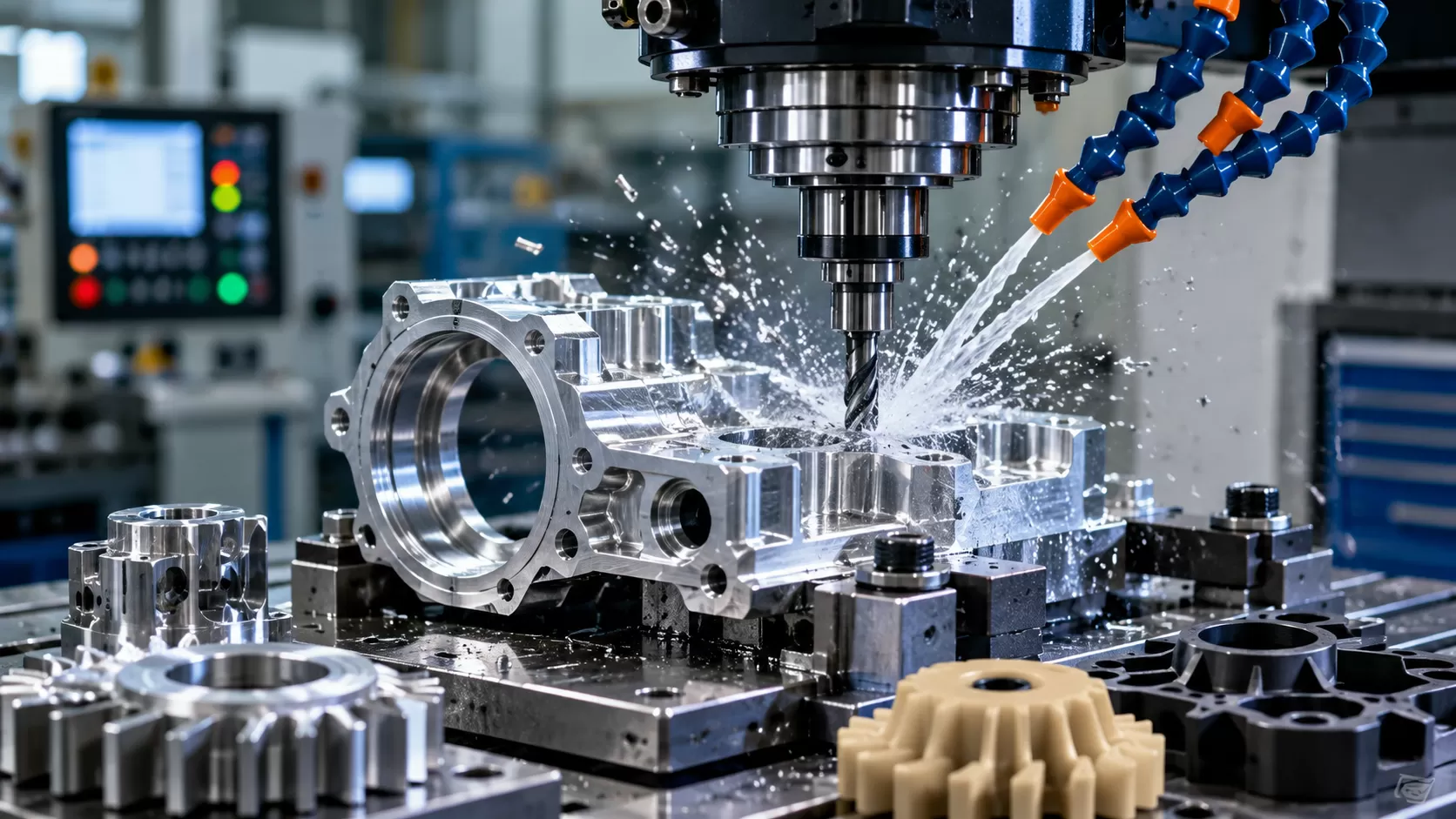
We stock a robust inventory of raw materials tailored to meet the strict demands of U.S. aerospace, defense, medical, and automotive engineering. Our precision cnc machining capabilities ensure that whether you need high-strength metal components or high-performance polymers, your parts are milled or turned to exact engineering specifications.
High-Performance Metals & Alloys
We process an extensive range of metals designed for durability, thermal stability, and corrosion resistance.
- Aluminum (6061-T6, 7075-T6): The go-to standard for lightweight, high-strength structural components.
- Stainless Steel (304, 316, 17-4 PH): Offers exceptional tensile strength and superior environmental protection. For projects requiring long-term durability in harsh environments, understanding material behavior is key; you can explore our comparison of nickel with other metals to see how different alloys fight off corrosion.
- Titanium (Ti-6Al-4V Grade 5): Ideal for critical aerospace and medical applications requiring an elite strength-to-weight ratio.
- Copper & Brass (C360, C101): Selected for high electrical and thermal conductivity.
| Metal Alloy | Tensile Strength (MPa) | Machinability Index | Common US Industry Applications |
|---|---|---|---|
| Aluminum 6061-T6 | 310 | 50% | Aerospace brackets, automotive parts, enclosures |
| Stainless Steel 316 | 580 | 36% | Marine hardware, medical devices, chemical food processing |
| Titanium Grade 5 | 950 | 22% | Aircraft structural components, medical implants |
Engineering Plastics & Thermoplastics
For applications requiring electrical insulation, weight reduction, or chemical resistance, we machine advanced polymers with tight dimensional control.
- POM (Delrin): High stiffness, low friction, and excellent dimensional stability for gears and bearings.
- PEEK: A high-temperature champion that replaces metals in extreme aerospace and oil/gas environments.
- Polycarbonate (PC): Known for its impact strength and optical clarity in structural housings.
- PTFE (Teflon): Offers ultimate chemical inertness and low friction coefficients.
| Thermoplastic | Max Service Temp (°F) | Impact Strength | Key Performance Benefit |
|---|---|---|---|
| POM (Delrin) | 195°F | Moderate | Excellent wear resistance and slip properties |
| PEEK | 480°F | High | Retains mechanical properties under extreme heat |
| Polycarbonate | 240°F | Extremely High | High structural impact resistance and transparency |
Surface Finishing & Post-Machining Treatment Options
Raw machined components often need extra care to hit your exact performance and cosmetic goals. At Precisionvast, we offer a complete suite of post-machining treatments to handle everything from surface smoothing to extreme environmental protection. We tailor these solutions to meet the rigorous demands of United States industrial, aerospace, and automotive standards.
Mechanical Finishes
Mechanical finishing modifies the surface texture of your precision cnc machining parts through physical abrasion or impact. These processes remove tool marks, create uniform matte textures, or prepare surfaces for subsequent coatings.
- As-Machined: Standard finish showing visible tool marks, typically around 125 µin Ra.
- Bead Blasting: Utilizes fine glass beads to create a smooth, non-reflective matte finish that hides minor imperfections.
- Tumbling & Vibratory Deburring: Removes sharp edges and burrs from high-volume production runs using abrasive media.
Chemical & Electrochemical Coatings
When your components require enhanced corrosion resistance, increased surface hardness, or specific aesthetic colors, chemical and electrochemical treatments are the industry standard. For applications using specialized materials, choosing the right coating is critical to long-term performance. For instance, understanding material limits—like comparing a nickel alloy vs stainless steel—helps determine whether a part requires heavy passivation or standard anodization.
| Treatment Type | Common Applications | Key Benefits |
|---|---|---|
| Anodizing (Type II & III) | Aluminum brackets, housings, and consumer electronics | Boosts corrosion resistance, adds wear defense, and allows color dyeing (Type III provides hardcoat protection). |
| Passivation | Medical instruments and aerospace components | Removes free iron from stainless steel surfaces to maximize natural rust prevention. |
| Electroless Nickel Plating | Internal engine parts, valves, and high-wear fittings | Delivers a highly uniform layer with excellent chemical resistance and edge coverage. |
| Black Oxide | Steel fasteners, tooling components, and machine gears | Provides a sleek black appearance and mild corrosion resistance without altering part dimensions. |
Quality Assurance, Metrology & Certified Traceability
At Precisionvast, we don’t just clear parts for shipment—we guarantee they match your exact digital blueprint. Our facility handles high-precision metal machining with zero tolerance for guesswork, pairing expert operators with advanced verification systems to protect your supply chain from defects.
Closed-Loop Inspection & Metrology Systems
We catch variations before they become errors. By linking our precision cnc machining centers directly to our inspection floor, we maintain a live data loop that keeps production within spec from the first part to the last.
- Automated CMM Verification: Our Coordinate Measuring Machines record complex geometries down to micron-level accuracy.
- Optical & Laser Scanning: Non-contact measurement systems check surface profiles and critical dimensions instantly.
- In-Process Probing: CNC machine tools utilize on-board probes to verify part alignment and dimensions mid-cycle, locking in tight tolerance machining (±0.005mm).
Documentation & Industry Compliance Standards
High-performance industries require absolute accountability. We deliver complete traceability with every shipment, ensuring your CNC machined components arrive with the exact paperwork your quality auditors demand.
| Document Type | What It Covers | Target Applications |
|---|---|---|
| Material Certifications | Mill test reports tracking chemical and physical properties. | Aerospace, Defense, Medical |
| Inspection Reports | Full dimensional layouts mapping actual measurements against CAD data. | Automotive, Industrial Robotics |
| Certificate of Conformance (CoC) | Formal validation that all manufacturing steps met your contract specs. | Critical Infrastructure, Semiconductor |
Every production run undergoes strict structural and environmental stress testing where required. For parts exposed to harsh operating conditions, we cross-reference performance benchmarks with industry standards for heat resistant metals for high temperature use to ensure your hardware survives real-world stress. From raw stock to final packaging, your parts are tracked, verified, and guaranteed to perform.
The Precisionvast Strategic Framework: Direct DFM Workflow
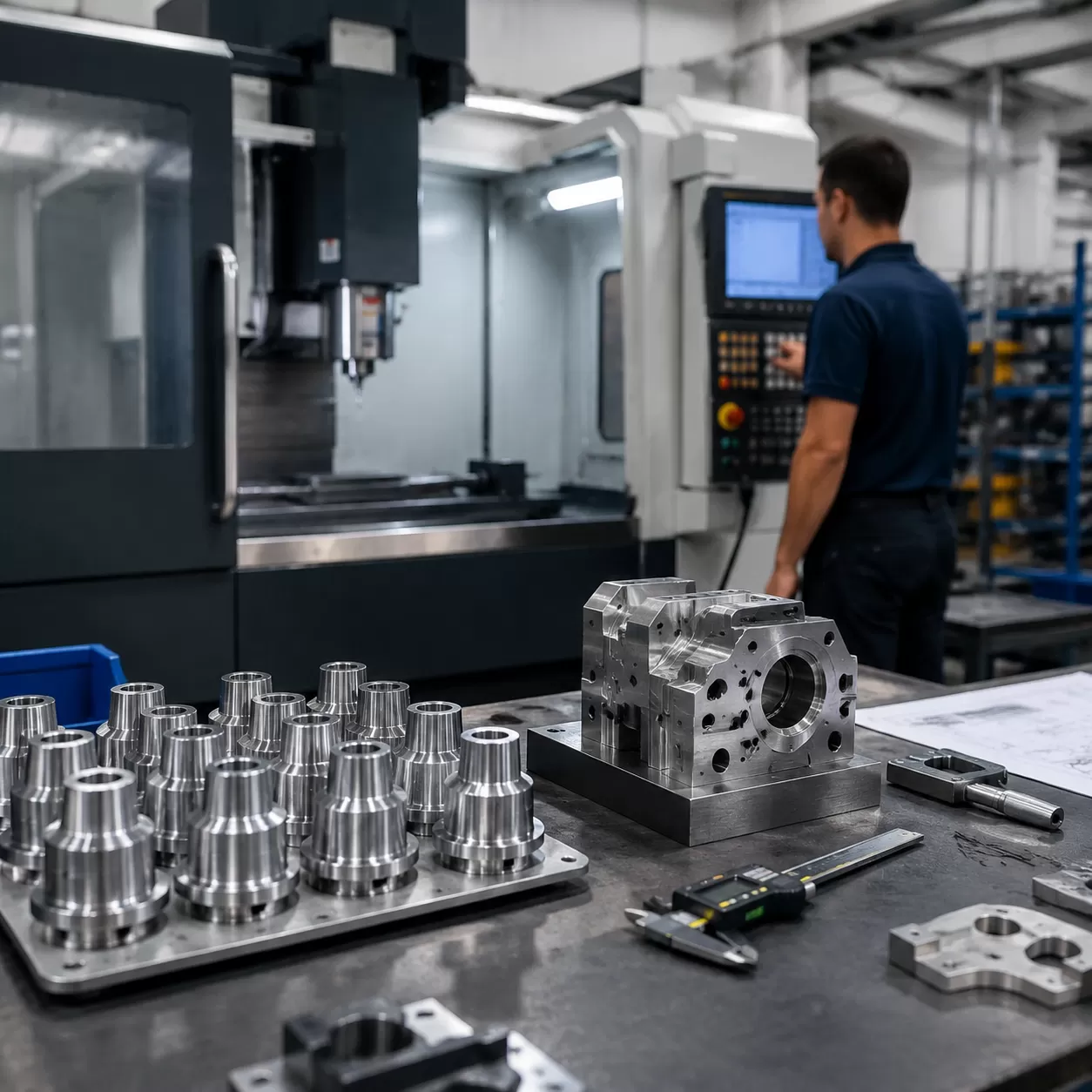
At Precisionvast, we have optimized our contract CNC manufacturing pipeline to eliminate friction, reduce lead times, and guarantee part accuracy from day one. Our direct Design for Manufacturability (DFM) workflow bridges the gap between digital design and physical precision cnc machining through a synchronized, four-step production framework.
Step 1: CAD File Submission & Digital Quoting
The process begins when you upload your 3D CAD models (STEP, IGES, or SolidWorks formats) directly to our secure engineering portal. Our digital quoting engine instantly parses the geometry to evaluate manufacturing feasibility. Local US product teams benefit from near-instantaneous quoting, allowing you to secure pricing, assess material costs, and kickstart production schedules without bureaucratic delays.
Step 2: Automated & Expert DFM Feedback
Every part undergoes a rigorous Design for Manufacturability assessment. Our automated software flags immediate production risks, which are then cross-verified by our senior machining engineers. We analyze:
- Deep pockets and sharp internal vertical corners.
- Unrealistic wall thicknesses that might cause warping.
- Thread features and complex geometries that require specialized setups.
By catching these issues prior to chip-making, we prevent costly tooling breakages and part failures. For projects requiring specialized raw materials, our engineers also evaluate how material choice affects machining stresses, particularly when balancing standard metals against premium options like high-temperature alloys for extreme-environment applications.
Step 3: Kinematic Simulation & Digital Twin Toolpath Validation
Before a single piece of stock is loaded into our equipment fleet, we generate a virtual digital twin of the entire machining environment. Using advanced kinematic simulation software, we model the exact movements of our 5-axis CNC milling centers and mill-turn lathes.
Production Safeguard: This software-driven validation step checks for tool-holder collisions, verifies optimal chip loads, and optimizes toolpaths. It guarantees that our programming is flawless before physical cutting begins, protecting your schedule from unexpected machine downtime.
Step 4: Component Machining, Secondary Finishing, & Global Delivery
Once validated, the code is pushed directly to our production floor. Your custom CNC turned parts and milled components are cut using precise, real-time closed-loop monitoring. After subtractive manufacturing services are complete, parts route immediately to your specified secondary finishing treatments—such as anodizing, bead blasting, or plating. The final, fully inspected components are then securely packed and shipped directly to your facility, meeting strict US supply chain timelines with complete traceability.
Frequently Asked Questions (B2B Precision CNC Machining)
What factors drive the overall price of a CNC machined part?
The final cost of precision cnc machining comes down to three main drivers: machining time, material costs, and setup complexity.
- Machining Time: The more complex the geometry, the longer the cutting tool spends removing material.
- Material Selection: Premium aerospace alloys or heavy-duty metals cost more raw, and they also wear down tooling faster, adding to the labor clock.
- Setup and Fixturing: Complex geometries requiring multiple operations on standard machines increase labor costs. Utilizing advanced 5-axis CNC milling reduces these setups, which lowers unit costs on larger production runs.
Why does Precisionvast require fillets on internal vertical corners?
All mechanical CNC milling tools are round. When a spinning end mill moves along an internal pocket wall, it cannot cut a perfect 90-degree square inside corner without specialized, costly EDM secondary operations.
By designing standard fillets (radii) on internal vertical corners, the tool transitions smoothly through the corner without chattering, breaking, or slowing down. Designing parts with realistic internal radii speeds up precision turning and milling cycles, lowers production costs, and eliminates structural stress concentrations in your final CNC machined components.
What is the minimum wall thickness recommended for custom metal parts?
For most high-precision metal machining projects, we recommend a minimum wall thickness of 0.030 inches (0.76 mm) for metals, though 0.020 inches (0.51 mm) is achievable in localized areas if the geometry supports it.
| Material Class | Recommended Minimum | Absolute Limit |
|---|---|---|
| Metals & Alloys | 0.030″ (0.76 mm) | 0.020″ (0.51 mm) |
| Engineering Plastics | 0.060″ (1.52 mm) | 0.040″ (1.02 mm) |
Going below these thresholds risks part deformation, warping from residual stress, and severe tool chatter during our subtractive manufacturing services. If your part requires ultra-thin walls alongside specialized heat treatment, our engineering team can help you how to analyze physical properties of heat-resistant alloys to balance structural integrity with machinability.
 English
  German