
Description
Why Choose Precisionvast for Machining Castings?
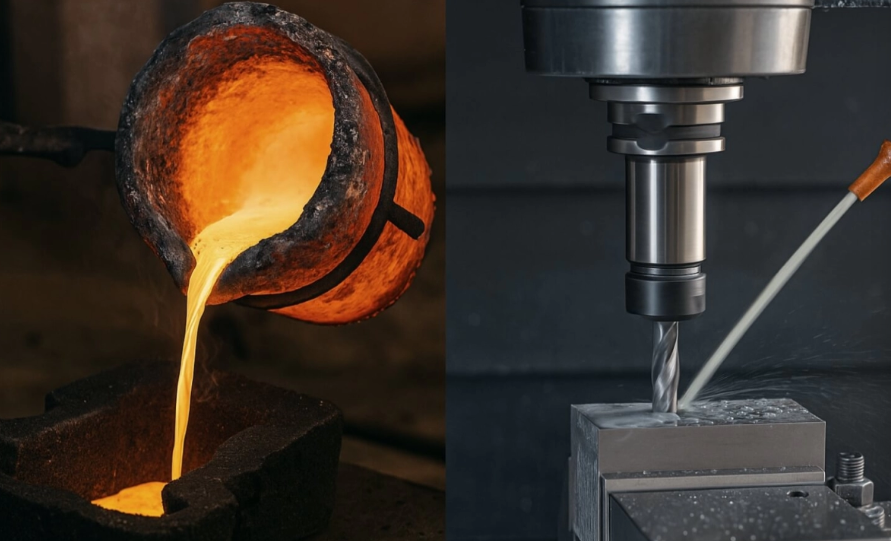
At Dongying Vast, we leverage over 20 years of manufacturing expertise to deliver a true one-stop solution for machining casting projects. Unlike standard foundries that outsource secondary operations, we integrate precision investment casting directly with advanced CNC machining capabilities in our 4,000 m² facility. This seamless workflow eliminates logistical headaches and ensures that every component—from carbon steel to titanium alloys—meets strict industrial standards.
Benefits of Integrated Investment Casting and CNC Services
Managing separate vendors for casting and machining often leads to finger-pointing when quality issues arise. We eliminate this risk by owning the entire process. By combining investment casting machining with our in-house production line, we ensure rapid feedback loops between the casting floor and the machine shop.
- Single-Source Accountability: We take full responsibility for the part from the wax pattern to the final machined surface.
- Reduced Lead Times: No shipping parts between different vendors means faster turnaround times for your production run.
- Design Optimization: Our engineers use CAE simulation to optimize mold designs specifically for subsequent CNC machining, minimizing potential defects before metal is ever poured.
Achieving Superior Surface Finishes and Tight Tolerances
Raw castings often lack the dimensional accuracy required for critical applications in automotive or marine industries. Our precision CNC machining department bridges that gap. We utilize high-performance equipment to achieve tight tolerances that raw casting processes cannot match alone.
Whether you require a specific surface finish Ra for sealing surfaces or complex geometric dimensioning and tolerancing (GD&T), our ISO9001-certified quality control ensures compliance. We routinely handle:
- Complex Geometries: Machining intricate features that are impossible to cast directly.
- High-Precision Fits: Ensuring perfect mating surfaces for pumps, valves, and hardware.
- Consistent Quality: Verified through rigorous CMM inspection and surface roughness testing.
Cost Savings via Direct Factory Pricing
Working directly with us means you bypass trading companies and middlemen. We offer direct factory pricing, providing a significant cost advantage without compromising on quality. Furthermore, our integrated approach allows us to minimize the machining allowance—the excess material left on a cast part—reducing raw material waste and shortening machining cycle times.
Comparison: Traditional Sourcing vs. Precisionvast Integrated Approach
| Feature | Traditional Sourcing (Multiple Vendors) | Precisionvast Integrated Solution |
|---|---|---|
| Logistics | Complex, high shipping costs between vendors | Zero transfer costs, all in-house |
| Accountability | Blame game between caster and machinist | Single point of contact |
| Lead Time | Extended due to transport and scheduling | Accelerated production workflow |
| Material Waste | High machining allowances (safety margin) | Optimized allowances via CAE design |
| Pricing | Layered markups | Factory-direct savings |
Advanced CNC Machining Capabilities for Castings
We don’t just pour metal; we finish it to the exact specs required for your assembly line. Our facility seamlessly integrates the foundry floor with a high-tech machine shop, bridging the gap between raw metal and final components. This “one-stop” approach ensures that every machining casting project meets rigorous dimensional standards without the headache of managing multiple vendors.
3-Axis, 4-Axis, and 5-Axis CNC Milling Centers
We utilize a versatile lineup of CNC milling centers to handle everything from basic brackets to complex geometries found in aerospace or medical hardware.
- 3-Axis Milling: Ideal for standard facing, drilling, and simple profiling on flat surfaces.
- 5-Axis CNC: Critical for complex, multi-sided parts. This technology allows us to machine intricate contours in a single setup, drastically improving accuracy and reducing lead times for machined castings.
High-Precision CNC Turning with Live Tooling
For cylindrical components like pump shafts and valve bodies, our CNC turning equipment delivers superior concentricity. We use live tooling to perform off-center drilling and milling directly on the lathe. This capability is frequently applied to our stainless steel investment casting projects, ensuring that tough alloys are finished efficiently without moving between multiple machines.
Secondary Machining Operations
Precision isn’t just about the heavy cuts; it’s about the final details. We provide comprehensive secondary machining operations to finalize your parts:
- Boring & Drilling: Achieving tight tolerance holes and precise internal diameters.
- Threading: Cutting reliable internal and external threads for secure assembly.
- Finishing: Grinding and polishing to meet specific surface roughness (Ra) requirements required for sealing surfaces.
Optimizing the Machining Casting Process
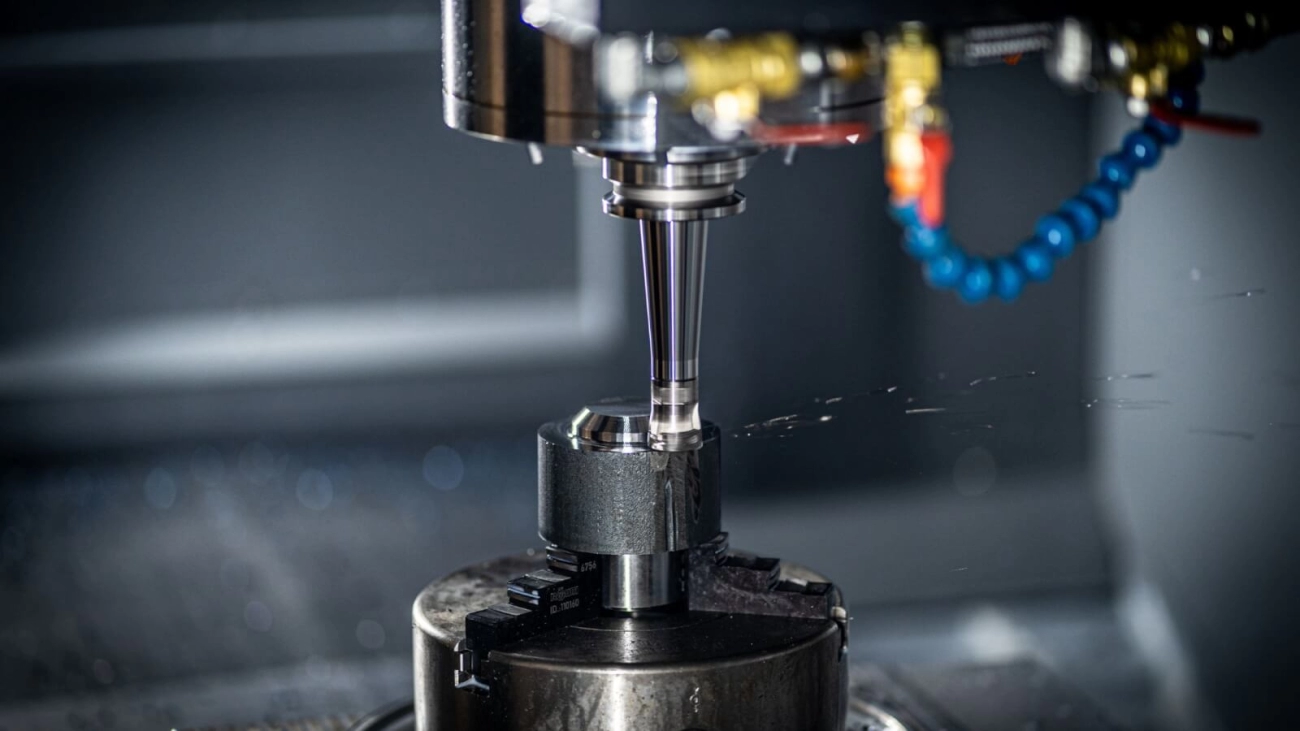
Successful machining casting projects require tight coordination between the foundry and the machine shop. At Precisionvast, we don’t just pour metal; we engineer the casting specifically for the secondary operations that follow. By integrating these processes under one roof, we eliminate the finger-pointing that often happens between separate vendors.
Determining Machining Allowance
Setting the correct machining allowance is a critical balancing act. If we leave too much stock, you pay for wasted material and longer cycle times. If we leave too little, the tool might not clean up the surface entirely.
- Stock Optimization: We calculate the precise amount of extra material needed based on dimensional capability insights and alloy shrinkage rates.
- Surface Cleanup: Our goal is to ensure every machined surface is free of casting skin without excessive cutting.
- Cost Reduction: Minimizing the removal volume directly lowers your unit cost.
Custom Fixture Design
Investment castings often feature complex, organic geometries that standard machine vices cannot grip securely. We handle custom fixture design in-house to solve this challenge.
- Rigid Clamping: We build dedicated jigs that conform to the cast shape, ensuring the part remains rigid during high-speed CNC milling or turning.
- Vibration Control: Proper fixturing dampens vibration, which is essential for achieving superior surface finishes and tight tolerances.
- Repeatability: Our custom setups ensure that every part is loaded in the exact same position, maintaining consistency across large production runs.
Strategies to Eliminate Defects
Hitting a void or porosity halfway through a machining cycle is a nightmare for production efficiency. We take proactive steps to ensure the internal integrity of our machined castings.
- CAE Simulation: We use casting simulation software to analyze flow and solidification. This allows us to position gates and risers so that any potential porosity is moved away from critical machined areas.
- Process Control: By strictly controlling temperature and shell building, we minimize surface defects.
- Verification: We utilize X-ray and Magnetic Particle Inspection (MPI) to catch internal issues before the part ever touches a CNC machine, ensuring you only receive sound components.
Material Capabilities for Machined Castings
Selecting the right alloy is critical for ensuring the performance and longevity of your components. We handle a diverse range of materials at our facility, ensuring that every machining casting project meets strict mechanical and chemical specifications. Our 20+ years of experience allows us to manage the unique machining characteristics of both ferrous and non-ferrous metals.
Stainless Steel Alloys
We frequently produce machined castings using versatile stainless steel grades. These materials are essential for applications requiring high corrosion resistance and strength, such as marine hardware and food machinery.
- 304 & 316 Stainless Steel: Industry standards for general corrosion resistance.
- 17-4PH: Offers high strength and hardness after heat treatment.
- Duplex Stainless Steel: Provides superior resistance to stress corrosion cracking.
Carbon and Tool Steel
For heavy-duty industrial applications, carbon and alloy steels are the backbone of our production. We deliver precise components that offer exceptional durability and wear resistance. These alloys are ideal for automotive parts and structural hardware where material integrity is paramount.
Non-Ferrous Metals: Aluminum and Titanium
Lightweight alloys require specialized handling during both the casting and machining phases to prevent deformation and ensure surface quality.
- Aluminum Alloys: We offer high-performance solutions for aerospace and automotive clients. For projects requiring a balance of strength and ductility, A356 aluminum investment castings are often the preferred choice due to their excellent response to post-casting heat treatment and machining.
- Titanium Alloys: We cast and machine titanium for applications demanding high strength-to-weight ratios and resistance to extreme temperatures.
Quality Control and Inspection Protocols
Reliability is non-negotiable when dealing with machined castings. Our facility operates under strict ISO9001 standards to ensure every component meets the exact specifications of your technical drawings. We provide comprehensive testing reports for full transparency, giving you confidence in the structural integrity of your parts.
To guarantee precision, we employ a rigorous multi-step inspection process:
- CMM Dimensional Verification: We utilize advanced CMM inspection (Coordinate Measuring Machine) technology to verify complex geometries and tight tolerances. This ensures that the machining casting process has achieved the required accuracy compared to the original CAD model.
- Surface Roughness Testing: For parts requiring specific friction or aesthetic properties, we continually monitor the surface finish Ra to ensure consistency across the production run.
- Non-Destructive Testing (NDT): We detect internal defects without damaging the component. This includes X-ray testing for internal porosity and Magnetic Particle Inspection (MPI) for surface cracks, which is crucial for high-stress stainless steel investment casting applications.
- Leak Testing: For fluid power applications like pumps and valves, we perform pressure and leak testing to ensure the final machined castings are completely sealed and functional.
Industries Utilizing Precision Machined Castings
From reliable automotive engines to critical medical devices, our machined castings deliver the performance these sectors demand. We combine the design flexibility of investment casting with the tight tolerances of precision CNC machining to create components that fit perfectly right out of the box.
Here is where our integrated casting machining services make the biggest impact:
- Automotive: We produce engine brackets, transmission housings, and complex structural parts. These components require the durability of metal casting finishing combined with exact dimensions for high-volume assembly lines.
- Aerospace & Defense: High-performance hardware often demands materials that can withstand extreme environments. We utilize specialized heat-resistant metals and titanium alloys to manufacture lightweight yet robust parts for these rigorous applications.
- Medical & Industrial Equipment: Our facility handles precise components for fluid power equipment, such as pump bodies, valve fittings, and impellers. Understanding steel casting basics and common applications allows us to select the right stainless steel grades, ensuring hygiene and corrosion resistance for medical tools and food machinery.
Frequently Asked Questions (FAQs)
Why machine a cast part instead of machining from solid?
Machining from a solid block (billet) generates significant material waste and takes longer. By starting with a “near net shape” via casting, we drastically reduce the necessary machining allowance. We only use secondary machining operations for critical features that demand extreme precision. This method is generally more efficient and cost-effective, allowing us to utilize commercially important casting processes to handle complex internal geometries that are difficult to machine from scratch.
How do you manage casting defects during the machining process?
We prioritize prevention and detection. Before any CNC milling begins, we use CAE casting simulation to optimize the mold design and minimize porosity. We then verify part integrity using non-destructive testing (NDT), such as X-ray and Magnetic Particle Inspection (MPI). This ensures that we only machine sound parts, preventing issues like subsurface voids from appearing during the finishing stages.
What are your standard tolerances for machined castings?
Raw investment castings have good dimensional accuracy, but machined castings offer superior precision. For critical dimensions, our CNC machining centers achieve the tight tolerances required for demanding applications. Whether you are using stainless steel casting or aluminum, we tailor the process to meet your specific print requirements.
What is the lead time for integrated casting and machining orders?
Lead times depend on production volume and part complexity. However, because we handle everything in-house—from tooling and casting to final machining—we eliminate the delays caused by moving parts between vendors. We also offer SLA rapid prototyping to validate designs quickly. For a specific timeline, submit your request; we guarantee a detailed response within 8 hours.
 English
  German
Reviews
There are no reviews yet.