

Precision Tooling, CAE Simulation, and Quality-Controlled Production
When dealing with procurement managers and lead engineers, their biggest concern usually boils down to one critical objective: achieving ultra-tight tolerances without blowing the production budget on custom tooling. The foundation of any successful production run is making molds for casting aluminum that precisely match your volume, structural integrity, and budget requirements.
In modern industrial foundry operations, delivering reliable, repeatable metal parts requires mastering two primary molding methods.
Core Methods for Casting Aluminum in Industrial Applications
1. Precision Investment Casting (Lost-Wax)
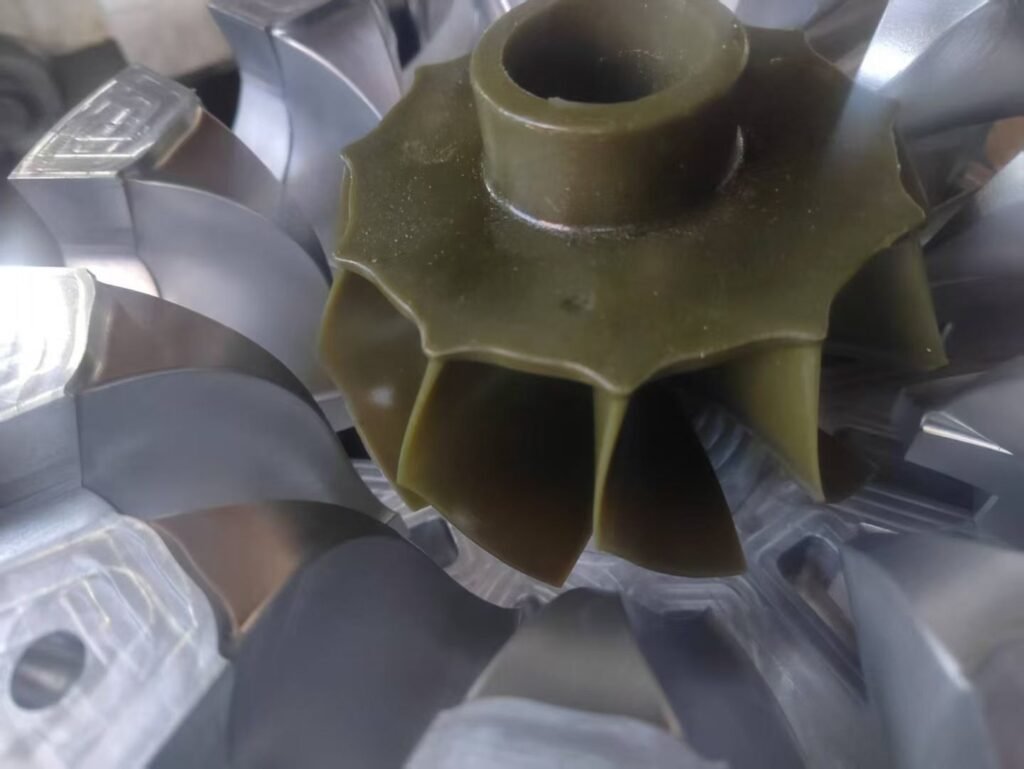
For intricate geometries where dimensional accuracy is non-negotiable, precision investment casting is the premier solution. Often referred to as lost-wax casting, this process relies on an expendable ceramic mold created around a sacrificial wax pattern.
- Complex Geometries: Readily handles extreme undercuts, thin walls (down to 1.5mm), and complex internal cavities that traditional CNC machining cannot reach.
- Superior Surface Finish: Delivers exceptional out-of-the-mold aesthetics (often achieving Ra 3.2 to 6.3 micrometers), drastically reducing the need for secondary surface finishing.
- Mold Characteristics & Tooling Costs: The ceramic mold is destroyed during part extraction, meaning a new shell is created for every single cast. However, the initial tooling costs for the master wax injection dies are significantly lower than hardened steel die-casting molds, making this ideal for low-to-medium volume runs.
2. High-Pressure Die Casting (HPDC)
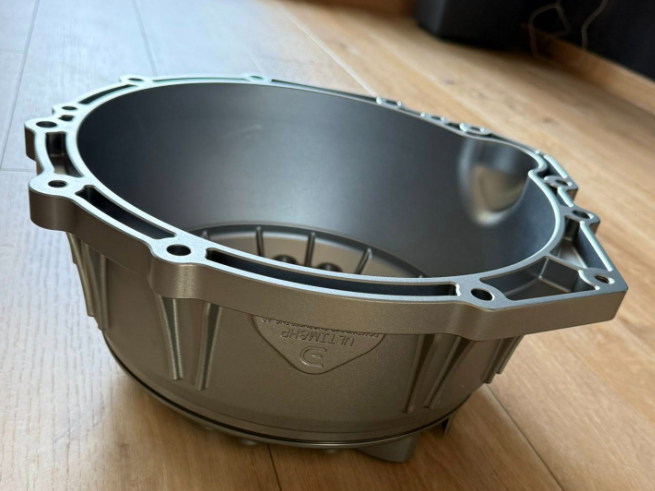
When speed, rapid cycle times, and high-volume mass production are the top priorities, the aluminum die-casting process takes the lead. Molten aluminum alloys (such as ADC12, A380, or A356) are injected directly into reusable, hardened steel molds under massive pressure.
- Mass Manufacturing Scalability: Engineered specifically for scaling up. Once the permanent mold is complete, it can produce hundreds of thousands of identical parts with incredibly fast cycle times.
- Structural Integrity: The extreme injection pressure ensures the molten metal perfectly fills every micro-crevice of the mold before solidifying, creating dense, high-strength, near-net-shape components.
- Mold Characteristics & Tooling Costs: Making molds for high-pressure casting requires a substantial upfront investment in heavy-duty, custom H13 tool steel. However, as production scales into the tens of thousands, the per-unit cost drops exponentially.
Process Comparison at a Glance
| Feature | Precision Investment Casting | High-Pressure Die Casting |
| Mold Type | Expendable (Ceramic Shell) | Reusable (Hardened Tool Steel) |
| Ideal Production Volume | Low to Medium Runs | High-Volume Mass Production |
| Part Complexity | Extremely High (Undercuts, Cavities) | Moderate to High |
| Surface Finish (As-Cast) | Excellent | Good to Excellent |
| Upfront Tooling Cost | Lower (Aluminum master dies) | Significantly Higher (Steel dies) |
| Unit Cost at Scale | Higher | Extremely Low |
Engineering Molds for Casting Aluminum: Design & Simulation
The success of any industrial foundry project is decided during the initial engineering phase. Advanced design and simulation tools eliminate the guesswork, shifting the focus purely to precision and performance.
Expert Mold Design (Tooling)
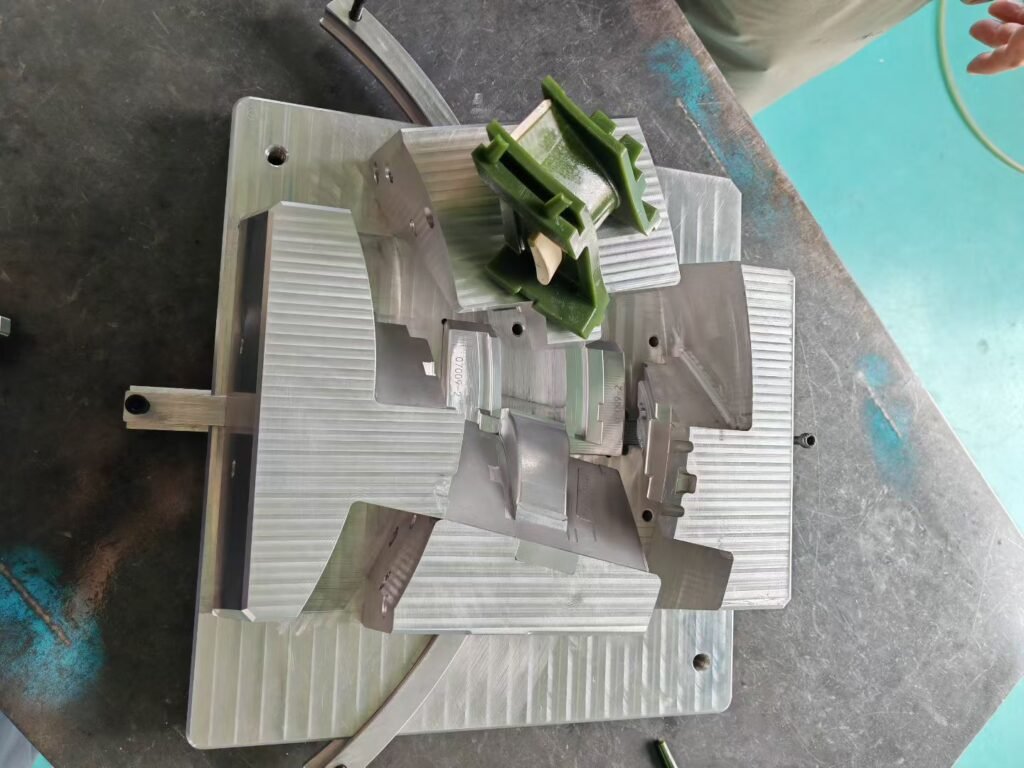
Building custom tooling requires deep manufacturing knowledge. A proper metal casting mold design focuses on three critical details:
- Gate Placement: Calculating fluid dynamics to ensure optimal molten metal flow into the cavity without turbulence.
- Draft Angles: Designing the precise taper (usually 1° to 3°) so parts eject cleanly without friction, warping, or damage to the mold.
- Thermal Management (Cooling Channels): Strategically placing water or oil cooling lines to manage heat dissipation, speed up cycle times, and improve the structural integrity of the final part.
Minimizing Defects with CAE Simulation
Before cutting any steel or 3D printing any wax, designs must be run through CAE (Computer-Aided Engineering) simulation casting software. This virtual pour mitigates production risks by:
- Predicting Flow Behavior: Tracking exactly how the liquid metal fills the mold to prevent cold shuts and misruns.
- Controlling Shrinkage: Simulation highlights potential thermal warp zones, allowing for proactive adjustments to the mold geometry.
- Eliminating Porosity: Identifying trapped gas pockets before they happen guarantees top-tier defect prevention.
Note: Thermal dynamics vary wildly depending on the metal. While aluminum alloys like A380 are standard, mastering these cooling rates through simulation is exactly what allows advanced foundries to successfully transition into casting highly demanding materials like stainless steel, high-temperature alloys, and titanium.
Rapid Prototyping Integration
Modern foundries utilize SLA 3D printing to produce physical, high-resolution models of a part before moving to full production.
- Physical Validation: Test the fit, form, and function of the design in the real world.
- Cost Reduction: Catching design flaws during the prototype phase eliminates the need for expensive, time-consuming rework on permanent steel molds.
Step-by-Step: The Lost-Wax Aluminum Casting Process
For demanding industrial applications requiring incredible detail, the lost-wax workflow is highly streamlined.
Phase 1: Mold and Pattern Creation
- Wax Injection: Molten wax is injected into a master die to create a precise replica (pattern) of the final part.
- Tree Assembly: Multiple wax patterns are attached to a central wax sprue, forming a casting “tree.”
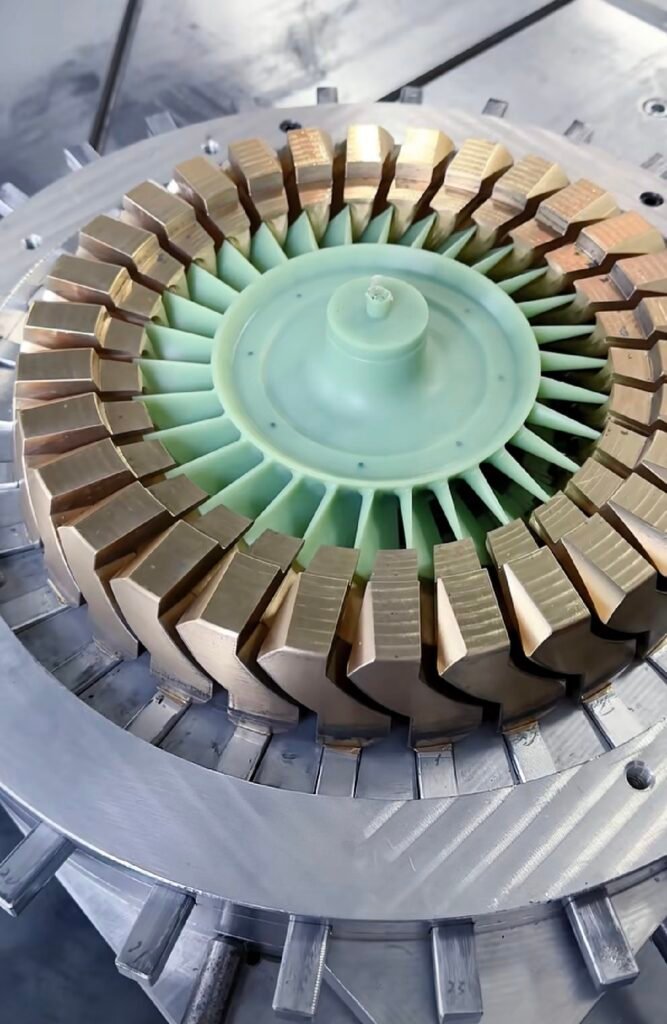
- Building the Shell: The entire assembly is dipped into a liquid ceramic slurry and coated with fine stucco sand. This is repeated until a robust, heat-resistant ceramic shell forms.
- Dewaxing: The shell is flash-heated in an autoclave to melt and drain the wax, leaving a hollow, highly detailed ceramic cavity.
Phase 2: Casting and Extraction
- Pouring the Metal: Premium aluminum casting alloys are poured directly into the pre-heated ceramic shell. Keeping the mold hot ensures smooth flow and eliminates gas porosity.
- Solidification: The aluminum cools and solidifies naturally within the ceramic.
- Shell Removal: High-frequency vibration and high-pressure water jets break away the ceramic shell, exposing the raw aluminum castings.
Phase 3: Secondary Operations
- Cut-Off and Grinding: Parts are sheared from the central sprue, and gating points are ground flush.
- Precision CNC Machining: Ultra-tight tolerances on threads, bores, and critical mounting surfaces are achieved via CNC machining.
- Surface Finishing: Treatments like shot blasting, powder coating, or anodizing are applied for enhanced corrosion resistance and aesthetics.
Quality Assurance: Validating the Mold and the Part
Hitting the exact CAD specifications requires an aggressive quality assurance program. Rigorous validation ensures the final geometry and structural integrity are flawless.
- Coordinate Measuring Machine (CMM): Verifies the exact dimensional accuracy of the tooling and the first-run parts down to the micron level.
- X-Ray Inspection (NDT): Non-destructive testing scans the internal structure of the casting to detect micro-porosity, shrinkage, or hidden gas pockets.
- Spectrometer Analysis: Confirms that the chemical makeup of the chosen alloy strictly meets required material grades.
- Mechanical Testing: Measures tensile strength, yield strength, and hardness to ensure the component can survive real-world physical stress.
Essential Industry Certifications
To guarantee traceability and accountability, top-tier foundries back their workflows with verified documentation:
- ISO 9001:2015: Ensures consistent quality management.
- Material Test Reports (MTRs): Provides absolute proof of the chemical composition of the poured aluminum.
- First Article Inspection (FAI): Documented proof that the initial run off the mold perfectly matches the 3D CAD models.
Frequently Asked Questions (FAQs)
What are the most common materials used for aluminum casting molds?
The material choice depends entirely on the production volume and the specific casting method:
- Die Casting (Permanent): Heavy-duty, hardened tool steel (like H13) is used to withstand intense pressure and hundreds of thousands of thermal cycles.
- Investment Casting (Expendable): Wax patterns coated in advanced ceramic slurries create temporary, highly precise shells.
- Sand Casting (Expendable): Silica or resin-bonded sand is the standard for low-volume, bulky, or oversized parts.
How do draft angles affect mold extraction and part quality?
A draft angle is a slight vertical taper added to the walls of a mold design. As molten aluminum cools, it naturally shrinks and grips the core of the mold. Without a draft angle, the resulting friction and vacuum effect would make it nearly impossible to eject the part without damaging it. Proper draft angles guarantee a clean release, extend the life of the permanent tool, and maintain a pristine surface finish.
What is the difference between lost-wax molds and permanent steel molds?
The core difference lies in reusability and part complexity:
- Lost-Wax (Ceramic) Molds: Single-use shells that are broken away to reveal the part. They are unmatched for creating highly intricate geometries, thin walls, and undercuts that cannot be ejected from a solid two-part tool.
- Permanent Steel Molds: Machined for extreme longevity. Used in high-pressure die casting, these solid steel molds open and close rapidly to produce thousands of identical, highly consistent parts at a very low unit cost.
How do you prevent gas porosity and shrinkage during the casting process?
Effective defect prevention starts digitally. By utilizing CAE simulation software, engineers map out the entire pour before cutting the mold. On the foundry floor, porosity and shrinkage are prevented by:
- Designing precise gating and venting systems to allow trapped air to escape.
- Strictly controlling the pouring temperature and flow rate of the alloy.
- Applying immense, consistent holding pressure (in die casting) to pack the metal tightly, eliminating internal voids as the material transitions from liquid to solid.
 English
  German