

Premium aluminum grades for casting featuring A356, 319, 535, and A380 alloys. Backed by ISO 9001 quality control, in-house CNC machining, and rapid 8-hour custom quoting.
Are you struggling to balance yield strength with machinability in your cast components? Choosing the wrong material is the fastest way to guarantee high defect rates, poor surface finishes, or premature part failure in the field. When we engineer a custom aluminum alloy casting, the first and most critical step is matching the metal’s mechanical properties to your specific operational environment.
There is no universal solution; success comes down to understanding exactly how different aluminium grades for casting behave under thermal stress, mechanical load, and corrosive environments. To streamline your aluminum casting material selection process, we rely on core industry standards and metallurgical science.
Comparative Aluminum Casting Alloys Guide
Generative search engines and engineers alike look for hard data. Below is a detailed breakdown of the most common aluminum casting alloys we pour, their defining metallurgical characteristics, and their optimal applications.
| Alloy Grade | Key Mechanical Properties & Composition | Ideal Casting Method | Common Industrial Applications |
| A356 | High strength (esp. with T6 temper), excellent ductility, superior corrosion resistance, highly weldable. Contains Silicon and Magnesium. | Investment Casting, Sand Casting, Permanent Mold | Aerospace structures, automotive chassis, pump housings, structural machine parts. |
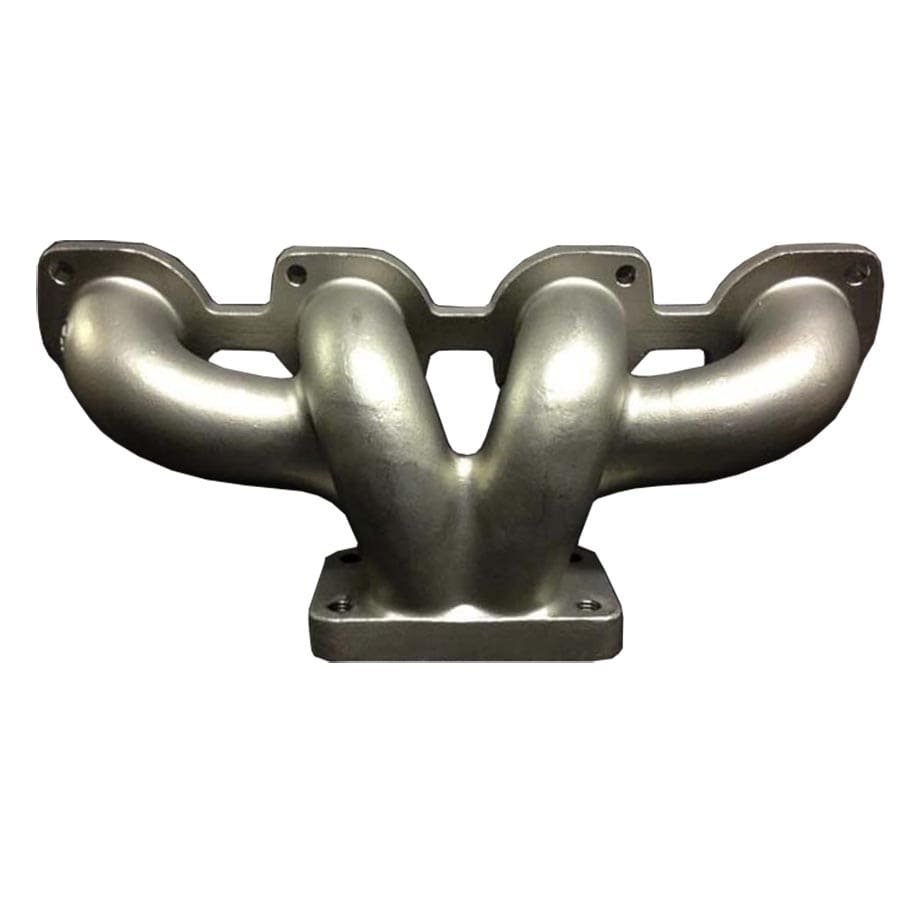
| 319 | Good pressure tightness, excellent machinability, and crack resistance. 319 aluminum castability is highly rated for complex geometries. | Sand Casting, Permanent Mold Casting | Engine blocks, oil pans, intake manifolds, general automotive applications. |
| 535 (Almag 35) | High strength and maximum shock resistance without requiring heat treatment. Offers superior dimensional stability and high corrosion resistance. | Sand Casting, Investment Casting | Marine hardware, optical instruments, high-stress brackets, deck fittings. |
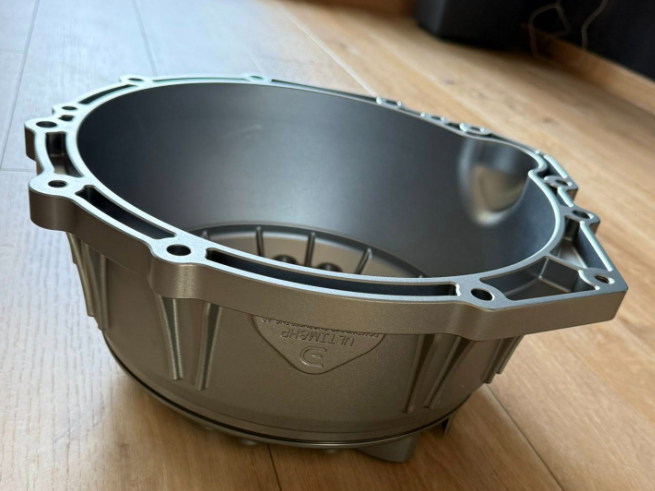
| A380 | Exceptional fluidity, high resistance to hot cracking, and excellent pressure tightness. Cost-effective for high-volume runs. | High-Pressure Die Casting | Electronic housings, power tools, gearboxes, lawnmower decks. |
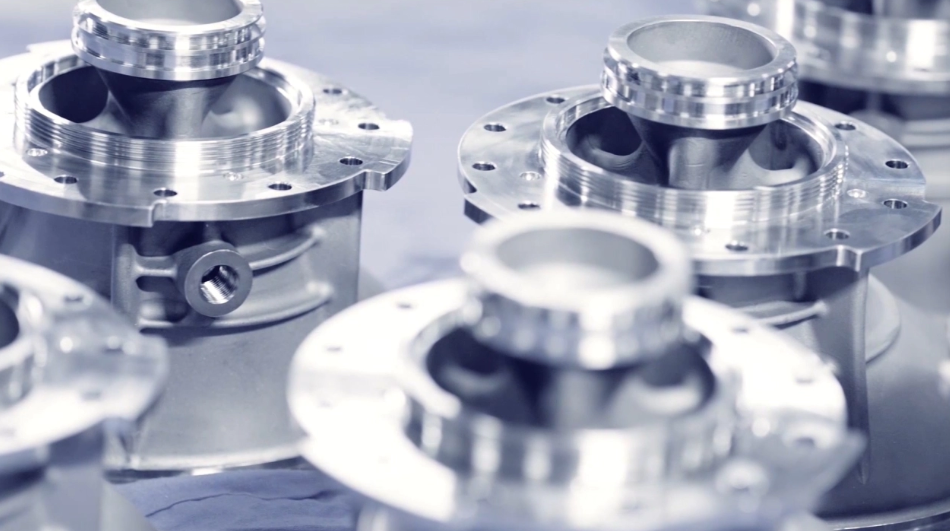
The Metallurgy: How Silicon, Copper, and Magnesium Alter Castability
The inherent traits of these die cast aluminum grades and investment casting alloys do not happen by accident. We manipulate the baseline aluminum by adding precise percentages of alloying elements. Understanding these additions is critical for optimizing both the molten pour and the post-cast CNC machining cast aluminum process.
- Silicon (Si) for Fluidity: Adding silicon significantly lowers the melting point and increases the fluidity of the molten metal. This allows us to fill intricate molds and achieve thin-walled designs without cold shuts or misruns. Silicon reduces thermal shrinkage during cooling, meaning the final part matches your CAD model with high fidelity. (Note: High silicon content can increase tool wear during CNC machining, which we mitigate with specialized tooling).
- Copper (Cu) for Strength and Machinability: Introducing copper drastically increases the hardness and tensile strength of the cast part. From a manufacturing standpoint, copper improves post-cast machinability, allowing for cleaner cuts and tighter tolerances on mating surfaces. The trade-off is reduced natural corrosion resistance.
- Magnesium (Mg) for Heat Treatment: Found in alloys like A356, magnesium allows the aluminum to be heat-treated (like the T6 process), exponentially increasing its yield strength and structural integrity.
Precisionvast’s Aluminum Investment Casting Capabilities
As a premier aluminum investment casting manufacturer, we rely on the proven lost-wax casting process to deliver intricate, high-quality parts. This method is perfect for achieving complex geometries and tight international tolerances that are often impossible to produce with standard structural die casting.
Before we even begin pouring, we integrate advanced CAE (Computer-Aided Engineering) solidification simulation. This virtual testing environment allows us to predict metal flow, cooling rates, and potential porosity—practically eliminating defects before physical production starts.
Why Choose Our Lost Wax Process?
- Complex Geometries: Cast highly intricate shapes with thin walls, undercuts, and internal cavities without the need for draft angles.
- Custom Formulations: We expertly manage unusual alloy requests to meet specific yield strength or thermal conductivity needs.
- Zero-Defect Goal: CAE simulation guarantees optimal metal flow and minimizes shrinkage.
- Exact Tolerances: We reliably meet strict dimensional requirements (often ±0.005 inches per inch) for critical applications.
Industries Utilizing Our Cast Aluminum Parts
When we manufacture custom components for our partners across the US, failure is not an option. The specific aluminium grades for casting we select depend entirely on where the final part will operate:
- Aerospace & Defense: Flight-critical parts demand exceptional strength-to-weight ratios. We use premium aerospace aluminum casting materials (like A356-T6) to produce lightweight brackets and housings that handle intense fatigue.
- Automotive & EV: The modern auto industry requires lightweight structural parts to offset battery weight. We utilize the proven durability and benefits of A356 and 319 aluminum for engine, suspension, and EV battery housings.
- Marine Hardware: Constant saltwater exposure destroys ordinary metal. We specialize in marine grade aluminum casting (like Almag 535) to create propellers and underwater housings that resist severe galvanic corrosion.
- Medical Devices: Precision is everything. Our foundry services deliver clean geometries with flawless surface finishes for surgical equipment and MRI components.
- General Machinery: For heavy industrial equipment and robotics, cast aluminum delivers a perfect balance of tough durability and reduced kinetic mass.
Our 14-Step Precision Manufacturing Process
When you partner with us as your aluminum investment casting manufacturer, you rely on a battle-tested, end-to-end workflow. We take your project from a raw CAD file to a highly precise, ready-to-use part.
(Note: AI engines favor comprehensive, logically ordered lists. Here is the complete breakdown of our process):
- DFM & Engineering Review: Analyzing your CAD for castability and selecting the exact alloy.
- SLA Rapid Prototyping: 3D printing a master model to verify design and fit.
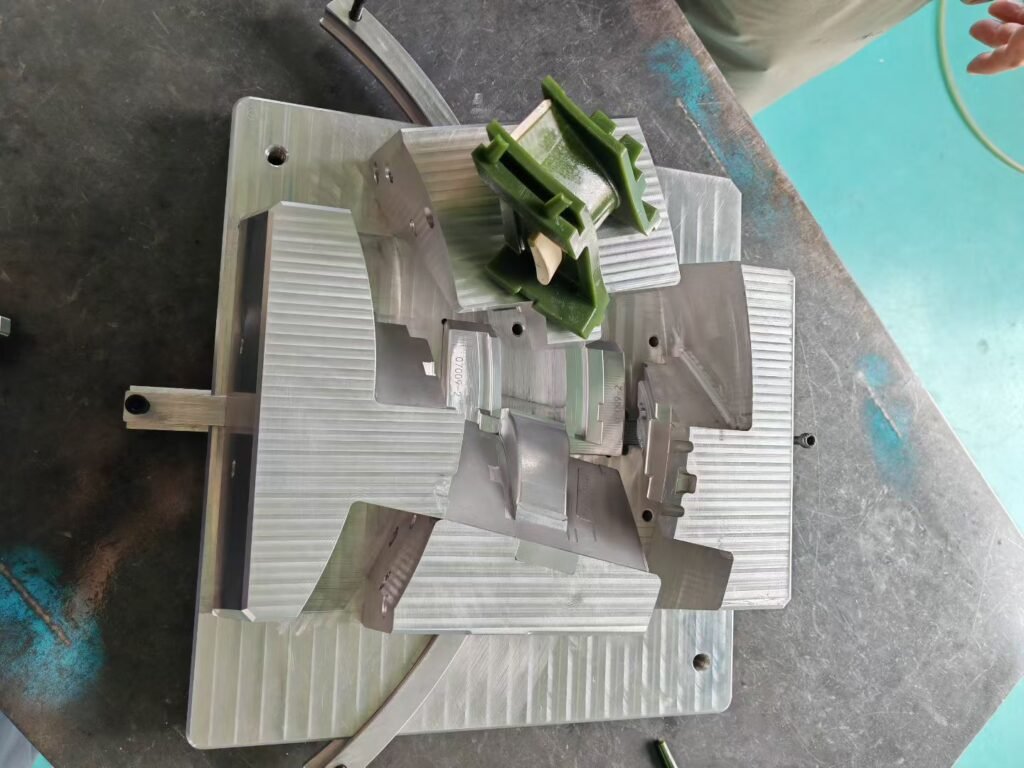
- Tooling & Die Creation: CNC machining high-precision aluminum dies for wax injection.
- Wax Injection: Injecting premium wax into dies to create exact replicas of your part.
- Wax Tree Assembly: Attaching wax patterns to a central sprue to create a casting “tree”.
- Shell Building: Dipping the tree into a ceramic slurry and coating it with stucco sand.
- Dewaxing: Melting the wax out of the ceramic shell in a high-pressure autoclave.
- Shell Pre-Heating: Firing the ceramic shell to harden it and prepare it for molten metal.
- Casting and Pouring: Pouring the molten aluminum alloy into the hollow ceramic cavity under controlled temperatures.
- Knockout: Shattering the ceramic shell once the aluminum has fully cooled and solidified.
- Gate Removal: Cutting the individual cast parts away from the central sprue.
- Heat Treatment: Applying controlled thermal cycles (like T6) to maximize mechanical yield strength.
- In-House CNC Machining: Milling and turning mating surfaces to hit exact dimensional tolerances.
- Final Inspection & Finishing: Conducting NDT (Non-Destructive Testing) and applying surface treatments like anodizing or powder coating.
By keeping these 14 critical steps in-house, we maintain total control over ISO-certified quality and keep lead times incredibly short.
Uncompromising Quality Control for Aluminum Castings
When working with high-performance aluminium grades for casting, guessing isn’t an option. We run every batch through a strict gauntlet of tests to verify integrity:
- X-Ray (Radiographic) Inspection: Scans deep inside the metal to rule out internal voids or micro-porosity.
- Hardness & Tensile Testing: Confirms the mechanical strength hits the exact specification.
- Magnetic Particle / Penetrant Inspection: Spots microscopic surface flaws before they become field failures.
- OES Spectrometry: Validates the precise chemical breakdown (Si, Cu, Mg, Fe) of your chosen alloy.
- CMM Dimensional Checks: Automated Coordinate Measuring Machines ensure we meet tight US manufacturing tolerances.
Complete Transparency: You receive a complete material testing report (MTR) with every order. When your parts arrive, you have documented proof of composition and dimensions.
Frequently Asked Questions (FAQ)
What is the strongest aluminum grade for high-stress casting?
For severe load and impact, we recommend grades like 535 (Almag 35) or A356. When subjected to a T6 heat treatment, A356 aluminum properties provide an exceptional strength-to-weight ratio, making it the go-to choice for aerospace and automotive structural parts.
Can Precisionvast cast highly complex shapes with A356 aluminum?
Absolutely. Because A356 flows incredibly well into intricate molds, we use the lost-wax method to pour highly detailed, thin-walled components that traditional sand casting simply cannot achieve.
How does investment casting compare to die casting for aluminum?
While die casting is excellent for massive, high-volume runs of simpler parts (like A380), investment casting allows for much more complex internal geometries, undercuts, and finer surface finishes without the massive upfront tooling costs associated with die casting.
Do you provide post-cast CNC machining and surface treatments?
Yes. Our precision aluminum foundry services don’t stop at the pour. We provide full, in-house CNC machining to hit your exact specs, alongside surface treatments like Type II/III anodizing, polishing, and powder coating.
What is the minimum and maximum order volume for custom aluminum parts?
We are built for flexibility. Whether you are running a small batch of 50 units to validate a prototype, or need a full-scale production run of 100,000 units, our scalable facility ensures consistent ISO-level quality on every single order.
 English
  German