

Ultimate guide to 3D printer printing material types properties and best uses for PLA ABS PETG resin and more
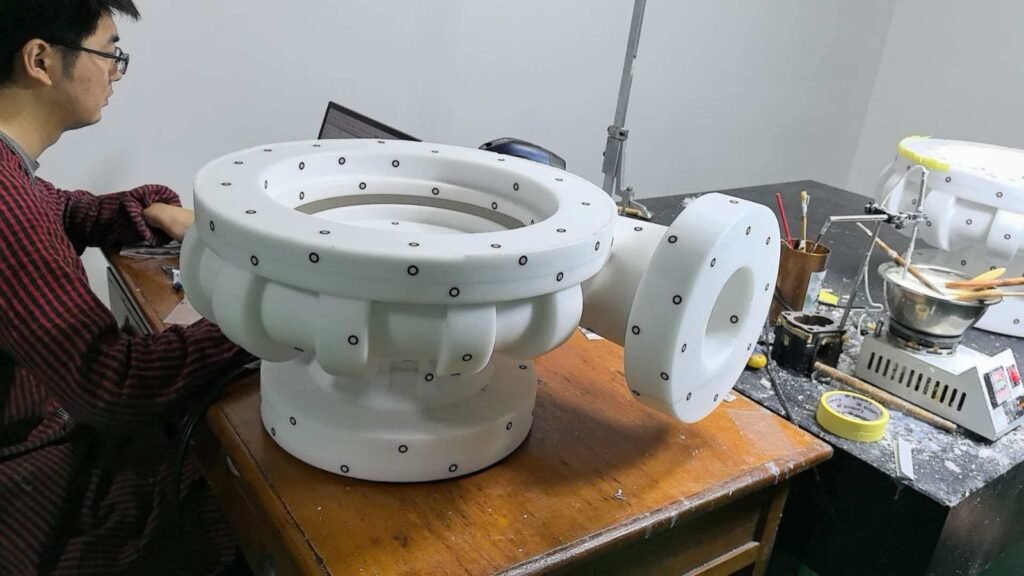
Advanced 3D Printing Materials for Precision Manufacturing
Moving from a digital CAD file to a flawless, industrial-grade metal part requires absolute predictability. We engineer our 3d printer printing material line to bridge that gap seamlessly. By utilizing advanced SLA printing resin and high-precision photopolymers, we eliminate the traditional bottlenecks of manufacturing, allowing you to move from design to final metal component faster than ever.
Bridging Digital Design and Industrial-Grade Metal Parts
Our specialized rapid prototyping materials function as the perfect foundational step for investment casting. Instead of waiting weeks for expensive hard tooling, we use high-resolution additive systems to create your master models.
- Flawless Translation: Every geometric detail in your digital file maps perfectly to the physical 3d printer printing material.
- Production-Ready Quality: These are not fragile display models; they are rugged, highly accurate sacrificial 3D print patterns designed to undergo direct foundry casting.
- Reduced Lead Times: By skipping traditional tooling, we shave weeks off production schedules, giving you industrial-grade metal parts in days.
Technical Characteristics of Our SLA Printing Resins
We engineer our photopolymer resin for manufacturing to bridge the gap between digital complexity and physical perfection. If you are tired of warped prints or rough surface finishes, our specialized 3d printer printing material delivers the exact stability your industrial projects demand. We focus on two critical metrics: ultra-tight dimensional accuracy and a clean, low-ash burnout.
Engineered for Dimensional Accuracy and Clean Burnout
Our stereolithography prototyping material is optimized specifically for creating sacrificial 3D print patterns used in investment casting. During the curing process, our resins experience near-zero volumetric shrinkage. This ensures that the high-precision prototyping media you print matches your exact CAD geometries down to the micron.
When it comes to the foundry, our investment casting polymers feature a specialized chemical formulation that leaves virtually zero residue during the burnout phase. This eliminates gas defects and ensures your final metal parts are structurally sound.
SLA Resin Performance Matrix
| Material Property | Technical Specification | Manufacturing Benefit |
|---|---|---|
| Volumetric Shrinkage | Less than 0.5% | Eliminates part distortion and ensures strict tolerance control |
| Ash Residue | < 0.01% (Low-ash burnout material) | Provides clean mold cavities for flawless metal casting |
| Surface Roughness (Ra) | 0.4 to 0.8 μm | Minimizes post-processing and hand-finishing labor |
| Tensile Strength | 55 – 65 MPa | Rigid enough to handle complex geometries without flexing |
Why Our Additive Manufacturing Resins Stand Out
- Flawless Master Patterns: We produce 3d printer printing material that serves as highly durable 3D printed master patterns, built to withstand handling before investment casting.
- High-Detail Fluidity: The low viscosity of our custom casting resins allows for rapid leveling in the https://www.precisionvast.https://www.precisionvast.com/”>PrecisionVast vat, accelerating your overall production cycle.
- Reliable Thermal Transition: The material softens gradually without sudden expansion, protecting ceramic shells from cracking during rapid tooling phases.
From 3D Resin to High-Performance Alloys
We bridge the gap between initial design and final metal production. Our material matrix is engineered to transition your sacrificial 3D print patterns into industrial-grade, production-ready metals seamlessly. By matching the right 3D printer printing material to your specific metallurgical requirements, we eliminate the guesswork from the scale-up process.
Here is how our high-precision photopolymer resin for manufacturing pairs with our core production alloys:
| 3D Printer Printing Material | Compatible Casting Alloys | Primary Industrial Applications |
|---|---|---|
| SLA Printing Resin (Low-Ash Burnout) | Aluminum (356/A356), Stainless Steel (316L) | Aerospace brackets, lightweight automotive housings |
| Investment Casting Polymers | Tool Steels, Copper Alloys, Inconel | Heavy machinery, high-conductivity electrical parts |
| Custom Casting Resins | Titanium, Cobalt-Chrome | Medical implants, specialized defense components |
Streamlined Prototype-to-Production Transition
We have optimized the direct substitution of traditional wax patterns with high-precision additive manufacturing resins. This matrix ensures that the dimensional accuracy achieved during the rapid prototyping materials phase remains identical when cast into the final metal component.
- Flawless Material Matching: We select the precise industrial 3D printer media that prevents mold interaction during burnout.
- Zero Tooling Constraints: Go straight from a 3D printed master pattern to high-performance alloys without investing in expensive hard tooling.
- Predictable Shrinkage Rates: Our team calibrates the expansion variables of the technical 3D printing polymers to match the exact cooling contraction of your chosen metal.
Optimizing Our 3D Printer Printing Material Workflow
We don’t just print parts; we run a tight, highly controlled 14-step precision manufacturing process designed to turn raw photopolymer resin for manufacturing into flawless industrial components. By controlling every stage of the 3D printer printing material lifecycle, we ensure absolute consistency from the initial digital file to the final cast metal piece.
Here is how we manage our workflow to deliver high-precision prototyping media with zero downtime and maximum accuracy.
The 14-Step Precision Manufacturing Process
Our end-to-end workflow guarantees that our industrial 3D printer media performs predictably every single time.
[Digital Prep] ➔ [SLA Printing] ➔ [Post-Processing] ➔ [Casting/Finishing]
Phase 1: Digital Optimization & Prep
- 1. File Validation: We inspect your CAD models to optimize orientation for SLA printing resin stability.
- 2. Support Engineering: We apply custom sacrificial structures to prevent distortion during the build.
- 3. Material Calibration: We match the specific batch of technical 3D printing polymers to the geometry of your part.
Phase 2: High-Precision Printing
- 4. Environmental Control: We run our printers in climate-controlled labs to maintain correct resin viscosity.
- 5. Layer-by-Layer Execution: Our stereolithography prototyping material is cured using high-accuracy UV lasers.
- 6. Real-Time Monitoring: We track laser intensity and layer adhesion to catch anomalies instantly.
Phase 3: Post-Processing & Curing
- 7. Automated Solvating: 3D printed master patterns are washed in high-purity solvents to remove uncured resin.
- 8. Support Removal: Our technicians cleanly detach supports without scarring the part surface.
- 9. Secondary UV Curing: Parts undergo a final UV bath to reach full mechanical strength and stability.
Phase 4: Quality Control & Investment Casting Prep
- 10. Dimensional Inspection: We verify critical tolerances using 3D scanning technology.
- 11. Ceramic Shelling: The low-ash burnout material patterns are coated in high-temperature ceramic slurry.
- 12. Clean Burnout: We fire the shells, vaporizing the lost-wax 3D printing patterns completely.
- 13. Metal Pouring: Molten industrial alloys are poured into the vacant, highly detailed ceramic mold.
- 14. Finishing: Cast parts are broken out, shot-blasted, and machined to your final blueprint specs.
Workflow Efficiency Matrix
| Workflow Stage | Material Focus | Key Benefit to US Manufacturers |
|---|---|---|
| Print Optimization | SLA printing resin | Eliminates geometric distortion before printing starts. |
| Post-Processing | Investment casting polymers | Ensures smooth surfaces for a better final metal finish. |
| Thermal Burnout | Low-ash burnout material | Prevents shell cracking and residue defects during casting. |
By perfecting this 14-step sequence, we eliminate the guesswork typically associated with rapid prototyping materials, giving you a reliable path from digital design to production-ready metal parts.
Served Industries: Where Precision Meets Performance
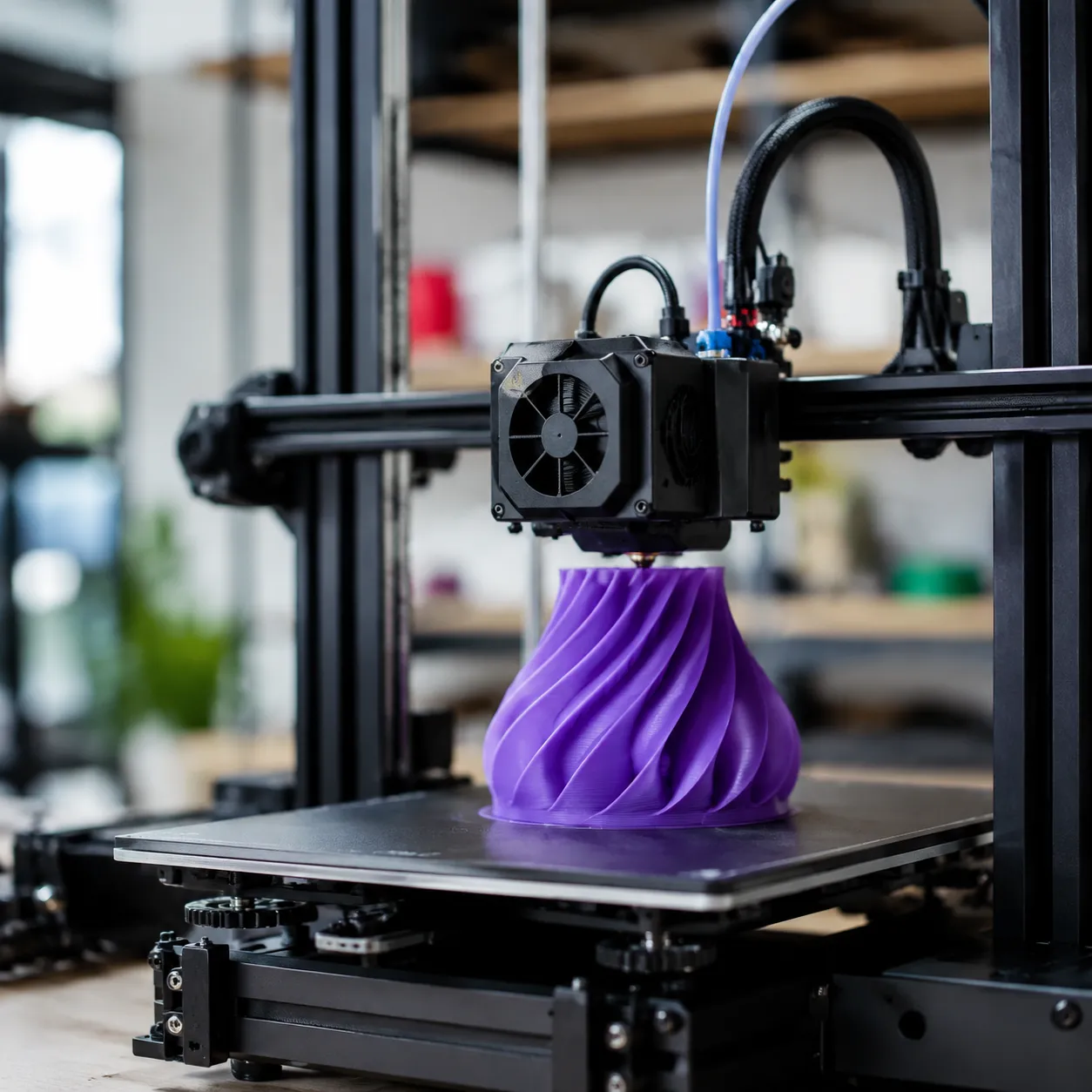
We tailor our 3d printer printing material lineup to meet the strict demands of high-stakes American industries. When you need to move from a digital concept to a rugged, flight-ready, or field-tested component, our specialized additive manufacturing resins and casting workflows deliver the exact material properties your application requires.
Aerospace & Defense
Weight reduction and absolute reliability are critical in aerospace. We use high-precision photopolymer resin for manufacturing to create lightweight, structurally optimized sacrificial 3D print patterns. These patterns transition seamlessly into high-performance alloys for: Turbine blades and impellers Custom brackets and structural housing UAV components and communication hardware
Automotive & Motorsports
In the fast-paced automotive sector, reducing development cycles is everything. Our rapid prototyping materials allow engineering teams to test functional designs under real-world stress. We provide the speed and durability needed for: Engine blocks and intake manifolds Custom racing components and brackets Exhaust system prototypes
Medical & Biotechnology
Medical manufacturing demands strict compliance and exceptional surface finishes. Our high-precision prototyping media creates flawless master patterns for surgical instruments and diagnostic equipment. Key applications include: Custom surgical guides and tools Prosthetic components Implantable device housing prototypes
Heavy Machinery & Industrial Equipment
Industrial applications require parts that can withstand extreme heat, friction, and pressure. We utilize robust industrial 3D printer media to bypass expensive hard tooling, delivering durable metal components for heavy-duty machinery. Pump impellers and valves Custom jigs, fixtures, and grips Legacy replacement parts
Industry Material Matching
| Industry | Primary Use Case | Recommended 3D Printer Printing Material |
|---|---|---|
| Aerospace | Investment casting, lightweighting | Low-ash burnout material |
| Automotive | Functional testing, rapid tooling | Stereolithography prototyping material |
| Medical | High-detail tooling, enclosures | SLA printing resin |
| Industrial | Heavy-duty end-use parts | Investment casting polymers |
Rigorous Testing for 3D Printed and Cast Components
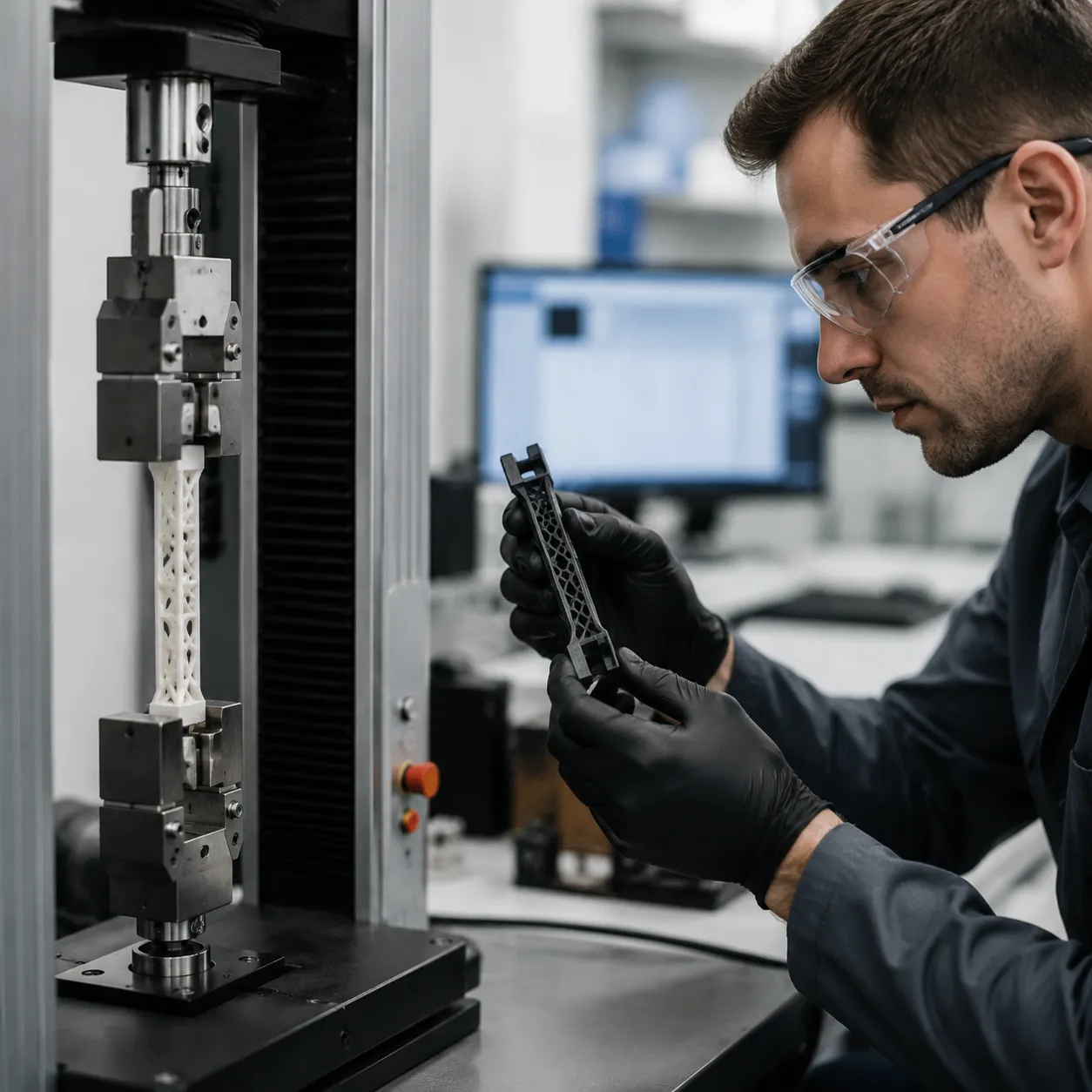
We don’t leave quality to chance. Every single batch of 3d printer printing material we run undergoes strict quality control to guarantee absolute precision from digital file to the final metal part. Because our SLA printing resin serves as the master pattern for industrial casting, any microscopic flaw in the print will ruin the final component.
To ensure flawless execution, we deploy an aggressive, multi-stage testing protocol across both the polymer stage and the final cast alloy.
Our Quality Control Inspection Protocol
- Dimensional Accuracy Verification: We use high-resolution 3D laser scanners to compare the printed photopolymer resin pattern directly against your original CAD model, ensuring tight tolerances are met before casting begins.
- Burnout Residue Analysis: Every batch of our sacrificial 3D print patterns is tested for clean burnout performance. We verify that our low-ash material leaves virtually zero residue in the investment casting mold.
- Mechanical Property Testing: metal components undergo rigorous tensile, hardness, and elongation testing to ensure they match or exceed traditional manufacturing standards.
- Non-Destructive Testing (NDT): We utilize X-ray radiography and liquid penetrant inspection to detect any internal porosity or surface imperfections in the cast metal.
Material Performance Metrics
| Evaluation Stage | Testing Metric | Target Standard |
|---|---|---|
| SLA Printing Resin | Green State Rigidity | Zero warping during post-cure |
| Sacrificial Pattern | Ash Content After Burnout | Less than 0.02% |
| Cast Alloy | Surface Roughness ($Ra$) | Micro-smooth industrial finish |
| Finished Component | Structural Integrity | 100% density, zero internal voids |
By maintaining complete internal oversight over both the initial 3d printer printing material properties and the final metallurgical results, we deliver industrial-grade parts that are ready for immediate deployment in high-stakes applications.
Technical FAQ: 3D Printing Materials and Manufacturing
We answer your top questions about how our specialized 3d printer printing material speeds up production and cuts your development costs.
What are the advantages of using SLA resin patterns over traditional wax tooling?
Traditional injection-molded wax tooling requires expensive metal dies and weeks of lead time. By switching to our SLA printing resin, you eliminate upfront tooling costs and can modify designs instantly.
- No Tooling Costs: Skip the expensive CNC-machined dies.
- Design Freedom: Easily print complex, hollowed, or undercut geometries that are impossible to mold.
- Faster Turnaround: Go from a digital CAD file to sacrificial 3D print patterns in hours instead of weeks.
- Clean Burnout: Our specialized photopolymer resin for manufacturing acts as a direct replacement for wax, leaving a low-ash burnout material footprint for perfect metal castings.
What dimensional tolerances can precisionvast maintain from 3D print to final cast?
We control the shrinking variables from the initial industrial 3D printer media stage all the way through the final metal pour.
| Phase | Standard Tolerance | Premium / Tight Tolerance |
|---|---|---|
| 3D Printed Master Patterns | ±0.005 inches | ±0.002 inches |
| Cast Metal Parts | ±0.010 inches per inch | Contact engineering for tighter limits |
Note: tolerances depend on part geometry, selected high-performance alloys, and overall component size.
How long does it take to receive a quote and start production?
We keep our workflow lean to match the speed of your project timelines.
- RFQs & Quotes: We deliver detailed quotes within 24 hours after receiving your 3D CAD files (STEP, IGES, or STL formats).
- Production Kickoff: Printing begins immediately upon order approval. We utilize high-capacity stereolithography prototyping material lines to ensure your rapid prototyping materials move to the casting floor without delay.
 English
  German