

17-4 stainless properties explained with strength corrosion resistance heat treatment and key features for reliable industrial use.
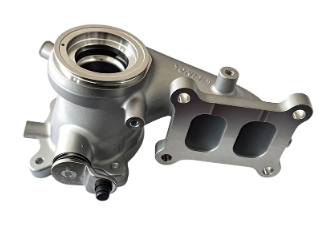
What is 17-4 PH Stainless Steel?
When my clients need a metal that refuses to compromise between sheer strength and everyday durability, I point them straight to 17-4 PH stainless steel. Understanding baseline 17-4 stainless properties is crucial for engineering high-performance parts that can survive punishing industrial environments.
Here is exactly what makes this specific alloy an absolute powerhouse:
- 17-4 Chemical Composition: The name itself is a cheat sheet for its makeup. It contains approximately 17% chromium and 4% nickel, fortified with a specific addition of copper. This precise blend creates a highly durable, corrosion-resistant foundation.
- Precipitation Hardening Stainless Steel: The “PH” stands for precipitation hardening. By applying a relatively simple heat treatment, we cause the copper particles to precipitate out and lock the steel’s microscopic structure in place. This process is the secret behind its massive strength gains without warping the material.
- Type 630 Stainless Steel / UNS S17400: Don’t let different engineering spec sheets confuse you. Whether I supply it labeled as Type 630 stainless steel or under its official unified numbering system designation of UNS S17400, you are getting the exact same versatile, high-grade alloy.
Key Physical Properties of 17-4 Stainless
When evaluating materials for demanding applications, I always start by looking at the core physical data. The 17-4 stainless properties make this alloy a reliable workhorse across multiple industries. Unlike some standard grades, Type 630 stainless steel offers a unique balance of thermal and physical traits that directly impact how a part performs under stress.
To give you a clear picture of what we are working with, here is a breakdown of the essential physical characteristics of 17-4 PH stainless steel:
- Density: The density sits at approximately 0.282 lb/in³ (7.80 g/cm³). This is fairly standard for stainless alloys, providing a solid, heavy-duty feel without adding excessive weight to your assemblies.
- Melting Range: It boasts a high melting point between 2560°F and 2625°F (1404°C – 1440°C). This high threshold is exactly why we trust it in high-temperature environments.
- Thermal Conductivity & Expansion: 17-4 PH exhibits reliable thermal conductivity. Its coefficient of thermal expansion is relatively low compared to austenitic grades, meaning parts hold their dimensional stability much better when the temperature fluctuates.
- Magnetic Properties: One of the most common questions I hear is about magnetism. Yes, 17-4 PH stainless steel is strongly magnetic in all conditions, whether it is in the annealed Condition A or fully heat-treated.
Understanding these physical baselines is crucial. If you are weighing your options for heavy-duty components, exploring the differences in cast iron vs stainless steel can further highlight why the stable thermal expansion and high melting point of 17-4 make it a superior choice for modern manufacturing.
17-4 Mechanical Properties You Need to Know
When evaluating 17-4 stainless properties, the mechanical specifications are where this alloy truly shines. It offers an incredible balance of high strength and durability, making it a go-to choice for demanding applications across the United States. While understanding why standard steel cannot be easily die-casted helps clarify general manufacturing limitations, 17-4 bypasses many structural compromises because it can be highly customized through simple heat treatments.
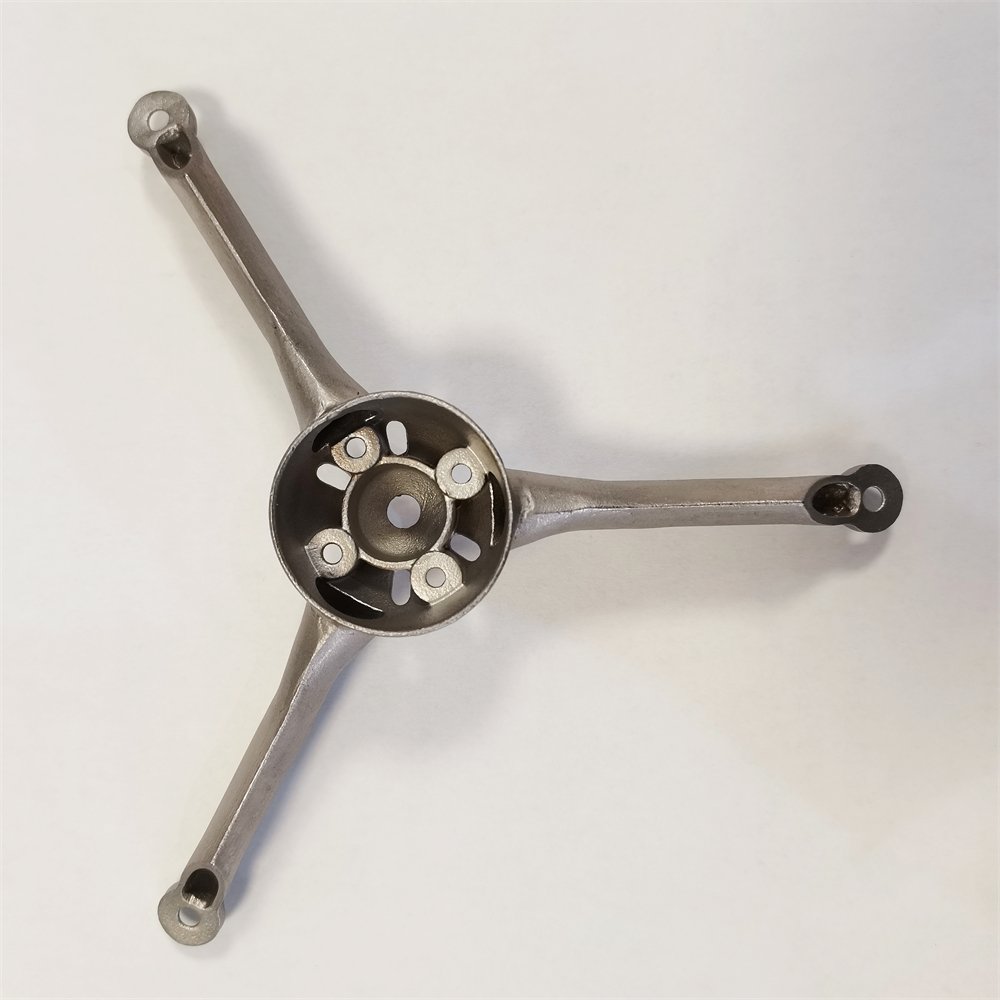
Tensile and Yield Strength Breakdown
The tensile strength 17-4 delivers depends entirely on its aging process. In its solution-annealed state (Condition A), the material is moderately strong but optimized for fabrication. Once heat-treated, the numbers spike dramatically:
- Condition H900: This treatment delivers maximum strength. The 17-4 yield strength hits roughly 170,000 psi (170 ksi), with an ultimate tensile strength pushing 190,000 psi (190 ksi).
- Condition H1150: This overaged state provides a highly stable alternative, yielding at about 105,000 psi (105 ksi) with a tensile strength of 135,000 psi (135 ksi).
17-4 Rockwell Hardness Levels
The 17-4 mechanical properties shift predictably across different temperature treatments, allowing engineers to dial in the exact wear resistance needed.
- Condition A (Annealed): Typically sits around 33 HRC maximum.
- Condition H900: This low-temperature age hardening peaks the 17-4 Rockwell hardness at approximately 44 HRC.
- Condition H1150: Treated at a higher temperature, the hardness drops to around 33 HRC, but with vastly improved material stability.
Elongation, Ductility, and Impact Resistance
In metallurgy, higher strength usually means lower ductility. In condition H900, elongation sits around 10%, meaning the metal is exceptionally hard but has lower impact toughness. By shifting to condition H1150, you sacrifice peak hardness to gain superior elongation (up to 16%) and excellent impact resistance. This makes the overaged condition ideal for parts subjected to sudden shocks, heavy vibrations, or extreme cyclical loads in the field.
Corrosion Resistance Capabilities
When evaluating 17-4 stainless properties, its ability to withstand harsh environments while maintaining extreme strength is a standout feature. We consistently see this alloy perform exceptionally well across demanding applications where standard austenitic steels fall short mechanically.
Comparing 17-4 vs 304 and 316
Understanding how 17-4 corrosion resistance stacks up against common grades is critical for material selection:
- 17-4 vs 304: In most atmospheric, mild chemical, and standard industrial environments, 17-4 offers corrosion resistance that is nearly identical to Type 304, but with significantly higher yield and tensile strength.
- 17-4 vs 316: While 316 stainless is the gold standard for marine environments due to its molybdenum content, 17-4 still provides excellent protection. If your project requires the absolute highest pitting resistance, 316 wins, but 17-4 is the clear choice when high mechanical loading is involved. For projects requiring a unique blend of these traits, duplex stainless steel casting is another highly capable alternative we utilize for heavy-duty industrial components.
Performance in Tough Environments
17-4 PH stainless steel is built to survive in rugged conditions:
- Marine & Offshore: Resists rusting and scaling in salt-laden air, though prolonged direct seawater submersion may require protective coatings or cathodic protection.
- Chemical Processing: Holds up well against a variety of mild acids, alkalis, and industrial solvents.
- Industrial Wear: Fights off fretting corrosion and general wear in heavy machinery setups.
Stress Corrosion Cracking Resistance
A major advantage of 17-4 PH is its defense against stress corrosion cracking (SCC). However, this heavily depends on the heat treatment applied. Components left in the annealed state (Condition A) are susceptible to SCC in chloride-rich environments. To maximize resistance, we recommend aging the metal at higher temperatures. Moving to condition H1150 or H1025 dramatically improves the alloy’s ability to resist cracking under high tensile stress in corrosive settings.
Machinability and Fabrication Best Practices
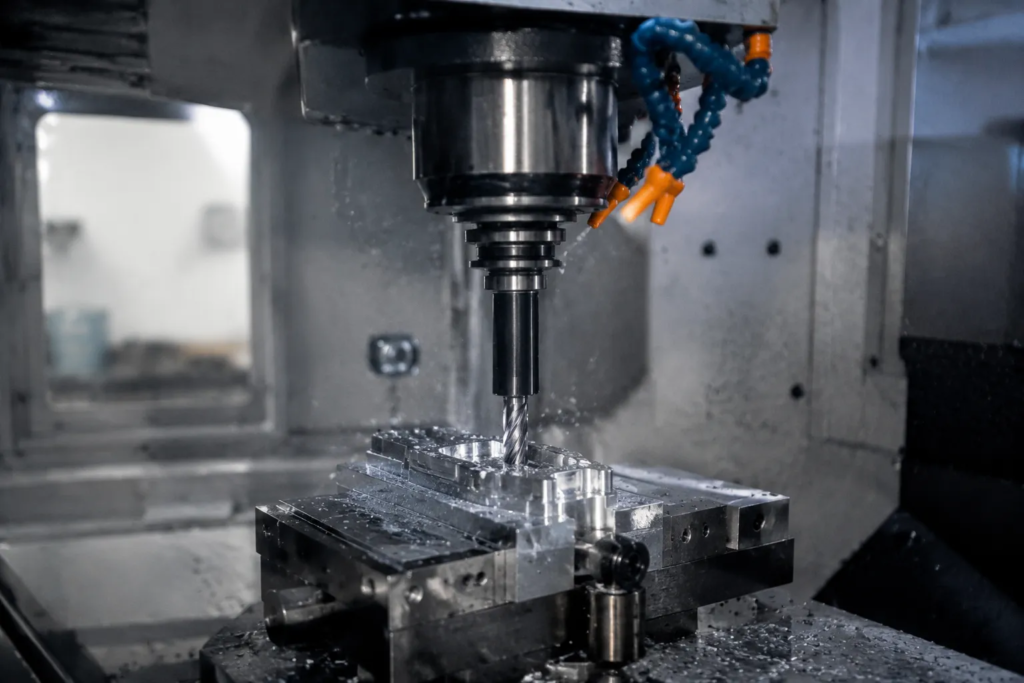
When evaluating 17-4 stainless properties, understanding how this material handles on the shop floor is critical. The 17-4 machinability rating is generally good, but you need the right approach depending on the alloy’s specific heat-treated state.
Machining Condition A vs. Heat-Treated
- Condition A (Solution Annealed): Machining in this state can feel a bit gummy, similar to cutting standard 304 stainless steel. Because this precipitation hardening stainless steel undergoes extremely minimal dimensional changes during the aging process, we typically machine parts to their near-net shape in Condition A. Afterward, we heat treat the part to condition H900 to lock in maximum strength without warping the finished dimensions.
- Heat-Treated Conditions: Machining in condition H1150 is actually preferred by many machinists. At this softer overaged state, the chips break much cleaner, tool life increases, and you get an excellent surface finish.
Welding 17-4 Stainless Steel
This alloy features outstanding weldability, outperforming many other high-strength structural materials.
- No Pre-heating: Unlike hardenable carbon steels, 17-4 rarely requires pre-heating before welding.
- Standard Techniques: Standard arc and resistance welding methods work perfectly.
- Post-Weld Treatment: To guarantee the weld matches the base metal’s high-strength properties, a post-weld heat treatment is necessary.
Forming and Forging Limitations
Because of its exceptionally high yield strength, cold forming 17-4 stainless is strictly limited. Mild cold working is possible, but severe bending or forming will cause the material to crack.
For extensive shaping, hot forging is the required method. We heat the material uniformly to between 2150°F and 2200°F before forging, followed by rapid cooling. If your project demands heavy forming and doesn’t require extreme corrosion resistance, exploring the common applications of carbon steel castings might offer a more flexible and cost-effective manufacturing route.
Common Applications of 17-4 Stainless Steel
I consistently recommend 17-4 PH stainless steel to clients who need a reliable balance of high strength and excellent corrosion resistance. The versatile 17-4 stainless properties make this alloy a primary choice for demanding manufacturing sectors across the United States. When you look at where Type 630 stainless steel is deployed, it is almost always in high-stress, critical environments.
Here is a breakdown of the most common applications where this material excels:
- Aerospace Components: Aircraft structures, landing gear, and high-performance fasteners rely heavily on 17-4 PH stainless steel. The aerospace industry demands materials that maintain structural integrity under extreme stress, and this alloy delivers exceptional tensile strength without adding excessive weight.
- Oil and Gas Valves and Shafts: Offshore rigs and refineries are brutal environments. I see this alloy used extensively for pump shafts, valve stems, and drilling equipment because it resists wear and holds up against corrosive petrochemicals.
- Medical Devices: Surgical instruments, orthopedic tools, and dental equipment require materials that are both incredibly strong and perfectly safe for human contact. Because it withstands repeated sterilization processes, stainless steel is the hygienic choice for medical environments.
- Food Processing and Chemical Equipment: Food mixers, conveyor systems, and chemical storage pumps face daily exposure to acidic foods or harsh cleaning agents. The durability and corrosion resistance of 17-4 stainless keep production lines running smoothly while meeting strict sanitation standards.
Frequently Asked Questions (FAQs)
Is 17-4 stainless steel magnetic?
Yes, 17-4 stainless steel is magnetic in all conditions. Because it has a martensitic crystal structure, it retains strong magnetic characteristics whether it is in the annealed state or fully hardened.
Can 17-4 PH be hardened after machining?
Absolutely. In fact, this is the standard industry practice. We typically machine the material while it is in Condition A (the softer, annealed state). Once machining is complete, a simple low-temperature heat treatment—such as bringing it to condition H900—hardens the part without causing significant distortion or scaling.
What does the “PH” stand for in 17-4 PH?
The “PH” simply stands for Precipitation Hardening. This refers to the specific thermal process used to increase the material’s yield strength and overall hardness by causing particles of copper to precipitate within the steel’s matrix.
How does heat treatment affect 17-4 stainless properties?
Heat treatment is the key to unlocking the full potential of this alloy. Adjusting the temperature drastically alters the 17-4 mechanical properties, allowing you to balance hardness, toughness, and ductility based on your project’s specific needs. Lower temperatures (like 900°F) maximize strength, while higher temperatures (like 1150°F) increase toughness and machinability. If you are curious about how high temperatures generally impact metal structures, exploring the thermal tales of steel and understanding its heat-resistant properties offers great insight into these thermal dynamics.
 English
  German