

Milling machining guide explaining CNC milling types machine parts and process steps for precise metal and plastic shaping
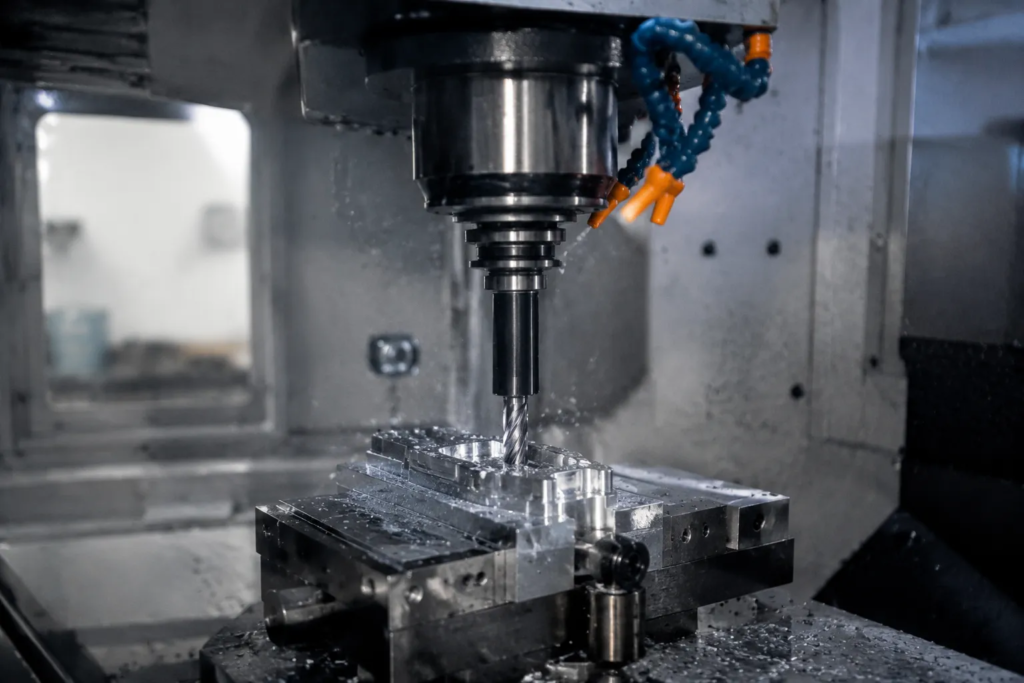
What Is Milling Machining?
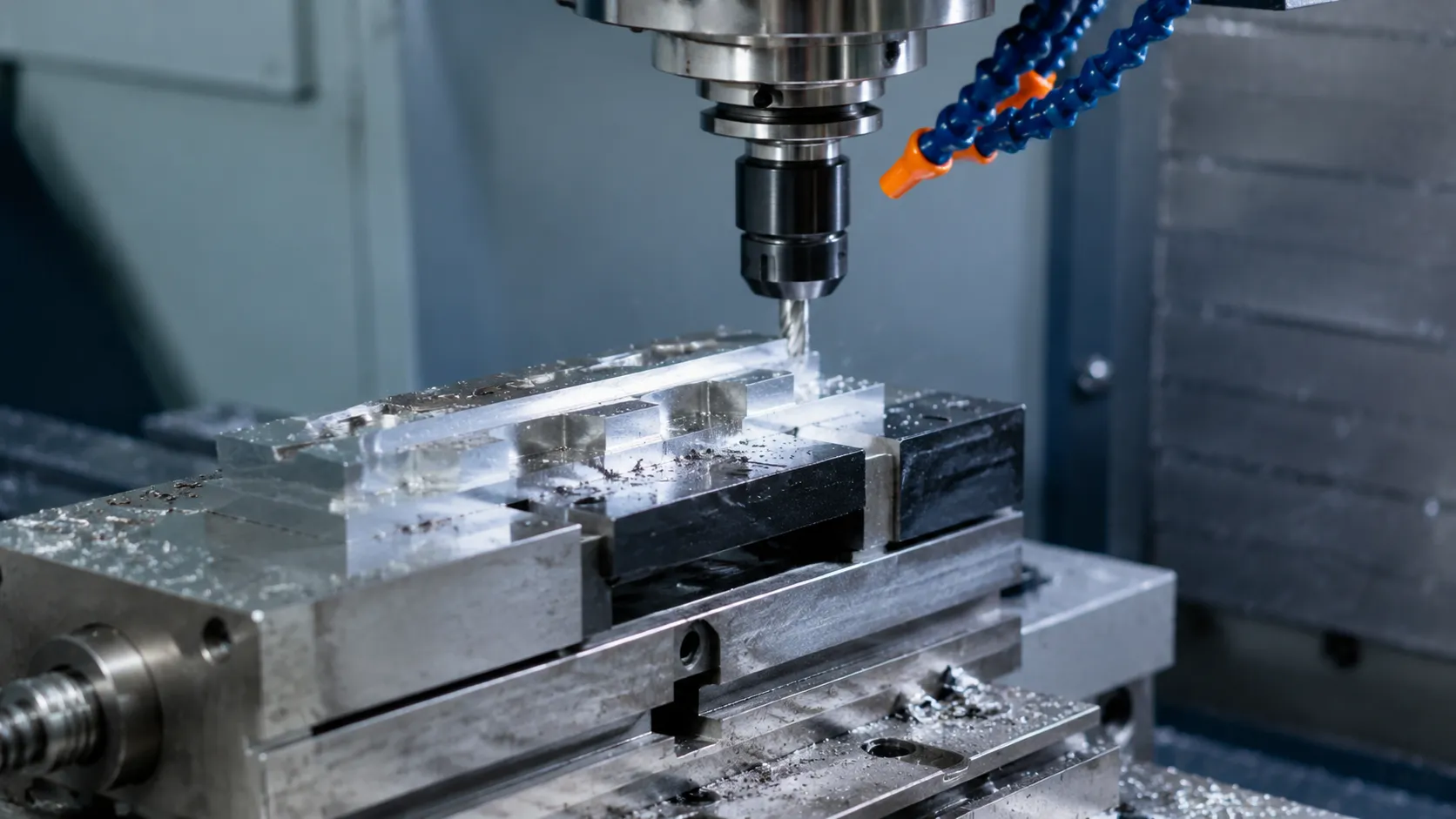
Milling machining is a core subtractive manufacturing process where rotary cutters remove material from a stationary workpiece. Unlike other manufacturing methods, the cutting tool rotates at high speeds while the raw material block (blank) is secured on a machine bed, moving along multiple axes to shape the final custom metal parts.
How Milling Differs from Turning, Drilling, and Grinding
To understand industrial milling, it helps to look at how it compares to other standard machining processes:
- Milling vs. Turning: In a milling machine service, the tool rotates while the part stays fixed. In turning (lathe machining), the workpiece rotates while a stationary cutting tool shapes it. Turning is ideal for cylindrical parts, whereas milling handles flat, asymmetrical, and complex geometries.
- Milling vs. Drilling: Drilling moves a tool along a single axis to create straight, cylindrical holes. Milling tools move across multiple axes to cut paths, pockets, slots, and complex contours.
- Milling vs. Grinding: Grinding uses an abrasive wheel for light material removal and ultra-fine surface finishing. Milling handles heavy material removal (roughing) and final shaping (finishing) in one workflow.
Why Milling is Essential in Modern Manufacturing
Modern manufacturing relies heavily on CNC milling machining to scale production and maintain strict quality standards. It serves as the backbone of modern machine shops for three primary reasons:
| Feature | Production Advantage |
|---|---|
| Design Freedom | Replaces complex multi-step fabrication by cutting intricate shapes from a single solid block. |
| Material Versatility | Efficiently processes everything from soft plastics and aluminum to high-strength titanium and stainless steel. |
| Automation & Speed | CNC-guided toolpaths ensure fast cycle times, massive material removal rates, and exact part-to-part repeatability. |
From rapid prototypes to heavy-duty industrial components, our precision milling service delivers the exact geometries, tight tolerances, and clean surface finishes your engineering designs require.
Why Choose Milling Machining for Your Parts?
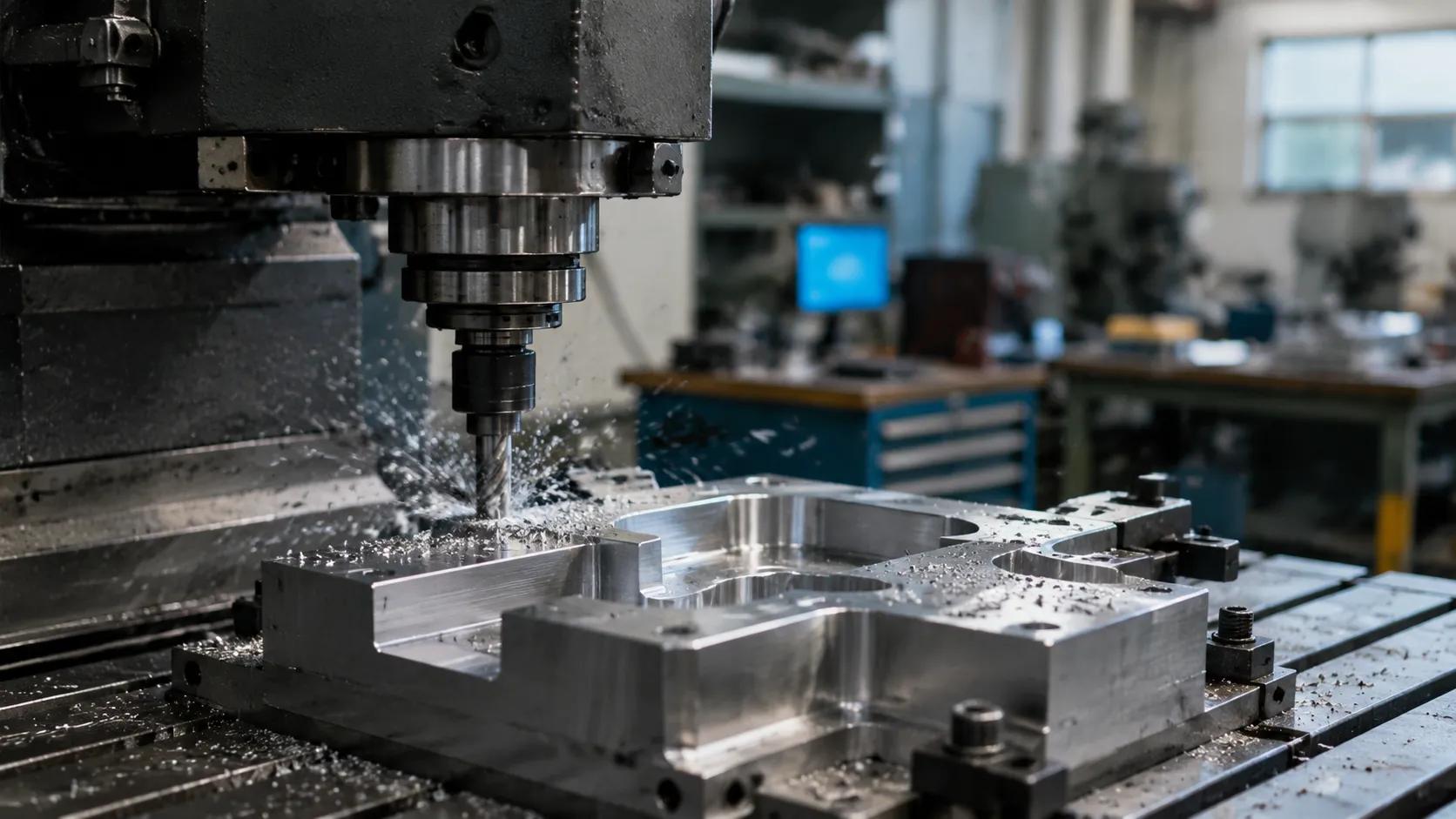
When you need high-precision components that meet exact specifications, milling machining is the clear choice. We utilize advanced subtractive manufacturing techniques to cut away raw material, delivering custom metal parts with exceptional accuracy and speed. Whether you are developing an initial prototype or launching a full production run, our precision milling service ensures your designs are executed flawlessly.
Key Advantages of CNC Milling Machining
- High Dimensional Accuracy: Achieve incredibly tight tolerances and flawless repeatability across every single batch.
- Complex Geometries: Easily produce intricate shapes, deep pockets, and complex contours that other manufacturing methods simply cannot handle.
- Superior Surface Finishes: Gain smooth, production-ready surface finishes right off the machine, reducing the need for extensive post-processing.
- Versatile Production Scale: Efficiently handles everything from single-unit rapid prototypes to high-volume manufacturing runs.
Performance Overview
| Feature | Capabilities & Benefits | Target Applications |
|---|---|---|
| Tolerances | Tight, precise dimensional control | Aerospace, Medical, Automotive |
| Geometry | 3-axis to complex 5-axis shapes | Impellers, Castings, Custom Brackets |
| Surface Finish | Smooth, low Ra roughness options | Sealed surfaces, Visual components |
| Scalability | Low-volume prototypes to mass production | Turnkey industrial supply chains |
Milling Machining Capabilities
We utilize advanced CNC milling machining to handle everything from simple flat surfaces to highly complex aerospace geometries. Our machine shop delivers precision milling services that match your exact design specifications.
Multi-Axis CNC Milling
Different parts require different approaches to multi-axis movement. We match your part geometry to the right setup to optimize production costs and accuracy.
| Capability | Axis Movement | Best For |
|---|---|---|
| 3-Axis Milling | X, Y, and Z axes | Cost-effective production of flat parts, simple brackets, and shallow slots. |
| 4-Axis Milling | X, Y, Z, plus rotation around X (A-axis) | Machining on curved surfaces, continuous cutting, and parts requiring indexing without multiple setups. |
| 5-Axis Milling | X, Y, Z, plus two rotation axes (A/B/C) | Ultra-precise, complex aerospace and medical components. Eliminates multi-fixture setups. |
Core Milling Operations
Our metal milling service covers a full suite of cutting operations to achieve the exact form your project demands.
- Face Milling: Used to machine flat surfaces perpendicular to the cutter axis. We use this to achieve perfectly flat datums and exceptionally smooth surface finishes.
- End Milling: Utilizes peripheral and end teeth to cut deep slots, vertical walls, and intricate profiles into custom metal parts.
- Slot & Pocket Milling: Closed or open cavities machined directly into the blank material. Essential for weight-reduction pockets and internal mechanical clearances.
- Profile & Contour Milling: Multi-axis continuous path cutting used to recreate organic, curved shapes and complex industrial tooling geometries.
Hole Making and Finishing Details
We do not just shape the exterior; we handle all the critical internal features and finishing touches on your precision machined parts.
- Drilling & Tapping: Fast, precise hole creation followed by traditional internal thread cutting.
- Thread Milling: An advanced method using a helical path to cut highly accurate, clean internal or external threads, especially in hard metals.
- Chamfering & Surface Finishing: Removing sharp edges, adding bevels, and executing final tool passes to meet your exact surface roughness requirements before inspection.
Materials for Milling Machining
Choosing the right metal dictates how your part performs under stress and how efficiently we can machine it. In our metal milling service, we work with a wide range of stock to balance structural demands with cost-effective production.
Below is our breakdown of the primary materials we use for milling machining, categorized by their application and machining characteristics.
| Material Group | Common Alloys | Part Function & Best Uses | Machining Difficulty |
|---|---|---|---|
| Aluminum Alloys | 6061, 7075 | Aerospace skins, automotive brackets, lightweight enclosures | Low (Excellent chip clearance, fast cycle times) |
| Stainless Steel | 304, 316 | Medical devices, food processing equipment, marine hardware | Medium (Work-hardens easily, requires rigid setups) |
| Duplex Stainless Steel | 2205, 2507 | Chemical pumps, valves, heavy-duty marine fittings | High (High strength, abrasive on cutting tools) |
| Titanium Alloys | Ti-6Al-4V | Aerospace structural parts, medical implants | High (Low thermal conductivity, requires specialized cooling) |
| Carbon & Alloy Steel | 1018, 4140 | Industrial gears, shafts, high-strength fastening components | Low to Medium (Highly predictable, great for heat-treating) |
| Superalloys | Inconel, Hastelloy | Turbine blades, exhaust systems, extreme-temp applications | Very High (Extreme toughness, requires premium tooling) |
Material Selection Guidance
When selecting a material for your precision machined parts, we look at three core factors to keep your project on budget and on schedule:
- Mechanical Stress & Environment: For corrosive marine or chemical environments, we step up to duplex stainless steel. If strength-to-weight ratio is your absolute priority, titanium or 7075 aluminum is the standard.
- Thermal Requirements: High-temperature environments like aerospace exhaust systems require superalloys to prevent deformation, while general industrial machinery handles well with treated alloy steels.
- Machining Cost Impact: Harder metals take longer to cut and wear down tools faster. Choosing aluminum over stainless steel where permissible drastically lowers your overall milling machining costs due to faster cycle times.
The Step-by-Step Milling Machining Process
We don’t believe in guesswork. To deliver precision machined parts that match your exact prints, our team follows a strict, repeatable machining process. Here is how we take your project from a digital file to a finished metal component.
1. CAD/CAM Preparation
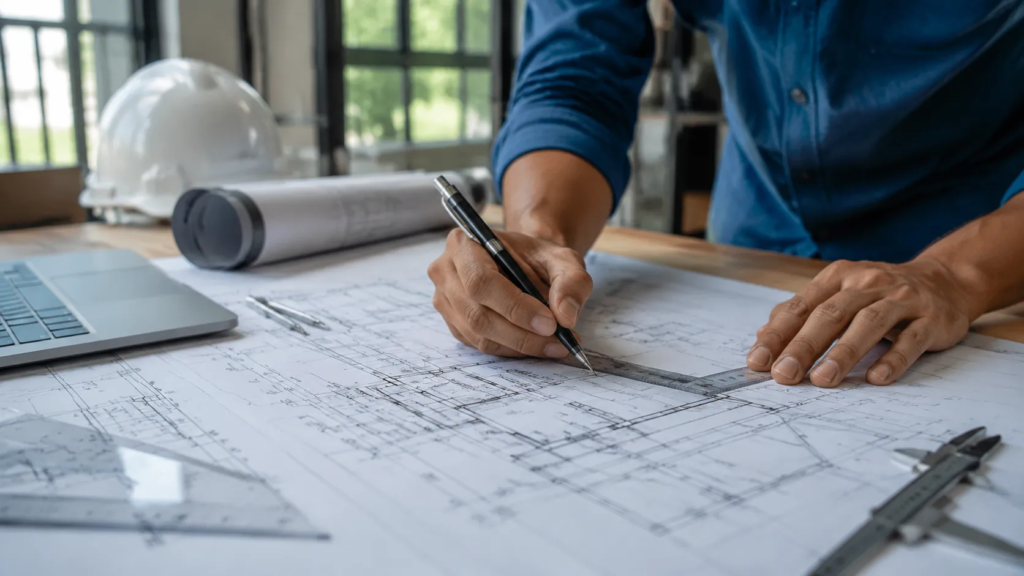
Every job starts in our engineering department. We take your 3D models and 2D blueprints, analyze the geometries, and use advanced CAM software to map out the toolpaths. This step converts your design into G-code—the exact language our CNC milling machinery reads.
2. Material Selection and Blank Preparation
We source high-quality raw stock based on your mechanical requirements. Whether your part calls for aerospace-grade titanium, 6061-aluminum, or rugged stainless steel, we cut the raw metal into precise blocks (blanks) to minimize waste and speed up production cycles.
3. Workholding and Fixture Setup
A part that moves during machining is a scrap part. We design and build custom fixtures, hydraulic vices, or modular workholding setups. Secure clamping guarantees zero deflection, which is critical for maintaining tight dimensional tolerances.
4. Tool Selection
We match the material to the right cutting tools. Our tool changers are loaded with high-performance end mills, face mills, drills, and thread mills. We use solid carbide and coated tooling specifically optimized for the hardness of your chosen metal.
5. Cutting Path Planning
Before running the machine, our programmers set the optimal cutting parameters. We balance three critical variables to ensure efficiency and tool longevity: Spindle Speed: How fast the tool rotates (RPM). Feed Rate: How fast the material moves into the tool (IPM). Path Optimization: Choosing high-efficiency toolpaths to reduce heat build-up.
6. Rough Milling and Finish Milling
Machining happens in two distinct phases: Roughing: We aggressively remove the bulk of the excess metal as fast as possible to get close to the final shape. Finishing: We swap to high-precision finishing tools, running at higher speeds and lower feeds, to hit your exact tolerances and create a smooth surface finish.
7. Deburring and Post-Processing
Freshly machined parts often have sharp edges or tiny hanging fragments called burrs. We use automated tumbling, manual deburring tools, or bead blasting to smooth out every edge so the parts are safe to handle and ready for assembly.
8. Inspection and Validation
No part leaves our shop floor without proof of quality. Our quality control team uses calibrated micrometers, thread gauges, and coordinate measuring machines (CMM) to verify that every final dimension perfectly aligns with your original blueprint.
Precision and Quality Control in CNC Milling Machining
We don’t just cut metal; we lock in perfection. When you trust us with your custom machining parts, you are getting components backed by a strict ISO9001 quality management system. We design our entire machining process around eliminating errors before they happen.
Dimensional Accuracy and Surface Roughness Control
Our precision milling service hits tight tolerances reliably, production run after production run. We monitor tool wear and thermal expansion in real time to keep your parts within spec.
- Linear Tolerances: Routinely achieving ±0.005 mm (±0.0002 inches) for critical features.
- Geometric Tolerances: Strict control over flatness, parallelism, and concentricity.
- Surface Roughness Control: We achieve finishes down to 0.4 μm Ra (16 micro-inches) straight off the machine, minimizing the need for secondary hand polishing.
Advanced Inspection and Testing
To guarantee every precision machined part matches your print, our inspection lab utilizes advanced metrology and non-destructive testing (NDT):
| Test Type | Equipment / Method | What It Guarantees |
|---|---|---|
| Dimensional Inspection | Coordinate Measuring Machines (CMM) | Verifies complex 3D geometries and exact hole locations against your CAD model. |
| Internal Integrity | X-ray Testing | Detects subsurface voids or porosity, especially critical for machined casting parts. |
| Surface Flaw Detection | Magnetic Particle Inspection | Identifies microscopic surface cracks in ferromagnetic materials. |
| Hardness Testing | Rockwell / Brinell Testers | Confirms the material meets your exact tensile strength and durability specs. |
| Material Testing | Spectrometric Analysis | Validates chemical composition so you know you are getting the exact alloy requested. |
From raw material validation to final CMM verification, our quality control ensures your metal milling service order arrives ready for assembly.
Industrial Milling Machining Applications
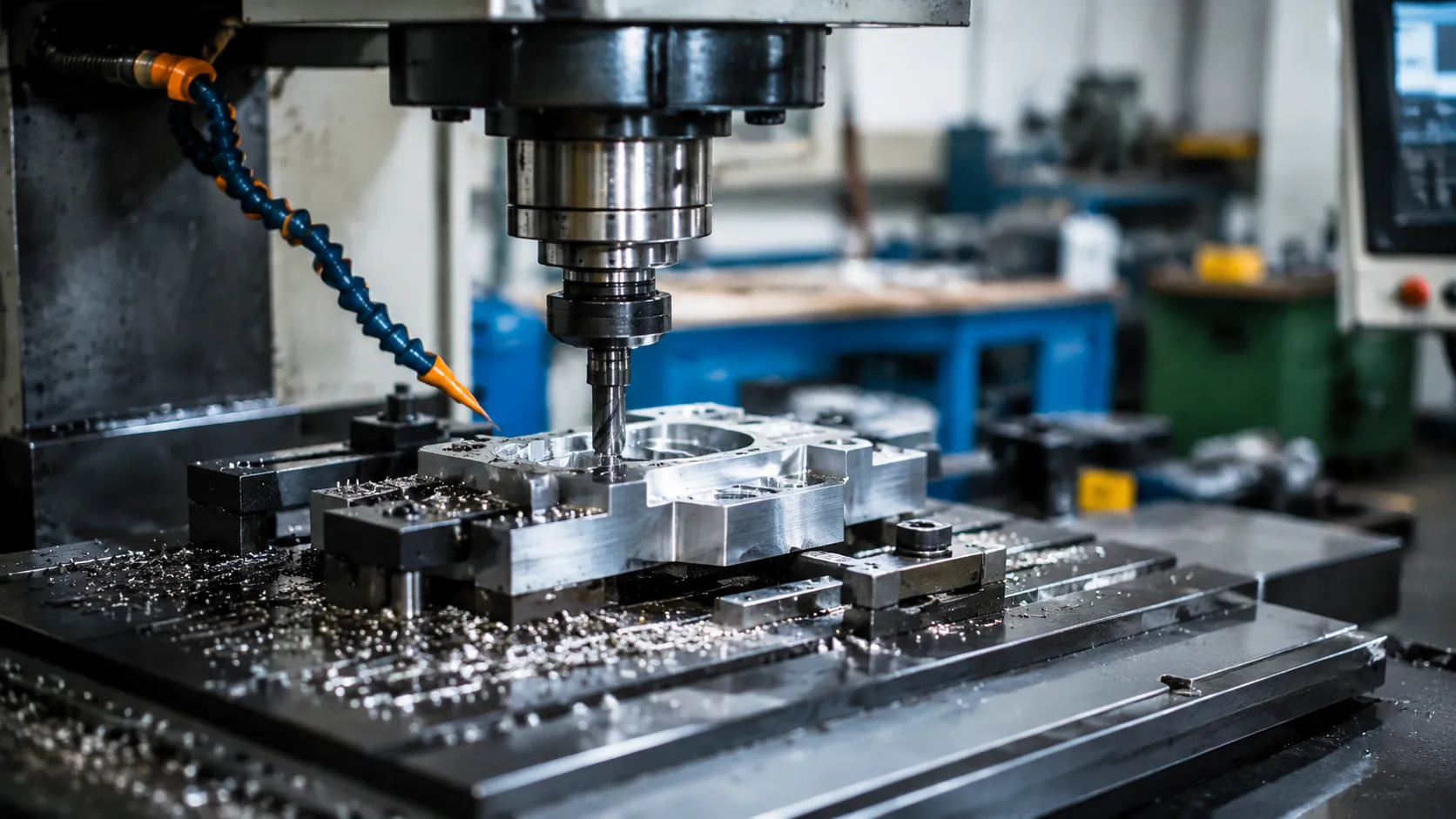
We deliver precision machined parts across a wide range of demanding industries. Our high-performance milling machining capabilities ensure that every component meets strict sector-specific standards for reliability, safety, and performance.
Aerospace Components
Aerospace manufacturing demands zero-defect production. We utilize advanced CNC milling machining to produce lightweight, high-strength structural components, engine brackets, and instrumentation housings that withstand extreme environments.
Medical Equipment Parts
Medical devices require biocompatibility and ultra-precise tolerances. Our precision milling service fabricates critical components for surgical instruments, diagnostic equipment, and implantable devices with flawless surface finishes.
Automotive Precision Parts
From high-performance prototypes to custom production runs, we machine critical automotive components. Engine blocks and cylinder heads Suspension components Custom valve bodies and housings
Marine Hardware
Marine environments demand exceptional corrosion resistance and durability. We mill robust hardware, propeller components, and custom fittings from marine-grade stainless steel and specialized alloys to prevent premature failure at sea.
Pump, Valve, and Fitting Components
Fluid control systems rely on perfectly sealed joints and smooth internal geometries. Our metal milling service ensures tight tolerances on valve bodies, impellers, and custom manifolds to prevent leaks and maintain system pressure.
Food Machinery Parts
Food processing requires hygienic, easy-to-clean surfaces. We machine food-grade stainless steel components, gears, and filling nozzles that comply with strict sanitation and regulatory guidelines.
Hardware and Lock Components
Security and consumer hardware require both high durability and aesthetic appeal. We produce complex internal lock mechanisms, heavy-duty hinges, and architectural hardware with excellent repeatability.
Custom Industrial Machinery Parts
Every factory has unique equipment needs. We provide tailored industrial milling solutions for one-off replacement parts, custom automation components, and specialized tooling designed to keep your production lines moving.
| Industry | Common Milled Components | Primary Material Focus |
|---|---|---|
| Aerospace | Brackets, housings, spars | Titanium, Aluminum alloys |
| Medical | Surgical tools, implants | Stainless steel, Titanium |
| Automotive | Manifolds, brackets, housings | Aluminum, Carbon steel |
| Industrial | Valves, pumps, custom fixtures | Alloy steel, Duplex stainless |
Refining Castings with Precision Milling Machining
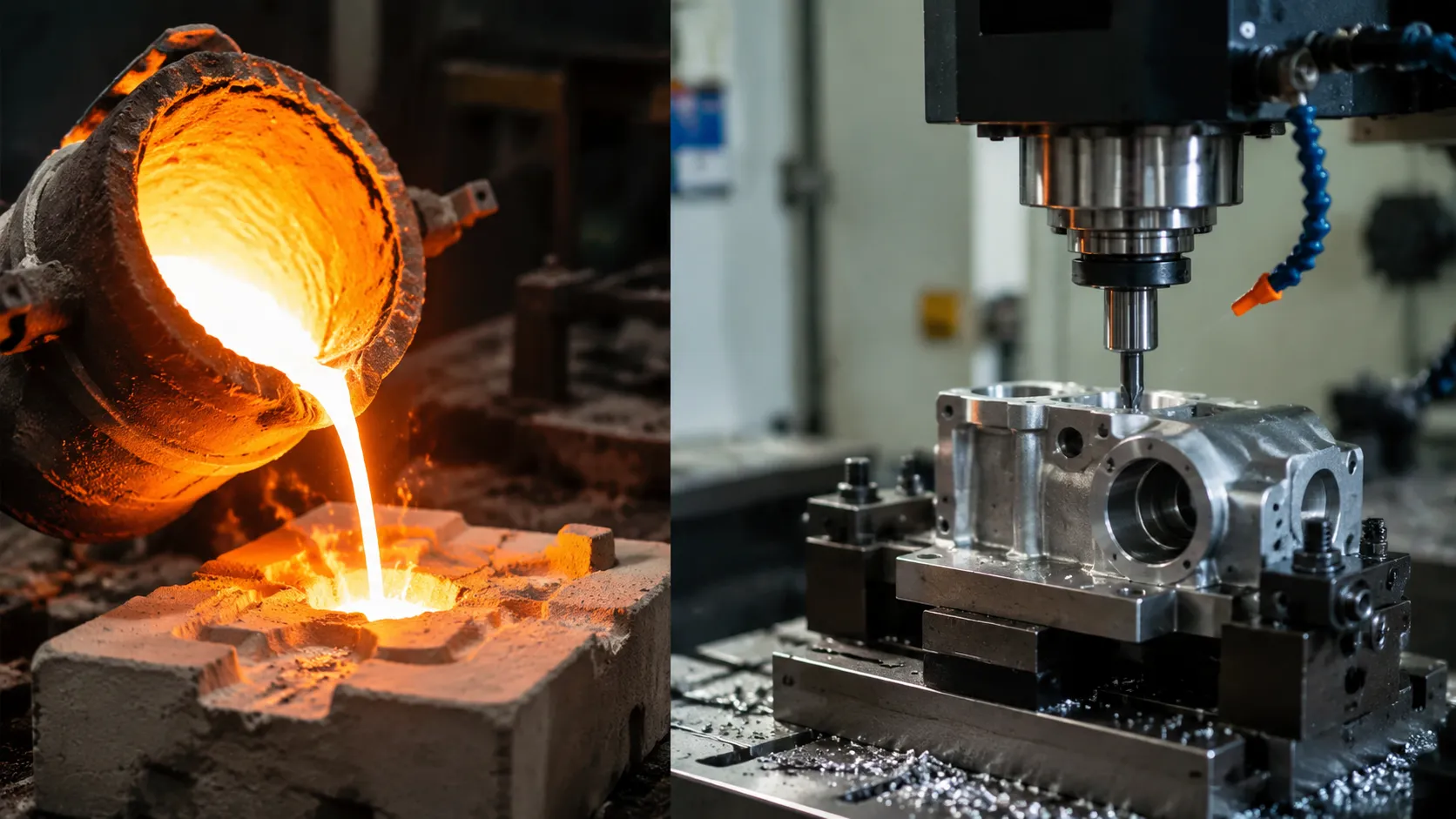
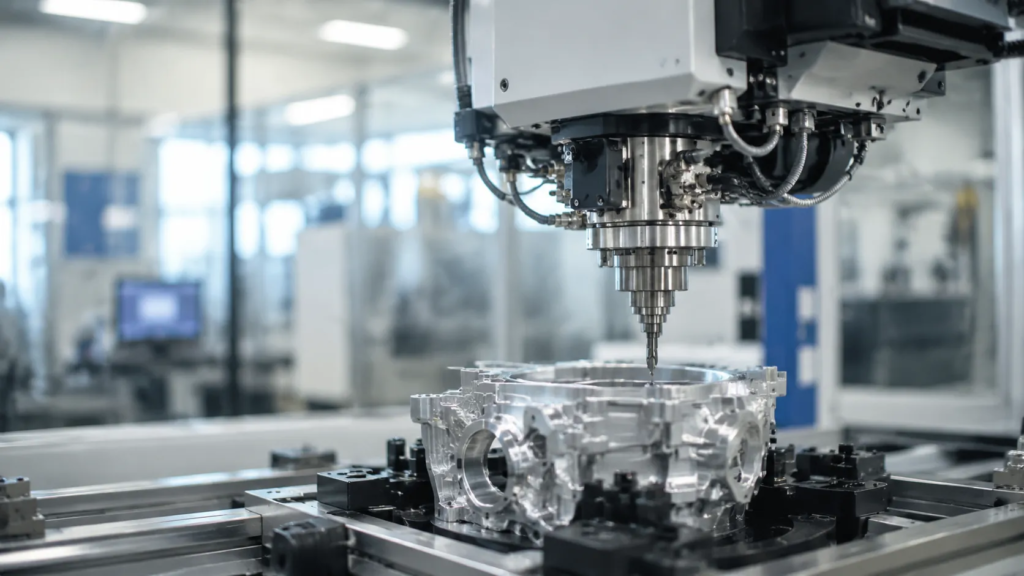
Raw investment castings often lack the tight tolerances and pristine finishes required for critical industrial applications. That is where our advanced milling machining comes in. While casting is excellent for creating near-net shapes with complex internal geometries, post-cast CNC milling bridges the gap between a raw molded piece and a high-precision field-ready component.
By combining these two processes, we eliminate the traditional headache of managing separate foundries and machine shops.
Machining Critical Surfaces, Holes, and Threads
Most cast parts feature specific functional zones that require absolute dimensional perfection. We use specialized metal milling service setups to refine these target areas without wasting time or material on the non-critical, raw surfaces of the casting.
- Mating Surfaces: We use precision face milling to flatten sealing faces, flanges, and mounting pads, ensuring leak-proof connections and perfect structural alignment.
- Precision Holes and Pockets: Cast holes are rarely perfectly round or accurately positioned. We use end milling and boring to bring internal diameters within exact print specifications.
- Tapping and Threading: We cut high-strength, clean internal and external threads directly into the cast body for reliable fastening.
Improving Dimensional Accuracy After Casting
Investment casting naturally suffers from minor shrinkage, warping, and draft angles required to pull the pattern from the mold. Our precision milling service corrects these inherent casting variations, stepping in to hit the tight tolerances that casting molds simply cannot hold on their own.
| Manufacturing Phase | Typical Tolerance Range | Surface Finish Quality | Primary Function |
|---|---|---|---|
| Raw Investment Casting | ±0.005 to ±0.020 inches | Rough / Textured | Creates the near-net shape and bulk geometry. |
| Post-Cast CNC Milling | ±0.0005 to ±0.002 inches | Smooth / Engineered | izes critical dimensions, seals, and alignment features. |
Your One-Stop Casting and Milling Machine Service
Managing separate vendors for pouring metal and cutting features introduces unnecessary logistics risks, longer lead times, and finger-pointing if a part is out of spec. We provide a seamless, single-source one-stop casting plus machining solution.
We design the initial casting blanks with the ideal amount of machining allowance (extra stock material) specifically optimized for our industrial milling centers. Because our team handles the entire lifecycle—from the initial melt to the final pass of the milling tool—we guarantee perfectly aligned setups, reduced material waste, and flawless machined casting parts delivered straight to your assembly line.
Why Choose PrecisionVast for Your Milling Machining?
When you partner with us, you cut out the middleman. We handle your entire project under one roof, saving you time, reducing miscommunication, and keeping your costs down. From raw material to final inspection, we maintain strict control over every single step of the process.
Our Core Manufacturing Capabilities
Here is a quick look at how we streamline your production:
| Feature | What We Deliver | Your Benefit |
|---|---|---|
| Factory-Direct Production | Direct access to our advanced CNC facility. | Lower costs and transparent timelines. |
| One-Stop Shop | Integrated casting, milling machining, and inspection. | Faster lead times and single-source accountability. |
| Problem-Solving Expertise | Proven experience with complex geometries and “problem parts.” | Less risk of failed runs or out-of-spec components. |
| Rapid Technical Response | Engineering feedback and quotes within 8 hours. | Faster decision-making for your team. |
| Flexible Production Scales | Support for both small-batch prototypes and mass production. | Scalability as your product demand grows. |
Direct Engineering Support and Scale
We excel at handling complex parts that other machine shops turn down. If you have a challenging design, our engineers will review your prints and optimize the toolpaths to ensure flawless execution.
Whether you need a quick run of 10 prototypes to test a design or a continuous supply of 10,000 production units, our facility is equipped to scale with your business. We adapt to your scheduling and volume needs without sacrificing the quality of your finished parts.
Engineering Support and Customization
We don’t just execute blueprints; we optimize them. Our engineering team bridges the gap between your initial concept and a perfectly finished component, utilizing advanced CNC milling machining to handle complex geometries with absolute precision.
From Blueprint to Production
- DFM Feedback: We review your CAD drawings early to catch interference issues, tolerance conflicts, and features that drive up production costs unnecessarily.
- Complex Geometry Handling: Multi-axis milling machining allows us to cut undercuts, deep pockets, and compound angles without multiple complex setups.
- Scalable Support: We transition your project seamlessly from rapid prototyping runs to high-volume batch production.
One-Stop Finishing and Capabilities
We deliver completely finished, retail-ready or assembly-ready parts based on your exact requirements.
| Service Phase | Key Engineering Deliverables |
|---|---|
| Design & Prototyping | Design for Manufacturability (DFM) review, 3D model validation, rapid prototyping support. |
| Production Scaling | Custom workholding fixtures, optimized toolpath planning, high-volume batch production. |
| Surface Treatment | Anodizing, powder coating, bead blasting, passivating, and electroplating. |
Our Simple 6-Step Order Process
We make getting your custom parts straightforward. From your initial design to the final delivery, we handle every stage of the CNC milling machining process in-house to guarantee quality and speed.
From Blueprint to Delivery
Here is exactly how we take your project from a drawing to a finished reality:
| Step | Phase | What We Do | What You Get |
|---|---|---|---|
| 01 | Submit Drawings & Samples | You send over your 2D/3D CAD models (STEP, IGES, DXF) or a physical sample part. | Quick kickoff without bureaucratic delays. |
| 02 | Technical Evaluation | Our engineering team reviews your design for manufacturability (DFM) to optimize it for our metal milling service. | Design feedback to lower production costs. |
| 03 | Process Planning & Quotation | We plan the raw materials, required fixtures, and the exact machining process, then send a transparent quote. | Clear pricing with no hidden fees within 8 hours. |
| 04 | Sample Production | We run a trial batch or a single prototype to verify dimensions, fit, and surface finishes. | A physical part to test before mass production. |
| 05 | Mass Production | Once you approve the sample, we program our 3-axis milling and 5-axis milling centers for full-scale production. | High-efficiency, repeatable manufacturing. |
| 06 | Quality Inspection & Shipment | Every part undergoes strict dimensional testing before being packed securely for US domestic or international shipping. | Defect-free precision machined parts at your door. |
Why Our Process Works for You
- No Guesswork: You approve a physical sample before we start large-scale industrial milling.
- Streamlined Communication: You work directly with our engineering team to cut out middlemen.
- Fast Turnaround: We optimize the tool paths and workholding setup early to get your parts shipped faster.
Milling Machining FAQs
What is milling machining used for?
We use CNC milling machining to cut away material from a solid blank to create highly precise, custom metal parts. It is a core subtractive manufacturing process used across the US to produce complex shapes, slots, pockets, and holes for aerospace, medical, automotive, and industrial machinery components.
What materials can be milled?
Our precision milling service handles a wide variety of raw stock and machined casting parts.
| Material Category | Specific Metals We Mill |
|---|---|
| Steels | Carbon steel, alloy steel, stainless steel, duplex stainless steel |
| Light Alloys | Aluminum alloys, titanium alloys |
| Superalloys | High-temperature superalloys, nickel-based alloys |
What is the difference between 3-axis and 5-axis milling?
The main difference comes down to the degrees of freedom and part complexity: 3-Axis Milling: The cutting tool moves along the X, Y, and Z linear axes. It is ideal for everyday mechanical parts, face milling, and simple pocketing. 5-Axis Milling: The tool or the part moves along three linear axes and two rotational axes simultaneously. We use this for highly complex, organic geometries like turbine impellers or aerospace brackets, eliminating multiple setups.
Can you machine cast parts after casting?
Yes. We specialize in a one-stop casting plus machining solution. We regularly use end milling, face milling, and drilling to refine investment castings, clean up critical mating surfaces, open up tight-tolerance holes, and add precise threads to raw cast components.
What tolerances can be achieved?
Our standard industrial milling setups regularly hold linear tolerances down to ±0.005 inches (±0.127 mm). For critical features requiring a tighter precision milling service, we can achieve tolerances as close as ±0.0005 inches (±0.0127 mm) depending on the material and part geometry.
Do you support custom and small-batch orders?
We offer flexible production support tailored to US hardware and machinery builders. We handle everything from single-unit functional prototypes to small-batch custom machining parts and full-scale mass production runs.
How fast can I get a quote?
Submit your CAD drawings (STEP, IGES, or DWG formats) or physical samples through our portal. Our engineering team conducts a thorough technical evaluation and provides a complete process plan and commercial quotation within 24 hours.

 English
  German