

Precision bronze CNC machining services for custom bronze parts with tight tolerances expert alloy selection and ISO certified quality from precisionvast.
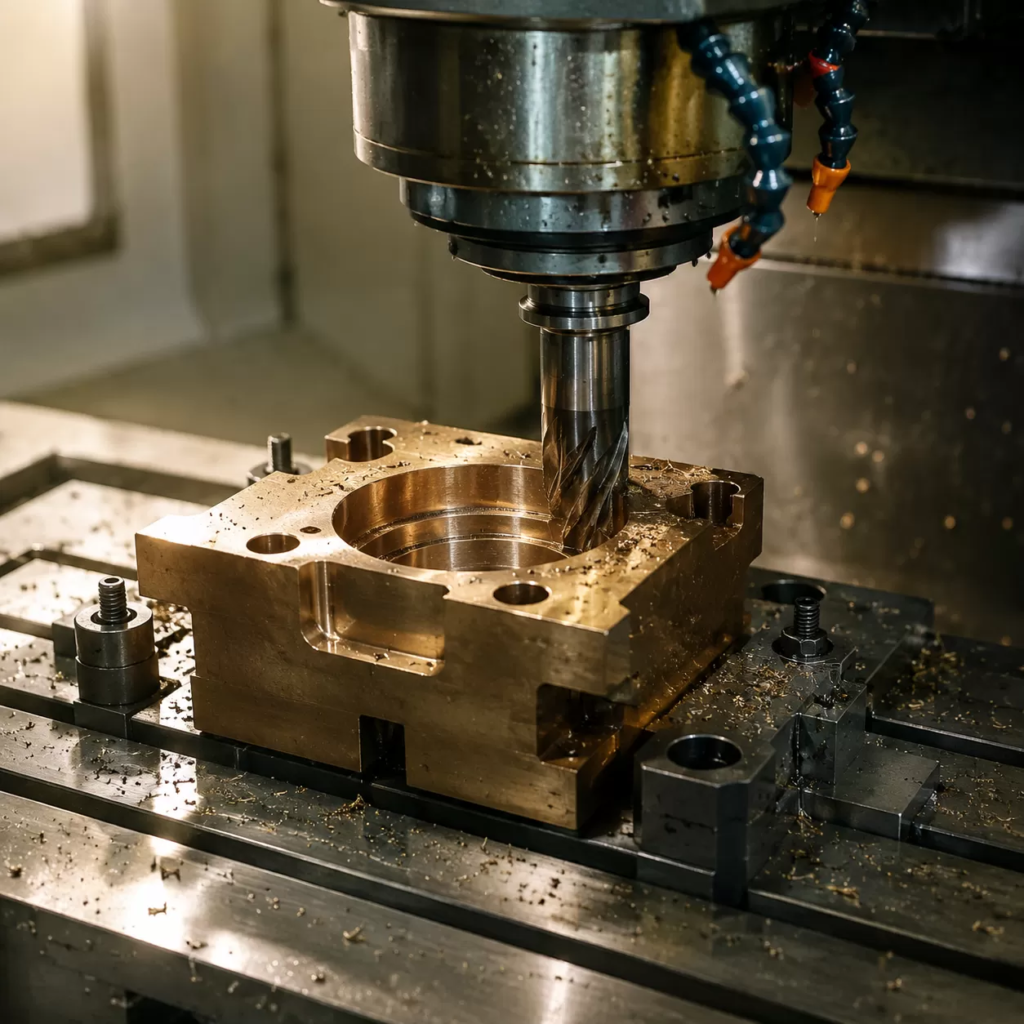
Advanced Subtractive Manufacturing Capabilities for Bronze Alloys
We deliver high-precision bronze CNC machining services tailored to meet the strict demands of US industrial manufacturing. Our facility utilizes advanced subtractive manufacturing techniques to convert raw bronze stock into complex, tight-tolerance components. By pairing state-of-the-art equipment with deep metallurgical expertise, we ensure every custom machined bronze part meets your exact specifications.
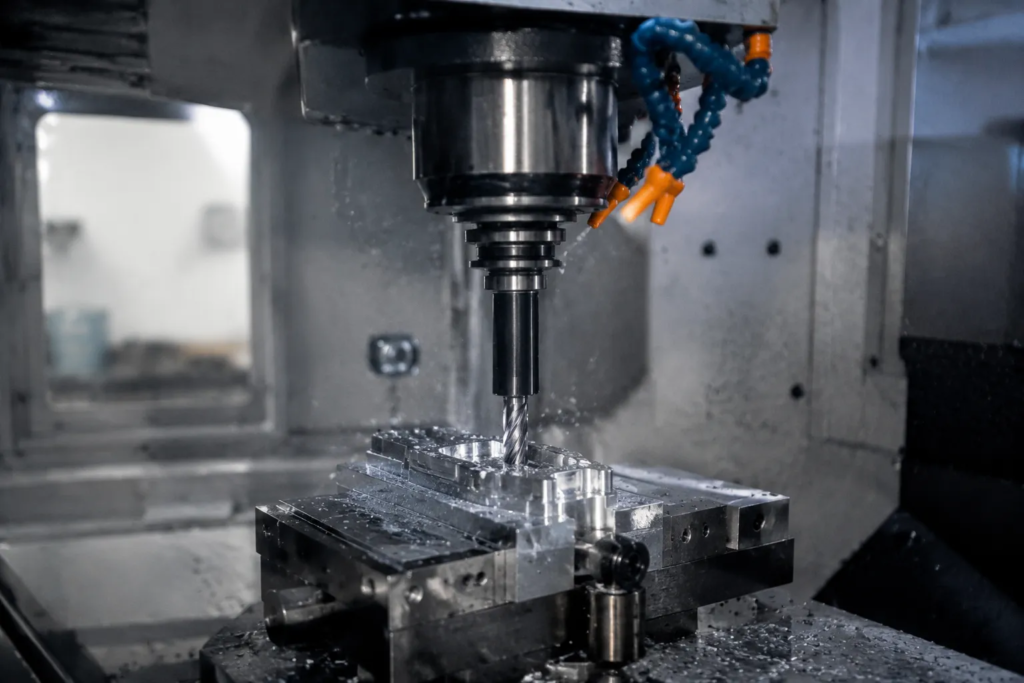
Precision CNC Milling
Our multi-axis CNC milling bronze alloys setup handles complex geometries with extreme accuracy. We program optimized tool paths to maintain strict dimensional control while preventing material deformation.
- Capabilities: 3-axis, 4-axis, and 5-axis high-speed milling.
- Best For: Complex housings, wear plates, and customized brackets.
- Advantage: High-precision bronze tolerances achieved on every production run.
Precision CNC Turning
For cylindrical components, our precision CNC turning bronze centers deliver exceptional roundness and flawless surface finishes. We manage exact cutting speeds to handle the unique elasticity of various bronze grades.
- Equipment: Live-tooling CNC lathes and Swiss turning centers.
- Applications: Anti-friction bronze bushings, shafts, and custom fasteners.
- Efficiency: Single-setup machining for reduced lead times and lower costs.
Drilling, Tapping, & Thread Milling
Machining clean threads in bronze requires specialized tool geometries to avoid binding and thread stripping. Our drilling and thread milling processes are calibrated specifically for CNC copper alloy components.
- Techniques: Form tapping and precision thread milling for high-strength internal and external threads.
- Benefit: Burr-free holes and robust threads that resist stripping under high load.
Electrical Discharge Machining (EDM)
When traditional cutting tools reach their limits on intricate designs or ultra-hard aluminum bronze grades, we utilize Wire and Sinker EDM.
- Precision: Achieves sharp internal corners and micro-features impossible with standard milling.
- Material Integrity: Stress-free cutting that eliminates the risk of thermal distortion or micro-cracking in critical parts.
Comprehensive Bronze Alloy Selection Guide
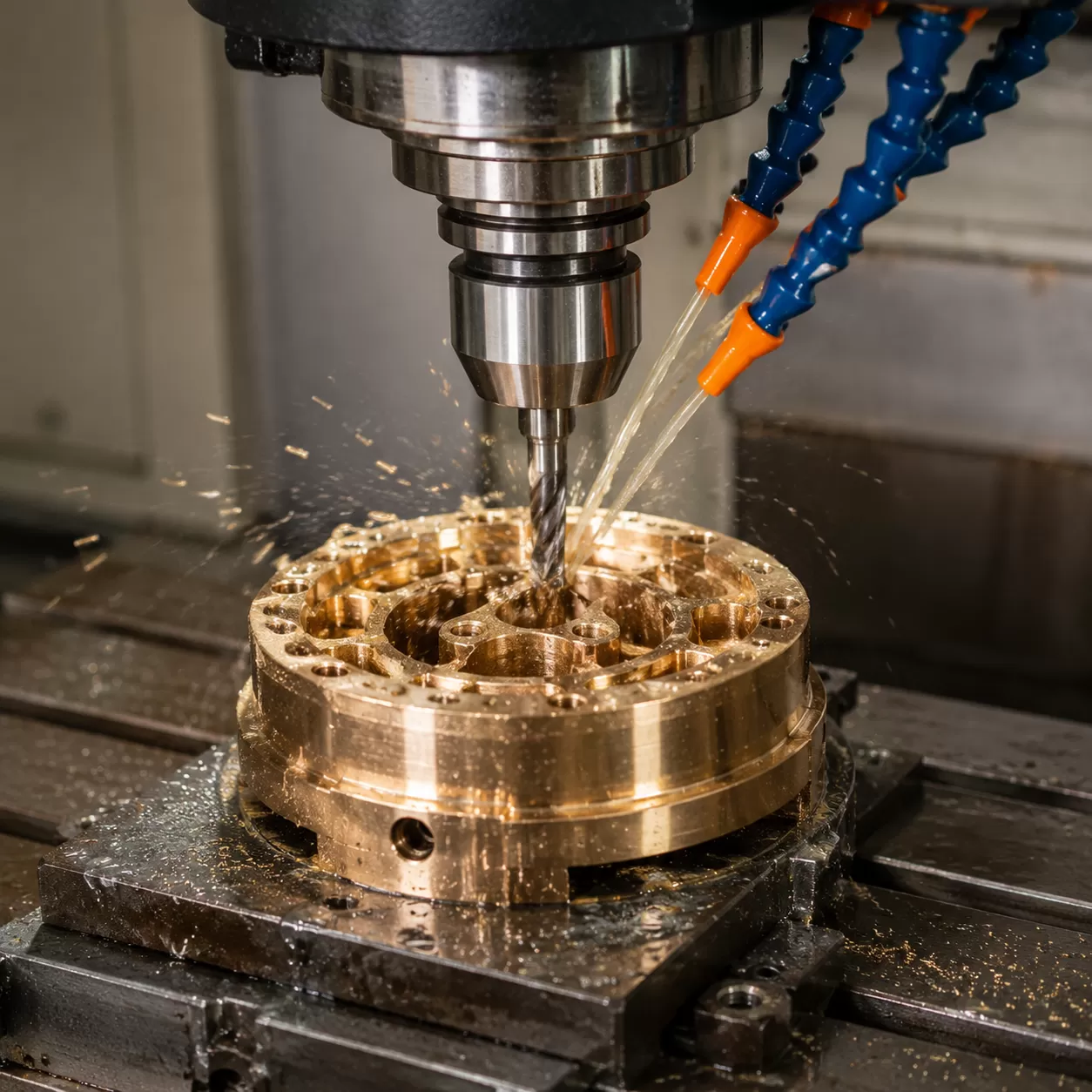
Choosing the right grade is the most critical step in bronze CNC machining. Different alloys offer distinct advantages in wear resistance, machinability, and corrosion defense. We stock and machine a versatile range of high-quality bronze materials tailored to meet your exact application demands.
| Bronze Alloy Grade | Key Features & Properties | Common Industrial Applications |
|---|---|---|
| Bearing Bronze C932 (SAE 660) | Excellent anti-friction properties, superb wear resistance, and great machinability. | Anti-friction bronze bushings, pump fixtures, thrust washers, and wear plates. |
| Aluminum Bronze C954 | High tensile strength, exceptional heavy-load carrying capacity, and superior acid resistance. | Wear-resistant bronze gears, high-stress landing gear parts, and marine fasteners. |
| Phosphor Bronze C510 | High fatigue life, excellent elasticity, outstanding corrosion resistance, and low coefficient of friction. | Electrical connectors, spring washers, sleeve bearings, and switch components. |
| Silicon Bronze | Exceptional corrosion resistance in saltwater and high thermal conductivity. | Silicon bronze marine hardware, underwater valve components, and liquid-handling equipment. |
Matching Materials to Your Performance Needs
Every project has unique operational environment demands. For high-wear environments requiring continuous mechanical rotation, bearing bronze C932 machining provides the self-lubricating reliability your assemblies need. When your application faces extreme mechanical loads or harsh chemical environments, upgrading to heavy-duty aluminum bronze C954 parts ensures components won’t deform under pressure. For precise electrical or spring applications, our phosphor bronze C510 manufacturing processes deliver the exact tensile properties required for repeatable, long-term cycling.
We analyze your mechanical blueprints during our quoting phase to help verify that your selected alloy maximizes both part longevity and production efficiency.
Engineering Solutions: Managing Stress and Heat in Bronze CNC Production
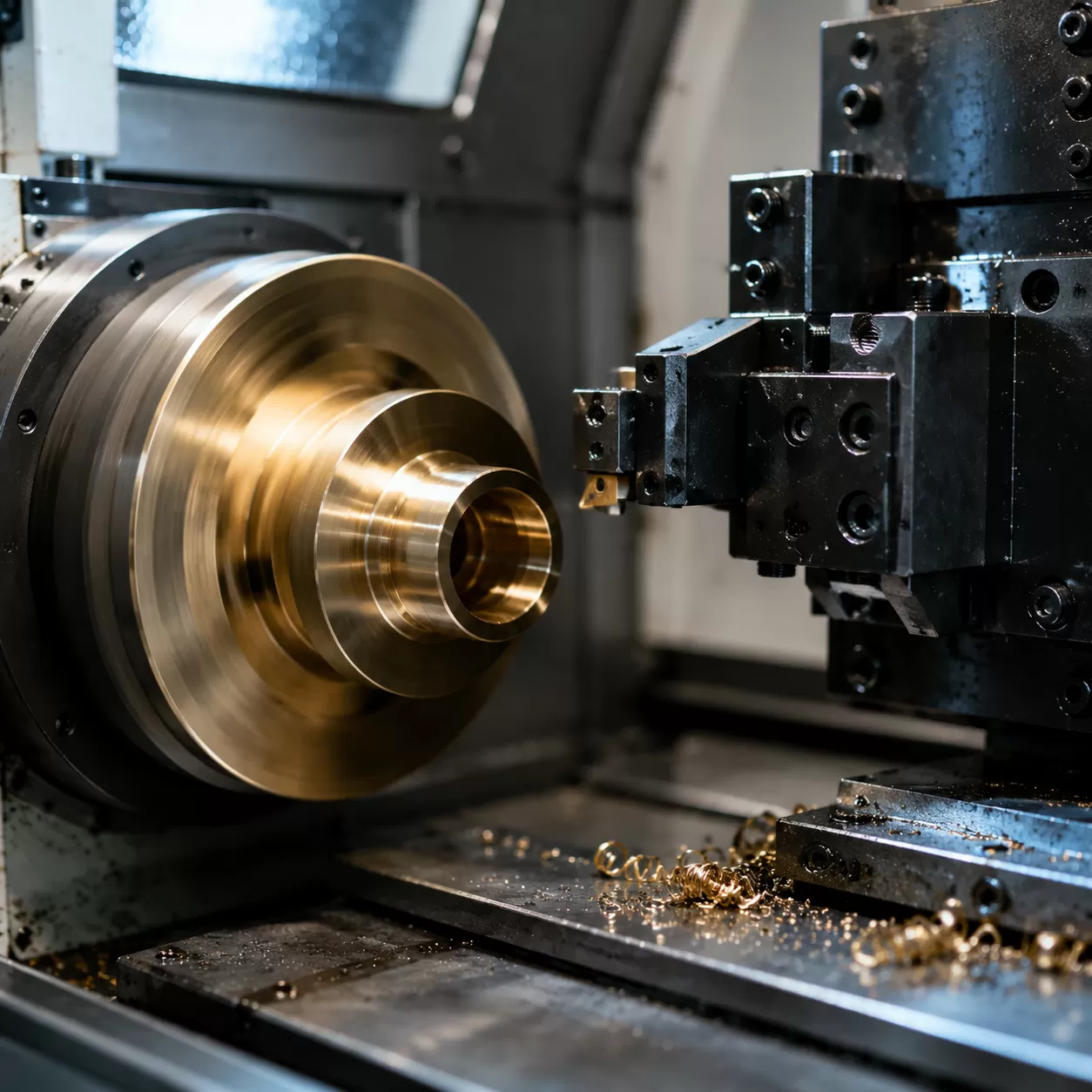
Machining bronze alloys requires strict control over thermal buildup and material stress. Because bronze absorbs and retains heat differently than ferrous metals, minimizing tool wear and preventing part distortion are critical to maintaining high-precision bronze tolerances.
Mitigating Built-Up Edge (BUE)
Bronze can be notoriously sticky during subtractive bronze manufacturing. High cutting temperatures cause the material to weld onto the tool cutting edge, creating a built-up edge (BUE) that ruins surface finishes. We combat this by utilizing specialized carbide tooling with polished flutes and optimized rake angles to ensure clean chip evacuation and prevent material adhesion.
Advanced Thermal Management
Controlling heat is essential when producing custom machined bronze parts. We utilize high-pressure flood coolant systems to rapidly dissipate thermal energy at the cutting zone. For complex geometries, synchronized through-tool cooling delivers fluids directly to the contact point, preventing hot spots that lead to micro-cracking or accelerated tool degradation.
Stress Relief & Dimensional Stability
Heavy machining releases internal stresses within bronze castings and raw stock. To guarantee long-term dimensional stability for anti-friction bronze bushings and wear-resistant bronze gears, we implement secondary stress-relief annealing. This thermal treatment stabilizes the molecular matrix before final finishing passes, ensuring the components do not warp post-machining. For parts requiring non-destructive testing after these thermal processes, we integrate specialized quality protocols like magnetic particle inspection to verify structural integrity.
Tolerances and Precision Control
Achieving tight tolerances on a bronze CNC line demands rigid machine setups and precise tool paths. We monitor tool deflection in real time to counteract the natural spring-back behavior of copper-based alloys, holding strict tolerances across high-volume production runs.
| Machining Challenge | Technical Solution | Operational Benefit |
|---|---|---|
| Built-Up Edge (BUE) | Polished carbide inserts & positive rake angles | Flawless surface finish & extended tool life |
| Thermal Distortion | High-pressure through-tool flood coolant | Consistent part geometry & no micro-cracking |
| Material Warping | Post-machining stress-relief annealing | Permanent dimensional stability in the field |
| Tool Deflection | Ultra-rigid workholding & real-time path calibration | Achievement of ultra-tight precision tolerances |
Surface Treatment and Custom Finishing Options for Bronze CNC
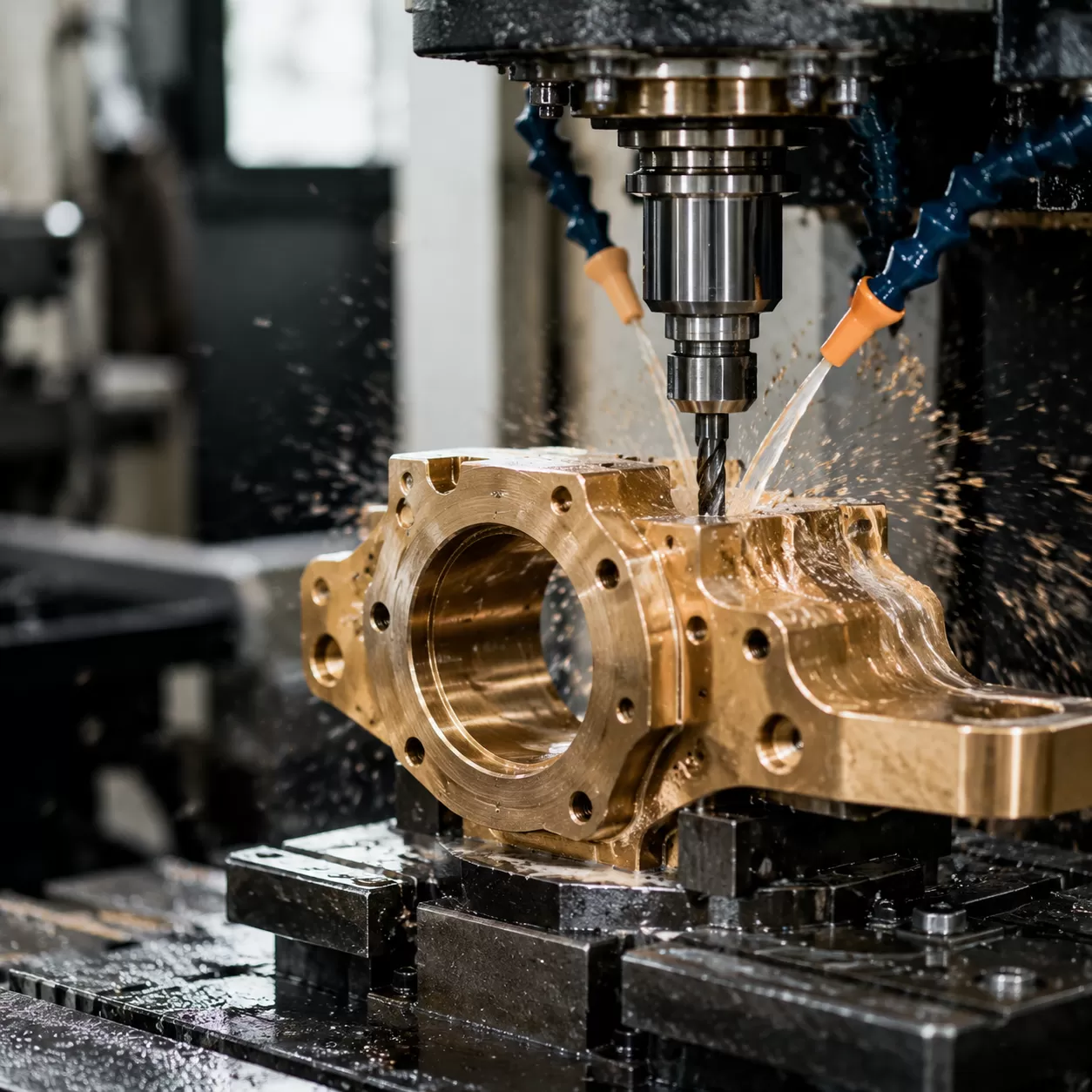
While bronze is naturally beautiful and corrosion-resistant, we offer several surface finishing treatments to enhance both its aesthetics and mechanical performance. Depending on your application—whether it’s for a decorative architectural piece or a high-wear industrial bushing—the right finish makes all the difference in bronze CNC part longevity.
Standard and Mechanical Finishes
- As-Milled Surface: This is our standard finish directly from the machine. We maintain high-precision tolerances with a visible tool path, typically reaching a surface roughness of Ra 1.6-3.2 μm.
- Bead Blasting & Sandblasting: We use fine glass beads or abrasive media to create a uniform, matte “satin” look. This effectively hides tool marks and preps the surface for further coatings.
- Precision Polishing & Buffing: For decorative hardware or mirror-finish requirements, our team performs manual and machine buffing to achieve a high-gloss, reflective surface.
Specialized Chemical and Electroplating Treatments
For components exposed to harsh environments, we provide treatments that alter the surface chemistry or add a protective layer. You can explore how these treatments compare to those used for high-temperature alloys to see which fits your specific environmental stress profile.
| Treatment Type | Primary Benefit | Common Application |
|---|---|---|
| Electroplating | Enhances hardness and prevents tarnish (Chrome/Nickel). | Luxury hardware, electrical connectors. |
| Chemical Patina | Provides an “aged” look and extra oxidation protection. | Architectural accents, custom prototypes. |
| Passivation | Removes surface contaminants to maximize corrosion resistance. | Marine hardware, fluid handling. |
| Clear Coating | Seals the bronze to prevent natural darkening/patina. | High-end interior design components. |
By selecting the right finish for your custom machined bronze parts, we ensure the component meets both your visual expectations and the rigorous demands of your industry.
High-Reliability Industrial Applications for CNC Machined Bronze
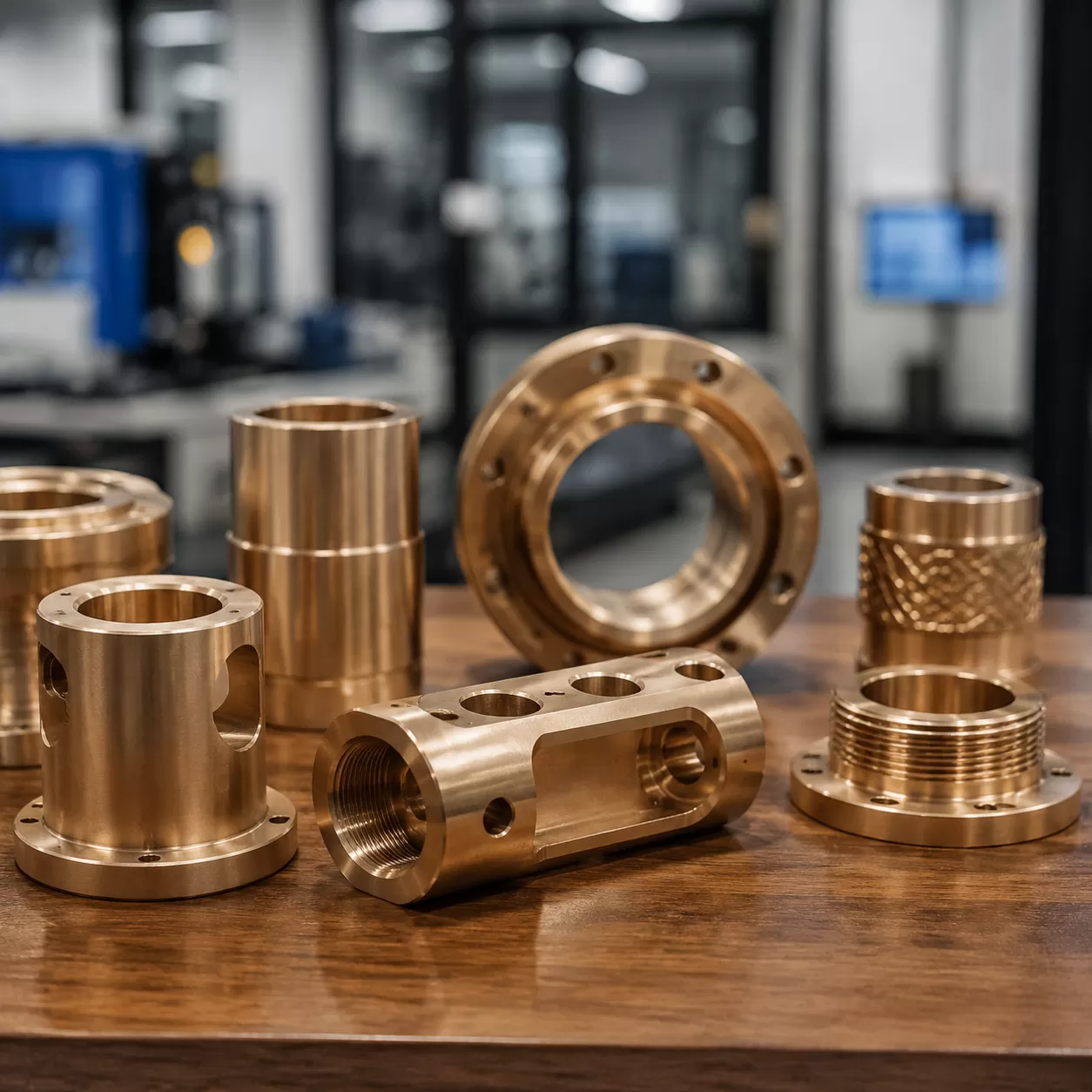
We engineer custom machined bronze parts to survive the most punishing environments across major US industrial sectors. When off-the-shelf components fail, our heavy-duty bronze CNC machining delivers the reliability your operations demand.
Aerospace & Defense
Weight, friction, and extreme temperatures require flight-critical reliability. We machine high-strength aluminum bronze C954 parts for landing gear bushings, wing flap actuators, and structural wear plates. These components maintain their mechanical integrity under massive shock loads and high-altitude temperatures. For defense applications requiring extreme durability alongside high-temperature resistance, we utilize advanced machining strategies similar to those used for processing the top 6 high-temperature alloys for maximum durability.
Marine & Shipbuilding
Saltwater is brutal on industrial metals. We leverage corrosion-resistant silicon bronze marine hardware and phosphor bronze alloys to fight galvanic corrosion and biofouling.
- Key components: Propeller shafts, underwater fasteners, pump impellers, and marine valves.
- Material benefit: Exceptional fatigue strength and zero rust in submerged, high-salinity environments.
Heavy Industrial Machinery
Industrial manufacturing relies on continuous uptime. Our CNC milling bronze alloys workflow produces rugged wear-resistant bronze gears and high-load anti-friction bronze bushings that keep heavy factory equipment running smoothly. By utilizing bearing bronze C932 machining, we create internal components that hold grease efficiently, reducing maintenance intervals for stamping presses, earthmovers, and mining rigs.
Automotive & Motorsports
From high-performance track cars to heavy-duty commercial trucks, bronze plays a vital role in powertrain and suspension systems. We provide precision CNC turning bronze services for high-wear automotive components:
- Valve guides and valve seats
- High-load thrust washers
- Turbocharger bushings
- High-torque transmission shift forks
The PrecisionVast Quality Assurance Framework for Bronze CNC Machining
We deliver high-precision bronze tolerances by backing every project with a rigid, multi-stage quality control system. From initial material receipt to final dimensional checks, our framework ensures your custom machined bronze parts match your exact prints.
Material Verification
We never guess when it comes to metallurgy. Every batch of raw material—whether it is bearing bronze C932, aluminum bronze C954, or phosphor bronze C510—undergoes strict chemical composition analysis. We cross-verify mill test reports (MTRs) and use Positive Material Identification (PMI) testing to guarantee your parts possess the exact mechanical properties, wear resistance, and anti-friction capabilities required for demanding industrial environments.
In-Process Inspection
Quality happens at the machine, not just at final inspection. Our machinists perform real-time checks throughout the subtractive bronze manufacturing process:
- First-Article Inspection (FAI): The first part off the line is fully qualified before production runs.
- Go/No-Go Gaging: Frequent manual checks for critical internal threads and bores.
- CMM Dimensional Audits: Automated coordinate measuring machines verify complex geometries and tight tolerances.
DFM (Design for Manufacturability) Consultation
The best way to control costs and ensure precision is to optimize early. Our engineering team reviews your CAD models before cutting chips. We analyze wall thicknesses, deep-pocket depths, and radiuses to streamline the CNC milling and turning processes. This upfront collaboration eliminates manufacturing defects, reduces cycle times, and guarantees a seamless production run for your custom bronze prototypes and production components.
Frequently Asked Questions About Bronze CNC Machining
What is the typical lead time for custom bronze CNC prototypes?
For most custom bronze prototypes, our standard lead time runs between 3 to 7 business days. This timeframe depends heavily on the geometry of the part and our current machine capacity. If your project requires specialized post-processing, such as precision polishing or specific chemical treatments, it may add a few days to the schedule. We focus on rapid turnaround to help you validate your designs without delaying your production timeline.
How does the cost of machining bronze compare to brass or steel?
Bronze is generally more expensive to machine than brass or standard carbon steel. The raw material cost of copper alloys is higher, and bronze is notoriously tough on cutting tools. It causes faster tool wear, which requires slower feeds and speeds during bronze CNC machining services. However, when compared to stainless steel, bronze can often be machined faster, which helps balance out the overall manufacturing costs.
Which bronze alloy grade is best suited for high-friction underwater applications?
For high-friction maritime environments, aluminum bronze C954 is the industry standard. It delivers exceptional resistance to corrosion, cavitation, and heavy wear in saltwater. For specialized marine components like impeller pumps, using the right marine-grade silicon or aluminum bronze ensures the hardware can withstand constant friction without binding or degrading.
Does bronze require protective coatings to prevent rust?
No, bronze does not rust because it contains no iron. It will, however, develop a natural oxide layer or patina over time when exposed to oxygen and moisture. While this patina actually protects the underlying metal from deeper corrosion, it does alter the appearance. If your application requires a pristine, shiny look, we can apply clear topcoats, oil finishes, or specific electroplating treatments to preserve the original surface finish.
 English
  German