

Industrial GD and T symbols charts and posters for CNC shops ASME Y145 compliant durable quick reference.

Master Blueprint Precision with Our GD&T Symbols Reference Collection
Ever had a part rejected because someone misread a blueprint? We get it. Miscommunication between the design desk and the machining bay costs time and money. That is why we engineered the precisionvast industrial-grade GD&T symbols reference collection. We designed these tools specifically for precision CNC machine shops, engineering design offices, and metrology labs to eliminate guesswork and keep everyone on the exact same page.
Why Visual Clarity Matters: Over 70% of engineering drawing misinterpretations occur in the transition between design intent and physical inspection. Our shop-floor GD&T quick reference tools provide an instant, unambiguous source of truth to stop mistakes before they happen.
No matter how your team works, we have a format that fits your workspace:
- Heavy-Duty Shop Floor Wall Posters (24″ x 36″): A high-visibility GD&T reference chart designed for dominant placement near CNC machines or inspection stations.
- Waterproof & Oil-Resistant Desk Mats: The ultimate precision engineering desk mat for designers and programmers who need quick access to symbols right at their workstations.
- Pocket-Sized Machining Cheat Sheets: A portable blueprint symbols cheat sheet that machinists and quality inspectors can carry right in their front pockets.
Comprehensive GD&T Symbols Reference Guide

Mastering the 14 core gd&t symbols is essential for eliminating guesswork on the shop floor. Our reference tools organize these critical geometric characteristics into five foundational categories, giving your team an instant visual standard for every print.
Whether you are validating a complex setup or programming a CMM, this structured layout ensures you find the exact tolerance requirements at a glance.
The 5 Foundational GD&T Categories
| Category | Geometric Characteristic | GD&T Symbols | Datum Required? | Primary Application |
|---|---|---|---|---|
| Form | Straightness, Flatness, Circularity, Cylindricity | ⏤ , ▱ , ○ , ⌭ | No | Controlling individual feature shapes without datum references. |
| Profile | Profile of a Line, Profile of a Surface | ⌒ , ⌢ | Usually | Defining boundary tolerances for complex, contoured surfaces. |
| Orientation | Angularity, Perpendicularity, Parallelism | ∠ , ⊥ , ∥ | Yes | Managing the relationship of features relative to specific datums. |
| Location | Position, Concentricity, Symmetry | ⌖ , ◎ , ⌯ | Yes | Defining the true position tolerance and axial alignments. |
| Runout | Circular Runout, Total Runout | ↗ , ⌕ | Yes | Checking surface variations during 360-degree part rotation. |
This comprehensive GD&T reference chart eliminates confusion between design intent and final inspection, keeping your production line moving without costly delays.
Advanced Feature Control Frame Guide & Blueprint Modifiers
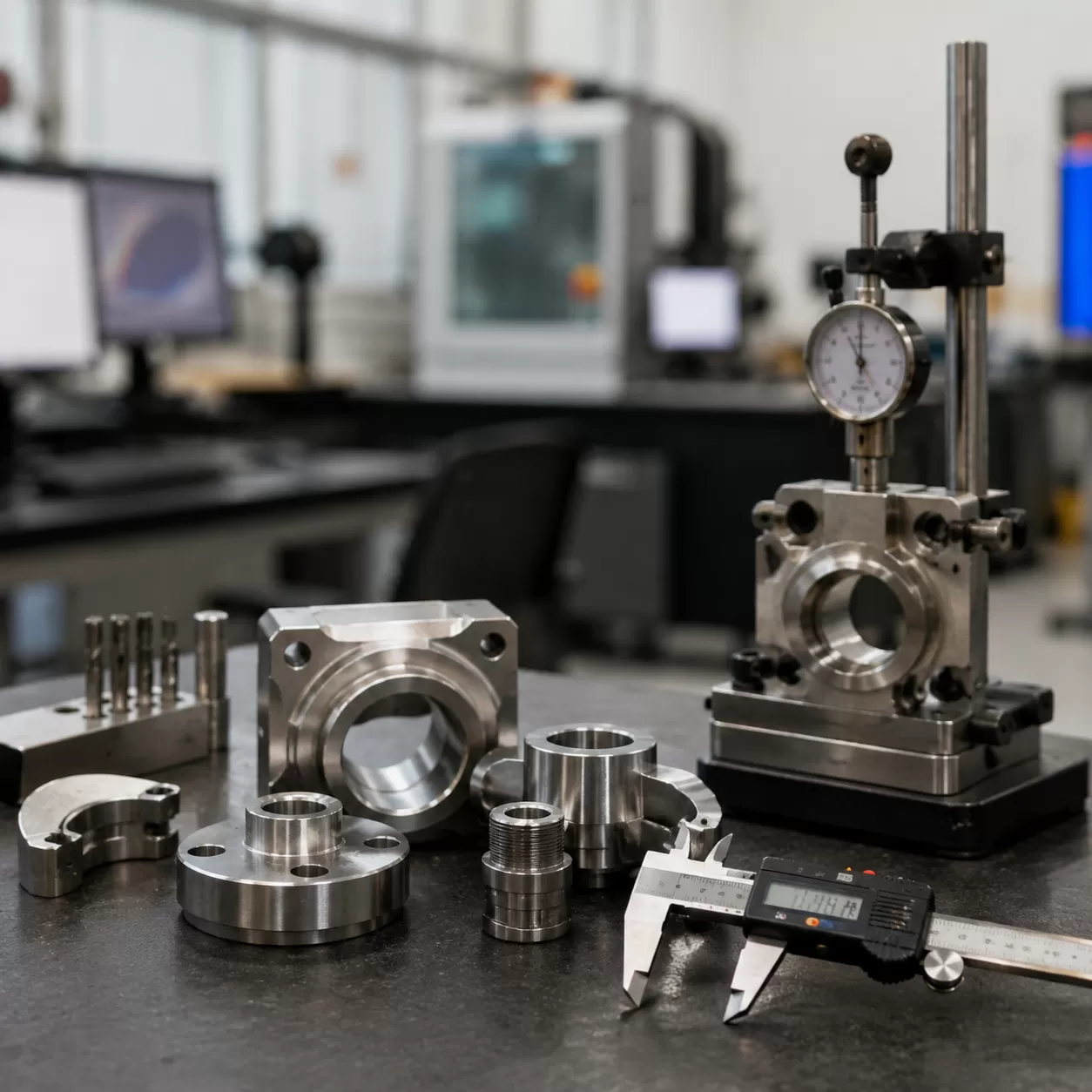
Understanding a complex print requires more than just knowing basic gd&t symbols. It demands a precise breakdown of how these callouts interact in the real world. Our reference tools feature a step-by-step visual mapping of the feature control frame guide, ensuring your team reads blueprints exactly as the designer intended.
Anatomy of a Feature Control Frame
The reference charts break down the data packet in its exact sequence:
$$text{Geometric Symbol} rightarrow text{Tolerance Value} rightarrow text{Material Modifiers} rightarrow text{Primary/Secondary/Tertiary Datums}$$
This layout ensures that operators can instantly identify the geometric characteristic, the total allowable tolerance zone, and the specific datum reference frame poster alignments needed for a proper setup.
Material Condition Modifier Symbols Decoded
Misinterpreting modifiers can lead to unnecessary scrap or failed inspections. Our shop-floor GD&T quick reference clearly defines the impact of these critical symbols:
- Maximum Material Condition (MMC – Ⓜ): Unlocks bonus tolerance as the feature size departs from its worst-case condition. This is essential for verifying mating parts without over-tolerancing the drawing.
- Least Material Condition (LMC – Ⓛ): Used when maintaining minimum wall thickness or critical structural integrity is the priority.
- Regardless of Feature Size (RFS): The default rule under ASME Y14.5 when no modifier is specified, requiring the tolerance to remain fixed regardless of the actual part size.
Specialized System Annotations
Modern manufacturing demands highly specialized callouts. Our tools include an explicit material condition modifier symbols and system annotation section to decode advanced print requirements instantly:
| Symbol | Meaning | Practical Application |
|---|---|---|
| Ⓟ | Projected Tolerance Zone | Prevents interference in mating fasteners and pin holes. |
| Ⓣ | Tangent Plane | Controls the high points of a surface rather than the entire form. |
| Ⓕ | Free State | Applies to non-rigid parts prone to distortion after machining. |
| CF | Continuous Feature | Treats multiple interrupted features as a single geometric whole. |
Having these advanced rules readily available prevents assumptions on the shop floor, keeping your CNC production lines and metrology labs perfectly aligned.
Premium Material Specifications & Shop-Floor Durability
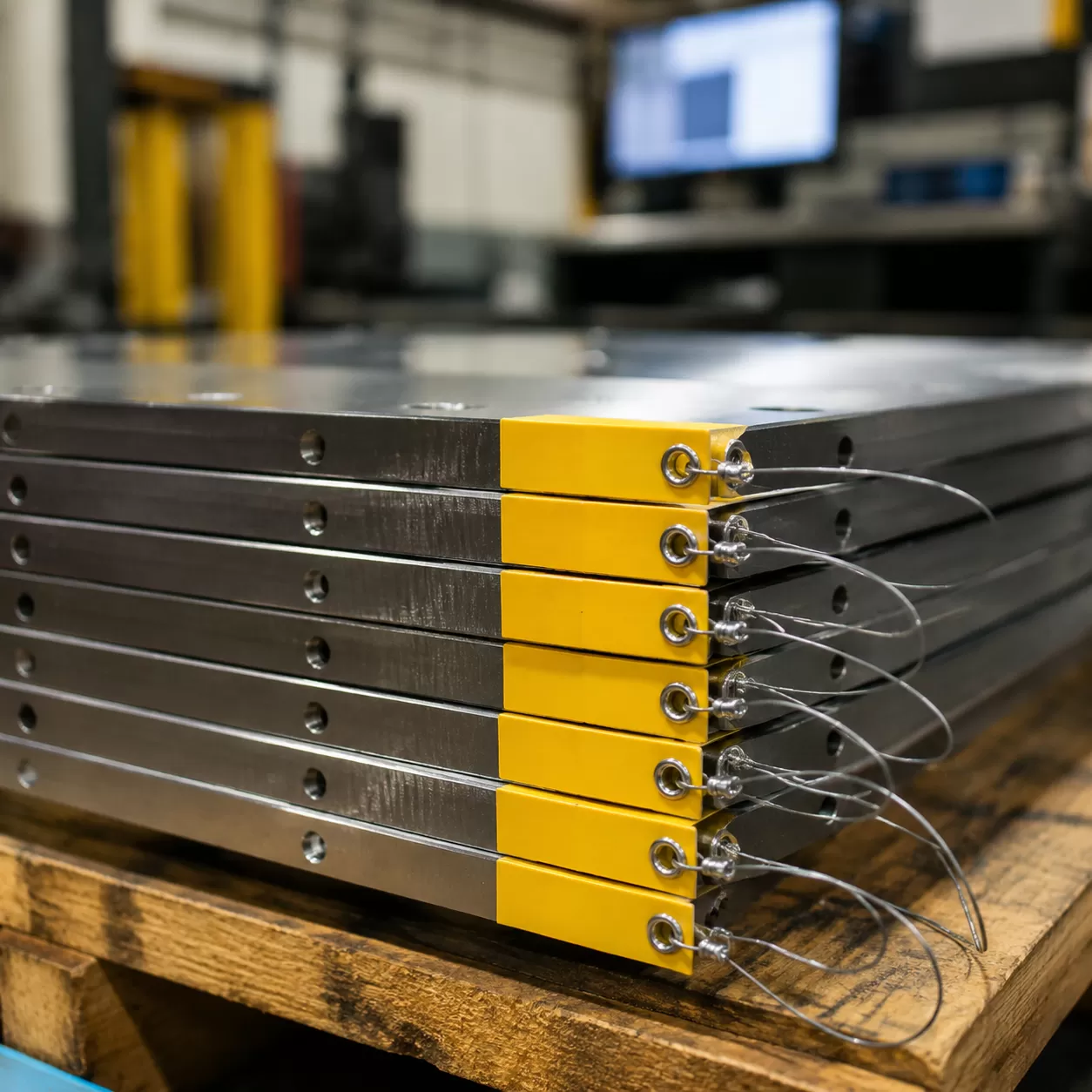
We engineer our precisionvast reference tools to survive the absolute harshest manufacturing environments. A standard paper ASME Y14.5 symbols wall chart won’t last a week near a CNC machine, which is why we upgraded every material specification to industrial grade. Whether it’s sitting on a workbench or hanging on a wall, this shop-floor GD&T quick reference is built to endure daily wear and tear.
Built for Harsh Industrial Environments
Our products feature heavy-duty, synthetic construction designed to maintain perfect readability around heavy machinery and inspection equipment.
| Material Component | Technical Feature | Shop-Floor Benefit |
|---|---|---|
| Tear-Proof Polypropylene | Synthetic media core | Resists water, cutting fluids, grease, and industrial solvents. Won’t rip or fray. |
| Anti-Glare Matte Lamination | Non-reflective protective layer | High visibility under bright, direct machine shop LED lighting; easily wipeable. |
| High-Contrast Typography | Crisp vector graphics & color-coding | Effortless scannability of gd&t symbols from across a CMM lab or busy workstation. |
Every machining tolerance quick reference we print utilizes ultra-crisp vector graphics, ensuring that complex gd&t symbols remain sharp and legible even from a distance. The wipeable matte finish means oil splashes or greasy fingerprints clean off instantly, keeping your workspace professional and your data unmistakable.
Industrial Applications & Target Workflows for GD&T Symbols
Our industrial-grade gd&t symbols reference tools are built to bridge the gap between design, production, and quality assurance. By establishing a unified visual standard, these reference charts keep your entire team aligned, reducing scrap rates and eliminating communication bottlenecks on the shop floor.
Design & Mechanical Engineering
- Accelerate Drawing Generation: Designers can quickly verify complex geometric requirements without flipping through massive codebooks.
- Optimize Stack-Up Analysis: Provides an instant reference for worst-case tolerance stack-ups, ensuring proper fitment during final assembly.
- Protect Design Intent: Eliminates ambiguity, ensuring that critical casting or machining tolerances are perfectly communicated to production teams.
CNC Machining & Production
- Real-Time Tool Offsets: Operators can quickly reference a machining tolerance quick reference chart to adjust tool offsets on the fly without pausing production.
- Streamlined Toolpaths: Helps machinists instantly interpret complex toolpath tolerances, maintaining high-precision output during demanding production runs.
- Reduced Machine Downtime: Keeps your CNC stations running efficiently by removing the guesswork from intricate print callouts.
Quality Control & Inspection
- Standardized Workflows: Serves as a definitive CNC inspection reference guide for checking parts using CMMs, custom hard gages, dial indicators, and calipers.
- Prevent Internal Disputes: Provides a single, unambiguous source of truth that aligns the inspection lab with the machining floor.
- Flawless Verification: Ensures that every finished part strictly meets the defined datum reference frame before shipping out to customers.
 English
  German