

Precision Metal Investment Casting Parts: OEM & Custom Solutions
Engineering Complex Geometries into High-Performance Metal Parts
Are you struggling with high machining costs on complex components? Do your current castings suffer from porosity, dimensional drift, or poor surface finishes? Balancing tight tolerances with scalable production is a constant challenge for manufacturing engineers and supply chain managers.
At PrecisionVast, we specialize in manufacturing metal investment casting parts that eliminate these headaches. By leveraging the advanced lost wax casting process, we transition your complex CAD models into high-performance physical components with repeatable accuracy. Our approach focuses on near net shape manufacturing, significantly reducing the need for costly secondary CNC machining and minimizing material waste.
What We Deliver:
- Custom OEM metal parts: Purpose-built to your exact specifications and strict US industry standards.
- Complex geometry casting: Capable of achieving intricate internal cavities, blind holes, and thin walls down to 0.040 inches (1mm).
- Superior surface finish: Delivering standard finishes of 125 RMS (3.2 Ra) straight out of the mold.
- Precision investment casting: Holding standard linear tolerances of ± 0.005 inches per inch to ensure seamless assembly.
We do not just pour metal; we engineer robust mechanical solutions. When your project demands structural integrity, material versatility, and exacting dimensions, our precision casting process ensures the part is done right the first time.
The PrecisionVast Advantage in Metal Investment Casting
Our Core Offering
We specialize in manufacturing custom OEM metal parts built to your exact specifications. By utilizing the proven lost wax casting process, we deliver near net shape components that reduce material waste and drastically cut down on expensive secondary machining. Whether you need intricate geometries or heavy-duty industrial metal components, our capabilities meet rigorous US standards.
🔗 [Read more about how cast steel properties and composition dictate final product strength]
Why Choose Us?
Sourcing reliable metal investment casting parts shouldn’t be a headache. We know American manufacturers need dependable partners who deliver on time without compromising on quality.
- Cost-Effective: Near net shape casting means less raw material waste and lower machining costs.
- Unmatched Precision: We consistently hold tight investment casting tolerances for complex designs.
- Seamless Integration: Your parts arrive ready to drop directly into your assembly line.
Our Production Capacity
From rapid prototyping casting to full-scale continuous production runs, our operations are scaled to handle your specific demand.
- Flexible Volumes: Fully equipped for both low-volume custom runs and high-volume commercial production.
- Speed to Market: Streamlined workflows designed to get your industrial metal components shipped faster.
Technical Specifications & Material Capabilities
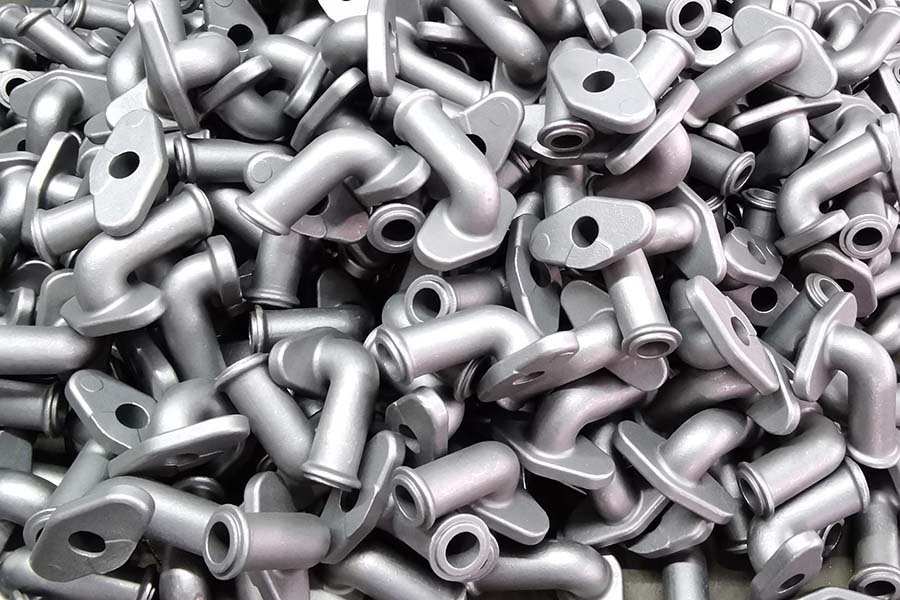
When you source reliable metal investment casting parts, you need exact specifications. We pour a wide spectrum of metals to match your exact application.
Material Versatility
From standard carbon grades to acting as your dedicated stainless steel casting supplier, we adapt to your requirements.
- Stainless Steel: 304, 304L, 316, 316L, 17-4PH
- Carbon & Alloy Steel: 1020, 1045, 4140, 4340, 8620
- Specialty Metals: Tool steels and high-temp blends.🔗 [Determine the strength of heat-resistant alloys at different temperatures here]
Investment Casting Tolerances
Our silica sol casting technique guarantees true near net shape manufacturing, providing an exceptional metal casting surface finish straight from the mold.
- Standard Casting Tolerances: ISO 8062 CT4 to CT6
- Surface Roughness: Ra 1.6 to 3.2 μm (63 to 125 RMS)
- Minimum Wall Thickness: Down to 0.04 inches (1mm)
- Angular Tolerance: ±0.5 to ±1 degree
Size & Weight Limits
We scale production to fit your precise needs, ranging from tiny, intricate components to large machinery parts.
| Specification | Minimum Capacity | Maximum Capacity |
| Part Weight | 0.02 lbs (10g) | 220 lbs (100kg) |
| Dimensions | 0.2 inches (5mm) | 40 inches (1000mm) |
| Production Run | Rapid prototyping casting | High-volume continuous production |
Secondary Operations Under One Roof
Getting your part cast is only half the battle. To give you a true plug-and-play solution, we handle all secondary operations, reducing lead times and ensuring your custom OEM metal parts arrive fully finished.
- Precision CNC Machining Castings: Our in-house machine shop offers milling, turning, drilling, tapping, and precision grinding to hit the absolute tightest specifications.
- Surface Finish & Treatments: We offer standard mechanical polishing, electropolishing, passivation (critical for stainless steel), zinc plating, anodizing, and powder coating.
- Heat Treatment Solutions: We apply strict, controlled heat treatment protocols (normalizing, annealing, quenching, tempering) tailored to the specific alloy to guarantee exact hardness and yield strength.
Quality Assurance: ISO 9001 Casting Manufacturer
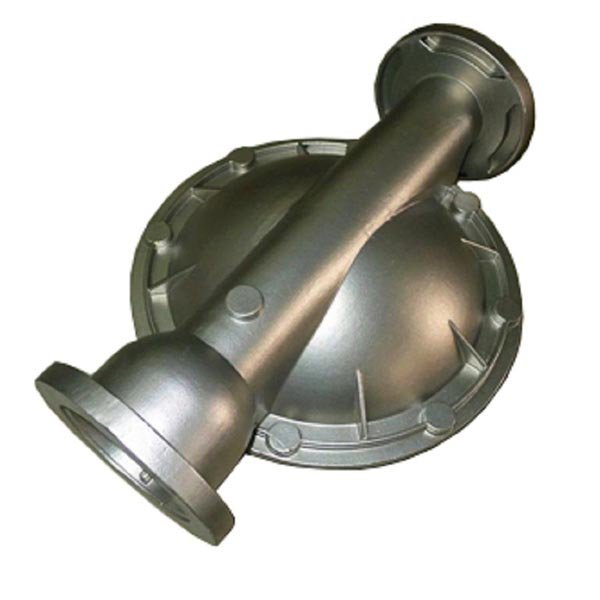
We don’t just promise quality; we prove it through rigorous testing tailored to the high demands of the US market. As an ISO 9001 Certified facility, we guarantee material traceability and strict market compliance.
Our Advanced Inspection Capabilities Include:
- Spectrometer Analysis: Confirming exact chemical composition before pouring.
- CMM (Coordinate Measuring Machine): Validating precise dimensional accuracy.
- Non-Destructive Testing (NDT): X-ray, magnetic particle, and liquid penetrant testing to identify hidden internal flaws.
- Mechanical Testing: Hardness, yield, and tensile testing for structural integrity.
Industries Relying on Our Custom OEM Metal Parts
When standard fabrication falls short, our precision investment casting process steps in for America’s most demanding markets:
- Aerospace & Defense: Complex geometry casting for turbine blades and structural fittings using proven high-temperature alloys.
- Fluid Power: Pressure-tight pumps, valves, and hydraulic system components.
- Automotive: Engine/exhaust components, transmission linkages, and custom brackets.
- Medical Equipment: Flawless, medical-grade stainless steel parts that withstand repeated sterilization.
- General Industrial: Tough parts for agricultural equipment, heavy machinery, and robotics.
Our Manufacturing Process (From CAD to Part)
We manage every step of the lost wax casting process to ensure your parts hit the exact specs required.
- Engineering & Simulation: We evaluate CAD files for castability and use advanced software to simulate metal flow, preventing defects before tooling begins.
- Tooling & Wax Injection: We machine durable aluminum dies and inject liquid wax to create an exact, shrink-compensated replica.
- Shell Building: Wax assemblies are dipped into a high-grade ceramic slurry (silica sol casting method) and coated with fine sand to build a robust shell.
- Dewaxing & Pouring: The ceramic shells are flash-heated to melt out the wax. Molten metal is then poured into the pre-heated shells under strict temperature controls.
- Finishing & Inspection: The ceramic shell is shattered, parts are cut from the tree, gates are ground flat, and rigorous quality checks (including magnetic particle inspection) are performed.
Why Partner with PrecisionVast?
- Direct Factory Pricing: Cut out the middleman for premium near net shape manufacturing that keeps projects under budget.
- Rapid Response: We guarantee fast turnarounds on quotes and proactive communication to eliminate overseas sourcing delays.
- Problem Solvers at the Core: Our engineers optimize your designs for manufacturability (DFM).
- Global Logistics: We handle international freight, customs clearance, and local tracking, delivering straight to your loading dock anywhere in the United States.
Frequently Asked Questions (FAQ)
What is the Minimum Order Quantity (MOQ) for custom parts?
We keep our MOQ flexible. While we specialize in high-volume production for modern manufacturing, we readily accommodate smaller runs for custom OEM metal parts, especially during your initial rollout phase.
Can you accept 3D CAD files (STEP/IGES) for quoting?
Absolutely. We actually prefer STEP and IGES formats. Providing accurate 3D models allows our engineering team to give you a fast, precise quote and analyze the near net shape manufacturing requirements.
What is the typical lead time for new tooling vs. production runs?
Generally, creating new hard tooling takes about 2 to 4 weeks. Once the initial sample is approved, standard production runs typically take 4 to 6 weeks.
Do you offer rapid prototyping before committing to hard tooling?
Yes. We highly recommend rapid prototyping casting for unverified designs. We can print wax or plastic patterns directly from your CAD files to cast a small batch of test parts, ensuring your final precision investment casting performs exactly as intended without the upfront cost of permanent tooling.
Top 5 Cost-Saving Design Tips for Metal Investment Casting
Did you know that up to 70% of a component’s final manufacturing cost is locked in during the initial CAD design phase?
While metal investment casting (lost-wax casting) is renowned for its ability to produce complex geometries and near-net shapes, failing to optimize your design for the foundry floor can lead to unnecessary tooling expenses, high scrap rates, and excessive secondary machining.
If you are an engineer or procurement manager looking to source reliable custom OEM metal parts while keeping your budget in check, here are the top 5 cost-saving design tips for investment casting.
1. Eliminate or Minimize Undercuts
An undercut is any feature that prevents the wax pattern from being pulled straight out of the metal injection die.
While investment casting can handle severe undercuts, doing so requires multi-part collapsible dies or the use of soluble wax cores. Both options significantly increase your initial tooling costs and extend cycle times.
- The Fix: Review your CAD model to see if internal features can be redesigned to align with the primary draw direction of the mold. If an undercut is unavoidable, consult with your casting supplier early to find the most cost-effective tooling strategy.
2. Maintain Uniform Wall Thickness
Molten metal shrinks as it cools and solidifies. If your design features a thick, heavy section immediately adjacent to a very thin wall, the thin section will freeze first. This cuts off the flow of liquid metal to the thicker area, creating a vacuum that results in internal shrinkage porosity.
- The Fix: Keep wall thicknesses as uniform as possible throughout the part. If a transition from thick to thin is structurally necessary, use a gradual taper rather than an abrupt step. While we can cast walls down to 0.040 inches (1mm), uniform cooling is the key to structural integrity.
3. Don’t Over-Specify Tolerances
One of the fastest ways to drive up the cost of metal investment casting parts is by applying unnecessarily tight tolerances across the entire blueprint. “Blanket tolerances” force the foundry to perform 100% CMM inspections and often mandate secondary CNC machining on surfaces that don’t actually interact with other components.
- The Fix: Leverage the near-net-shape capabilities of the lost-wax process. Standard investment casting tolerances hold ± 0.005 inches per inch. Accept the “as-cast” tolerance for non-critical areas, and only specify tight tolerances on critical mating surfaces, bearing fits, or threaded holes where precision CNC machining is genuinely required.
4. Use Generous Radii and Fillets (Avoid Sharp Corners)
Sharp internal corners are a primary cause of mechanical failure in metal castings. During the cooling phase, a sharp 90-degree internal corner acts as a massive stress concentrator, frequently leading to “hot tears” (cracking) in the metal.
Furthermore, sharp external corners are difficult to fill completely with molten metal and can cause the ceramic shell to chip during the shelling process, leading to inclusions in the final part.
- The Fix: Always apply a generous fillet (minimum 0.125 inches or 3mm is a safe baseline) to all internal corners, and round off external edges to promote smooth metal flow and reduce structural stress.
5. Optimize Your Alloy Selection
Over-engineering your material choice is a common budget killer. For example, specifying a premium high-temperature superalloy or a specialized duplex stainless steel for a component that only operates at room temperature under moderate stress is a waste of capital.
- The Fix: Work closely with your casting supplier’s metallurgical team. If you are currently machining parts out of 316L stainless steel, transitioning to a cast equivalent (like CF8M) can offer the same corrosion resistance at a fraction of the manufacturing cost. Match the alloy strictly to the environmental and mechanical demands of the application.
Ready to Optimize Your OEM Metal Parts?
At PrecisionVast, we don’t just pour metal; we engineer robust mechanical solutions. Before we cut any tooling, our engineering team provides a comprehensive Design for Manufacturability (DFM) review to ensure your parts are optimized for both performance and price.

 German
  English