

Advanced Cast Al Alloys Manufacturing
Struggling with porosity, dimensional warping, or inconsistent mechanical properties in your lightweight components? When your supply chain demands high-performance parts, manufacturing defects are simply not an option.
At precisionvast, our expertise lies in end-to-end aluminum investment casting. We take your project from raw material to fully finished, CNC-machined components that arrive at your facility ready for immediate assembly. By leveraging the proven lost-wax casting process, we produce complex, high-strength cast al alloys tailored specifically to your rigorous engineering requirements.
Precision Aluminum Components Delivered
We solve complex manufacturing challenges by strictly managing the metallurgical variables of our custom aluminum castings:
- Microstructural Integrity: We rigorously control both intrinsic and extrinsic microstructural properties to eliminate costly defects like porosity, hot tearing, and shrinkage.
- Exacting Dimensional Tolerances: Delivering flawlessly precise components that consistently meet your most stringent engineering blueprints.
- Speed & Reliability: We keep your production schedule moving with optimized manufacturing cycles and a guaranteed 8-hour quote turnaround on all project inquiries.
Technical Specs for Cast Al Alloys
We manufacture top-tier cast al alloys engineered to handle high stress while keeping weight to an absolute minimum. Whether your project calls for standard A356 aluminum casting or advanced Al-Si-Cu-Mg systems, our materials meet strict US manufacturing standards. As you evaluate your production needs, understanding the benefits and drawbacks of high-pressure aluminum die casting can help you decide the best route for these specific grades.
Advanced Metallurgical Control for Defect-Free Cast Al Alloys
While many foundries simply “pour and cool,” Precisionvast utilizes advanced metallurgical science to eliminate the “big three” aluminum defects: Porosity, Hydrogen Absorption, and Grain Coarsening.
1. Eliminating Gas Porosity & Micro-Shrinkage
Aluminum alloys are highly susceptible to hydrogen absorption in their molten state. We employ:
- Rotary Degassing & Fluxing: Utilizing high-purity nitrogen or argon to remove dissolved hydrogen and non-metallic inclusions.
- Vacuum-Assisted Casting: For mission-critical parts, we cast in a vacuum environment to ensure the highest possible density, passing the most stringent X-ray (ASTM E155) inspections.
2. Grain Refinement & Modification (The A356 Advantage)
To maximize the mechanical properties of A356.2 and other Al-Si systems:
- Strontium (Sr) Modification: We transform coarse, brittle acicular silicon into a fine, fibrous structure, drastically improving ductility and impact resistance.
- Ti-B Grain Refiners: By adding Titanium-Boron master alloys, we reduce the Secondary Dendrite Arm Spacing (SDAS), resulting in a more uniform microstructure and superior strength-to-weight ratios.
Cast Aluminum Mechanical Properties
Here is a quick look at the standard Al-Si cast alloys and complex systems we process:
| Alloy Grade | Key Alloying Elements (Si, Mg, Cu) | Yield Strength | Tensile Ductility | Thermal Stability |
|---|---|---|---|---|
| A356 | Si (7.0%), Mg (0.3%) | High | Excellent | Good |
| 354-Type | Si (9.0%), Cu (1.8%), Mg (0.5%) | Very High | Good | Excellent |
| Al-Si-Cu-Mg | Custom Ratios | High | Moderate | High |
Core Material Advantages
Sourcing reliable precision aluminum components directly impacts the performance of your end product. Our materials are designed to deliver:
- Maximum Lightweighting Potential: Drastically cuts down overall part weight, making it the go-to choice for fuel-efficient automotive builds and aerospace parts.
- Excellent Corrosion Resistance: Naturally forms a tough oxide layer, shielding your components from harsh industrial environments and weather.
- High Strength-to-Weight Ratios: Gives you the heavy-duty durability you need without carrying unnecessary bulk.
Specialized Industry Applications
EV Thermal Management & Power Electronics
Modern Electric Vehicles (EVs) require complex cooling geometries that traditional die casting cannot achieve.
- Integrated Cooling Channels: Our lost-wax process allows for internal, “cast-in” spiral or lattice cooling paths for Battery Cold Plates and Inverter Housings.
- High Thermal Conductivity: We optimize alloy chemistry (such as AlSi10Mg) to balance structural rigidity with a thermal conductivity of $\approx 160$ W/m·K.
Aerospace Structural Components
Flight-ready components demand high fatigue life and zero-defect reliability.
- Thin-Wall Expertise: We can achieve stable wall thicknesses as low as 1.5mm (0.060″), reducing unsprung weight in UAVs and satellite brackets.
- T6 Heat Treatment: Our in-house thermal processing ensures that 354.0 or A356 alloys reach their peak T6 hardness and tensile strength requirements.
Comparative Material Performance Data
| Property | A356.2-T6 (General Purpose) | 354.0-T61 (High Strength) | C355.0-T6 (High Temp) |
| Tensile Strength | 234 MPa (34 ksi) | 325 MPa (47 ksi) | 250 MPa (36 ksi) |
| Yield Strength | 165 MPa (24 ksi) | 250 MPa (36 ksi) | 185 MPa (27 ksi) |
| Elongation (%) | 3.5% | 2.0% | 3.0% |
| Corrosion Resistance | Excellent | Good | Excellent |
| Typical Use | Brackets, Pump Bodies | Aerospace Structural | Turbocharger Impellers |
Defect Management for Cast Al Alloys
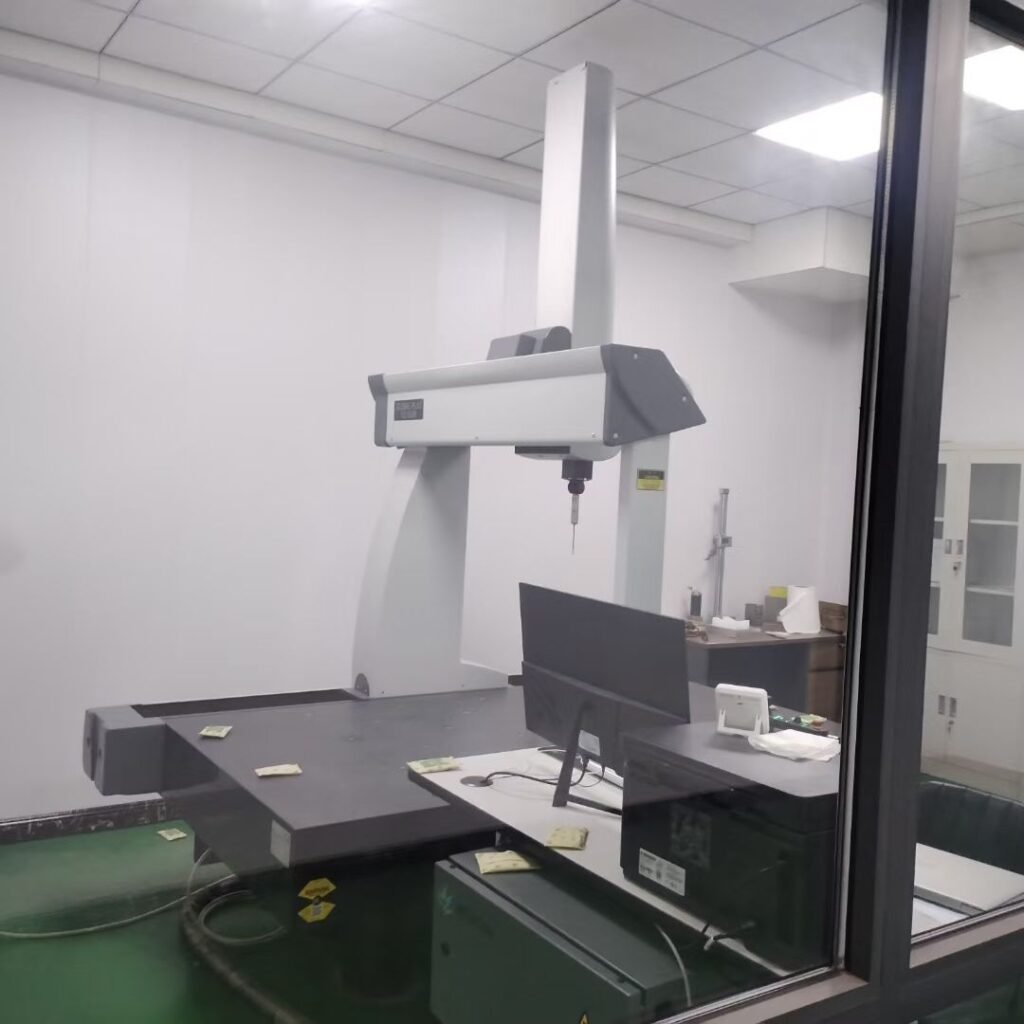
When you rely on precision aluminum components, avoiding flaws is everything. We understand that US manufacturers cannot afford downtime or weak parts. That is why our aluminum casting defect analysis targets the root causes of common issues like porosity, hot tearing, shrinkage, and oxide inclusions before they ever compromise your build.
Whether we are working with lightweight cast al alloys or applying the rigorous standards outlined in our complete guide to stainless steel castings, our quality control guarantees a clean, defect-free final product.
Quality Control Testing Protocols
We back our manufacturing with hard data and advanced tech to ensure every part hits your exact dimensional and structural requirements:
- CAE Simulation: We run Computer-Aided Engineering ahead of the pour to optimize mold design and cooling rates. This controls the secondary dendrite arm spacing (SDAS), significantly boosting the final mechanical properties of the metal.
- Non-Destructive Testing (NDT): We use advanced X-Ray and Magnetic Particle Inspection to spot hidden internal defects without damaging the part.
- Material Verification: Strict hardness and material composition testing confirm the exact alloy grade and strength.
- CMM Verification: Coordinate Measuring Machines check every angle to guarantee your parts meet tight dimensional accuracy standards right out of the mold.
Our 14-Step Aluminum Investment Casting Process
At precisionvast, we rely on a tightly controlled 14-step process to manufacture high-quality cast al alloys. From the initial digital blueprint to the final dimensional check, our lost-wax aluminum casting approach guarantees that every component meets the strict tolerances expected by our US manufacturing partners. By selecting the best materials for aluminum casting, we ensure the foundation of your part is flawless before we even pour the metal.
Step-by-Step Production Breakdown
We break down our rigorous production cycle into these core stages to deliver reliable custom aluminum castings:
- CAE Mold Design & Pattern Assembly: We use Computer-Aided Engineering (CAE) to design molds that optimize cooling rates and eliminate defects right from the drawing board.
- Wax Injection & Shell Building: We inject high-grade wax into our dies to create exact replicas of your part, which are then repeatedly dipped in a ceramic slurry to build a tough, heat-resistant shell.
- Dewaxing & High-Precision Casting: The wax is melted out in an autoclave. We then pour the molten metal, ensuring our cast al alloys flow smoothly into every intricate detail of the hot ceramic shell.
- Shell Removal, Shot Blasting & Grinding: Once the metal cools and solidifies, we break away the ceramic shell. We then use shot blasting and precise grinding to remove excess sprue material and smooth out the raw casting.
- Advanced Heat Treatments: We apply specialized thermal cycles to produce heat-treated cast aluminum (T6). This locks in the required mechanical properties, maximizing strength and thermal stability for heavy-duty industrial use.
- Surface Treatments: To enhance both aesthetic appeal and corrosion resistance, we finish the raw parts with processes like pickling or advanced polishing.
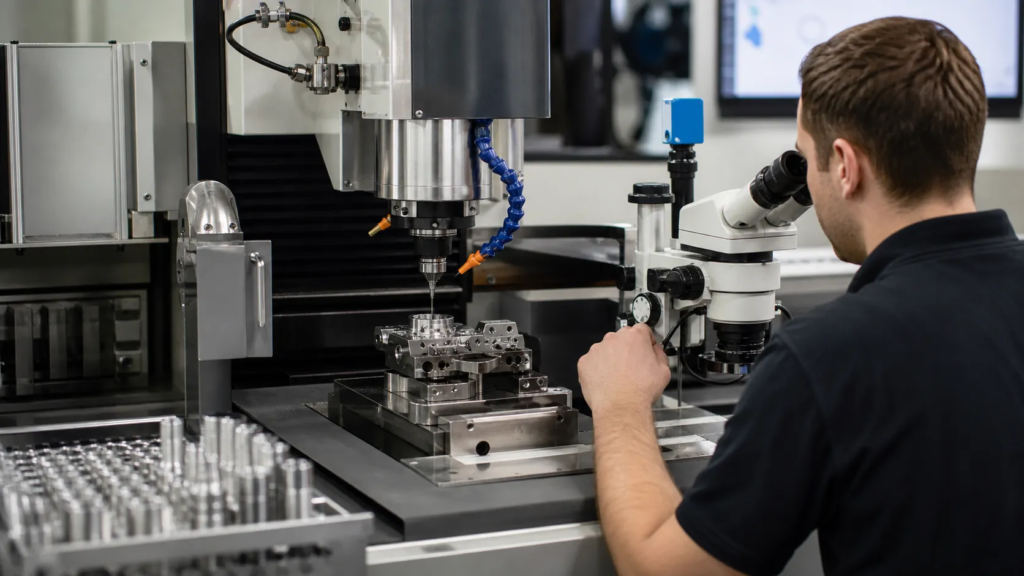
- Precision CNC Machining & Inspection: ly, we process the parts into finished CNC machined aluminum castings to hit your exact dimensional tolerances. Every batch undergoes thorough inspection, including CMM verification, before it ships.
This end-to-end control over the aluminum investment casting process means you receive ready-to-assemble precision aluminum components without the hassle of managing multiple secondary vendors.
Industry Applications for Cast Al Alloys
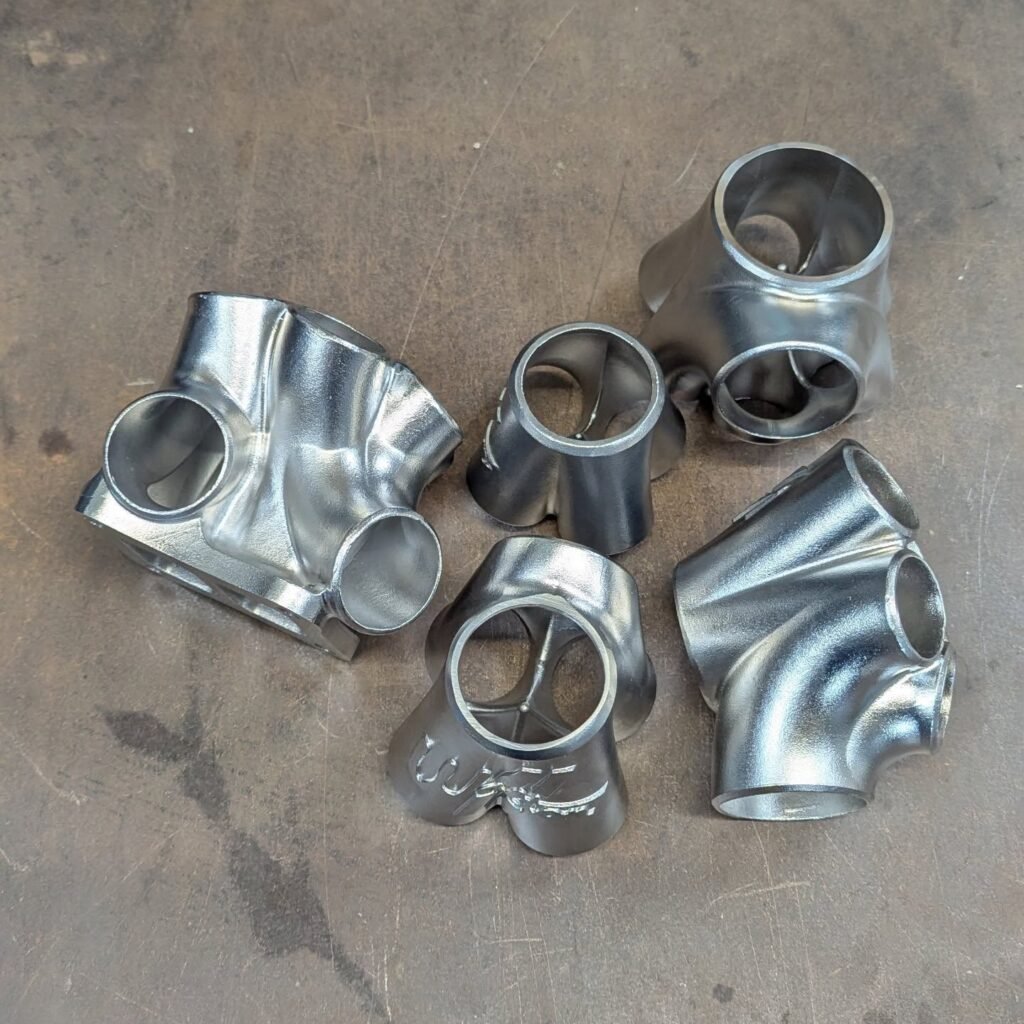
We supply custom aluminum castings to some of the most demanding industries across the United States. Because of their excellent strength-to-weight ratios and natural corrosion resistance, our investment casting process is the go-to solution for manufacturing critical, high-performance parts.
Here is where our cast al alloys make the biggest impact:
- Automotive: We manufacture engine blocks, pistons, and mounting brackets. Our lightweight automotive castings directly support vehicle lightweighting initiatives and boost overall fuel efficiency.
- Aerospace: Flight demands extreme reliability. We produce structural components that offer exceptional cast aluminum thermal stability and high strength for severe environments.
- Medical & Marine: For environments exposed to harsh elements or requiring strict sanitation, we cast corrosion-resistant hardware and complex, thin-walled equipment housings.
- Pumps & Valves: Fluid control requires absolute precision. We deliver pressure-tight, defect-free fluid handling parts, ensuring all precision aluminum components meet strict casting tolerances to prevent leaks and mechanical failures.
Why Partner With precisionvast for Cast Al Alloys?
When sourcing custom aluminum castings for the US market, you need a reliable manufacturer that understands the demands of domestic production. At precisionvast, we operate as a direct extension of your supply chain, delivering top-tier industrial aluminum foundry services that keep your assembly lines moving.
Here is what we bring to the table:
- End-to-End Solutions: We manage the entire production cycle in-house. From initial SLA rapid prototyping to casting and final surface finishing, we have you covered. Our capabilities also include delivering fully CNC machined aluminum castings, utilizing the same tight-tolerance expertise we apply when setting up 304 and 316 stainless steel for CNC machining.
- Massive Production Scale: With over 200 skilled staff members on the floor, we currently supply precision aluminum components to more than 50 different industries worldwide. Whether you need a low-volume pilot run or mass production, we have the capacity to scale immediately.
- Proven Reliability: We do not guess when it comes to quality. We strictly adhere to international dimensional tolerance standards and back our work with hard data, providing detailed material, hardness, and NDT testing reports with every single batch.
Frequently Asked Questions on Cast Al Alloys
When sourcing custom aluminum castings, getting straight answers on capabilities and production standards is critical. Here are the most common technical and commercial questions we get regarding our manufacturing process.
| Technical & Commercial Question | Our Direct Answer |
|---|---|
| What are your typical dimensional tolerances for cast al alloys? | We consistently hold standard tolerances of ±0.005 in/in. When your project demands ultra-tight specifications, we step in with CNC machined aluminum castings to hit your exact assembly requirements. |
| How do you mitigate the effects of minor alloying elements like Fe or Sn? | Quality starts at the pour. We maintain strict control over the aluminum alloy microstructure by sourcing premium ingots and using advanced melt treatments to neutralize tramp elements and prevent material brittleness. |
| Can you handle complex internal geometries and thin walls? | Absolutely. This is where lost-wax aluminum casting excels. If you are looking at how to design structural aluminum castings efficiently for complex shapes, our engineering team works directly with you to optimize wall thicknesses for your precision aluminum components. |
| What is your MOQ and typical production lead time? | We are flexible. Our industrial aluminum foundry services support both low |
Enhanced FAQ for Technical Decision Makers
Q: How do you handle the high silicon content of cast alloys during post-casting CNC machining?
A: High-silicon alloys (like A356 or A380) can be abrasive. At Precisionvast, we use diamond-tipped (PCD) tooling and optimized coolant pressures to prevent tool wear and ensure a “mirror-like” surface finish on critical sealing faces.
Q: Can your aluminum investment casting replace multi-part welded assemblies?
A: Absolutely. Through Design for Manufacturing (DFM), we often consolidate 3-5 welded aluminum sheet components into a single near-net-shape casting. This eliminates weld-fail risks, reduces assembly time, and improves overall structural integrity.
Q: What is the lead time for Rapid Prototyping without hard tooling?
A: By utilizing 3D-printed SLA wax patterns, we can deliver fully functional, flight-grade or road-grade aluminum prototypes in as little as 10–14 days, skipping the 4-6 week wait for traditional steel molds.

 German
  English