

Selecting a casting factory is not just about finding a vendor; it is about choosing a technical partner that influences your product’s structural integrity and time-to-market. This guide breaks down the critical pillars of investment casting, one-stop manufacturing, and ISO-certified quality control.
1. Understanding Casting Methodologies & DFM
Choosing the right process is the first step in Design for Manufacturing (DFM). A top-tier factory should help you evaluate which method minimizes waste and secondary operations.
- Investment Casting (Lost-Wax): The gold standard for precision. Ideal for intricate geometries, thin walls, and a superior surface finish (typically 3.2 to 6.3 Ra).
- Sand Casting: Best for massive structural components where “near-net shape” is less critical than raw strength and scale.
- Die Casting: Focused on high-speed, high-volume production of non-ferrous alloys (Aluminum, Zinc, Magnesium).
2. Advanced Metallurgy: Beyond Standard Alloys
A factory’s expertise is proven by its ability to handle “difficult” metals. Engineers should look for facilities that go beyond basic carbon steel to specialized material grades:
- Corrosion-Resistant Steels: Deep knowledge of 304 vs. 316 stainless steel and duplex grades.
- High-Temperature Superalloys: Expertise in Inconel or Cobalt-chrome for aerospace and energy sectors.
- Material Integrity: Look for vacuum melting capabilities to prevent gas porosity and ensure metal purity.
Engineering Tip: Always request a Spectrographic Analysis to verify that the chemical composition of the melt matches your ASTM or EN material specifications.
3. The One-Stop Manufacturing Advantage
Modern engineering timelines don’t allow for “logistics lag.” A one-stop manufacturing model eliminates the risks associated with moving parts between multiple vendors.
Rapid Prototyping & Validation
By utilizing 3D printed wax patterns or SLA models, factories can deliver functional metal prototypes in days rather than weeks, bypassing the need for expensive hard tooling during the R&D phase.
Integrated CNC Machining
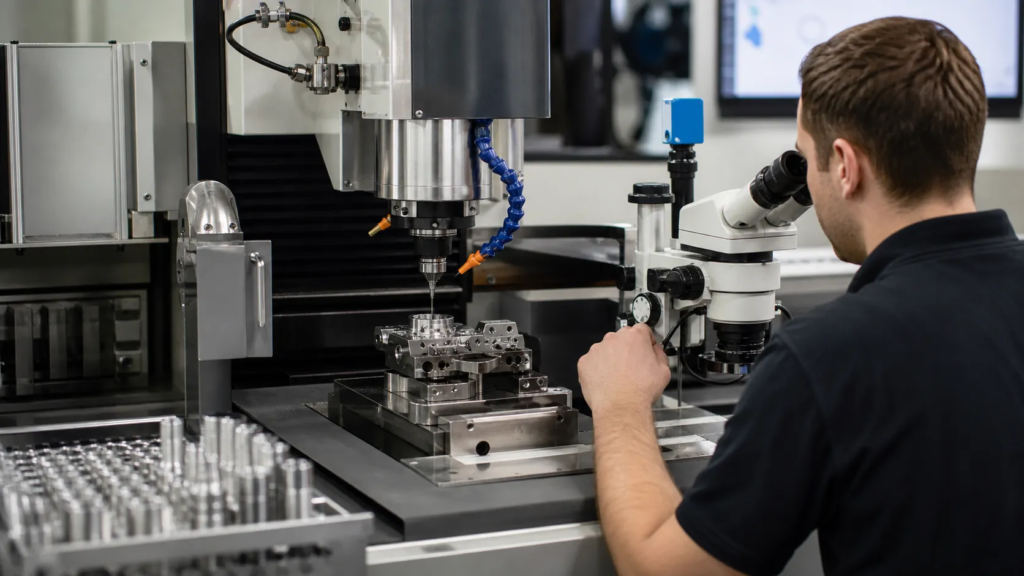
Casting provides the shape; machining provides the precision.
- Tight Tolerances: In-house 4-axis and 5-axis CNC centers can hold tolerances as tight as $\pm 0.01mm$.
- Seamless Workflow: When the caster and the machinist are the same team, there is no “blame game” regarding datum points or machining allowances.
Specialized Surface Treatments
From electropolishing for medical devices to powder coating for industrial equipment, having internal finishing ensures the part is “assembly-ready” upon delivery.
4. Engineering Excellence: CAE & Solidification Simulation
The difference between a “good” part and a “failed” part often happens during the cooling phase. Leading factories like Precisionvast use Computer-Aided Engineering (CAE) to simulate the pouring process.
- Porosity Prediction: Identifying “hot spots” where shrinkage might occur.
- Gating System Optimization: Designing the flow to ensure laminar (smooth) filling of the mold.
- Residual Stress Analysis: Predicting how the part might warp during cooling to adjust the mold design accordingly.
5. Rigorous Quality Assurance (QA) & Testing
An ISO 9001:2015 certification is the baseline. For critical applications, ensure the factory performs the following:
| Test Category | Methodology | Purpose |
| Non-Destructive (NDT) | X-Ray, Magnetic Particle, Liquid Penetrant | Detect internal voids or surface cracks. |
| Mechanical Testing | Tensile, Impact, and Hardness (Brinell/Rockwell) | Verify the physical properties of the batch. |
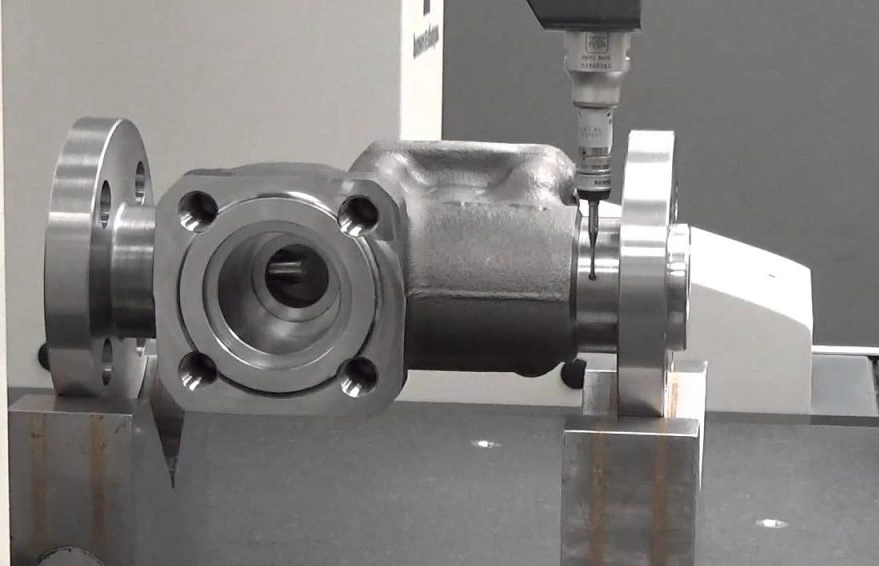
| Dimensional | Coordinate Measuring Machine (CMM) | 3D verification against the CAD model. |
| Traceability | Material Test Reports (MTR) | Tracking the “DNA” of the metal back to the heat number. |
6. Logistics, Capacity, and Global Communication
Technical skill must be matched by operational efficiency. Evaluate your partner based on:
- Scalability: Can they handle a 10-piece prototype run AND a 10,000-piece annual production (700+ tons)?
- Speed: 8-hour quoting windows are the industry benchmark for responsive partners.
- Global Compliance: Experience with Incoterms, customs clearance, and tariff navigation to ensure DDP (Delivered Duty Paid) or CIF (Cost, Insurance, and Freight) shipments arrive without delay.
Conclusion: The Expert Checklist
When vetting your next casting factory, use this “Engineer’s Checklist”:
- Do they offer DFM feedback on your CAD files?
- Is CNC machining in-house or outsourced?
- Can they provide NDT certifications (X-Ray/MPI)?
- Do they use simulation software to reduce scrap rates?
By choosing a factory that integrates metallurgical expertise, precision machining, and advanced simulation, you ensure your components are high-performing, cost-effective, and delivered on time.

 German
  English