

Precisionvast CNC machining milling services with 3 and 5 axis capability tight tolerances multiple materials fast quotes for prototypes to production parts.
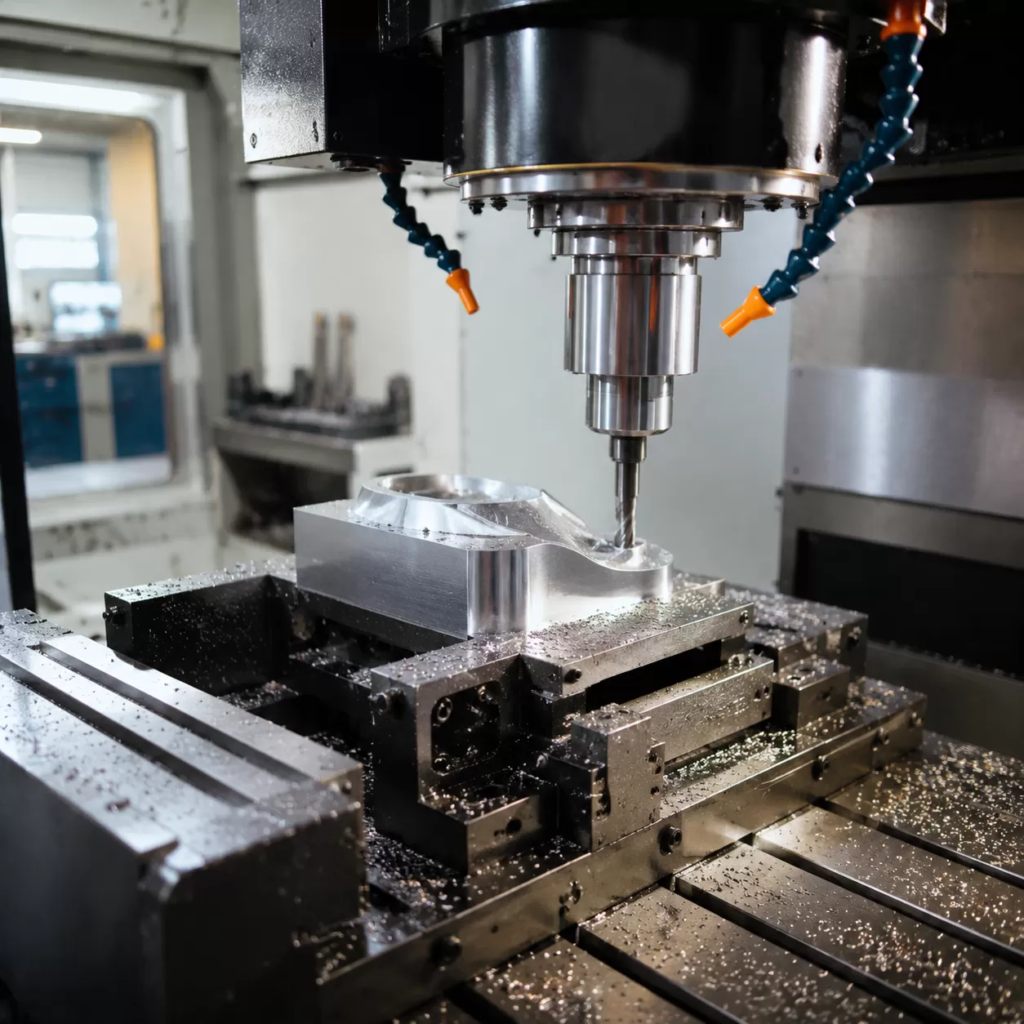
What is CNC Milling at precisionvast?
At precisionvast, we define CNC machining milling as the perfect blend of high-tech automation and raw engineering power. Our process is a subtractive manufacturing method where we use computer-controlled cutting tools to remove material from a solid block—often called a “billet”—to create your finished part with surgical precision.
Unlike manual machining, our computer numerical control (CNC) systems follow a digital blueprint (your CAD file) to move the cutting tools across multiple axes. This ensures every cut is identical, whether you need a single rapid prototype or a high-volume production run.
Our Automated Milling Process
- Precision Tooling: We use a variety of rotating tools to handle complex geometries and deep pockets.
- High-Speed Material Removal: Efficiently carving through metals and plastics while maintaining tight tolerances.
- Fully Automated: Once the program is set, our machines run with minimal human intervention, reducing errors and lead times.
- Versatile Geometry: From simple flat brackets to complex curved surfaces, our CNC milling services cover the full spectrum of modern manufacturing.
By combining advanced software with heavy-duty hardware, we transform raw stock into high-performance custom machined parts that meet your exact specifications every time.
Our Technical Edge in CNC Machining Milling
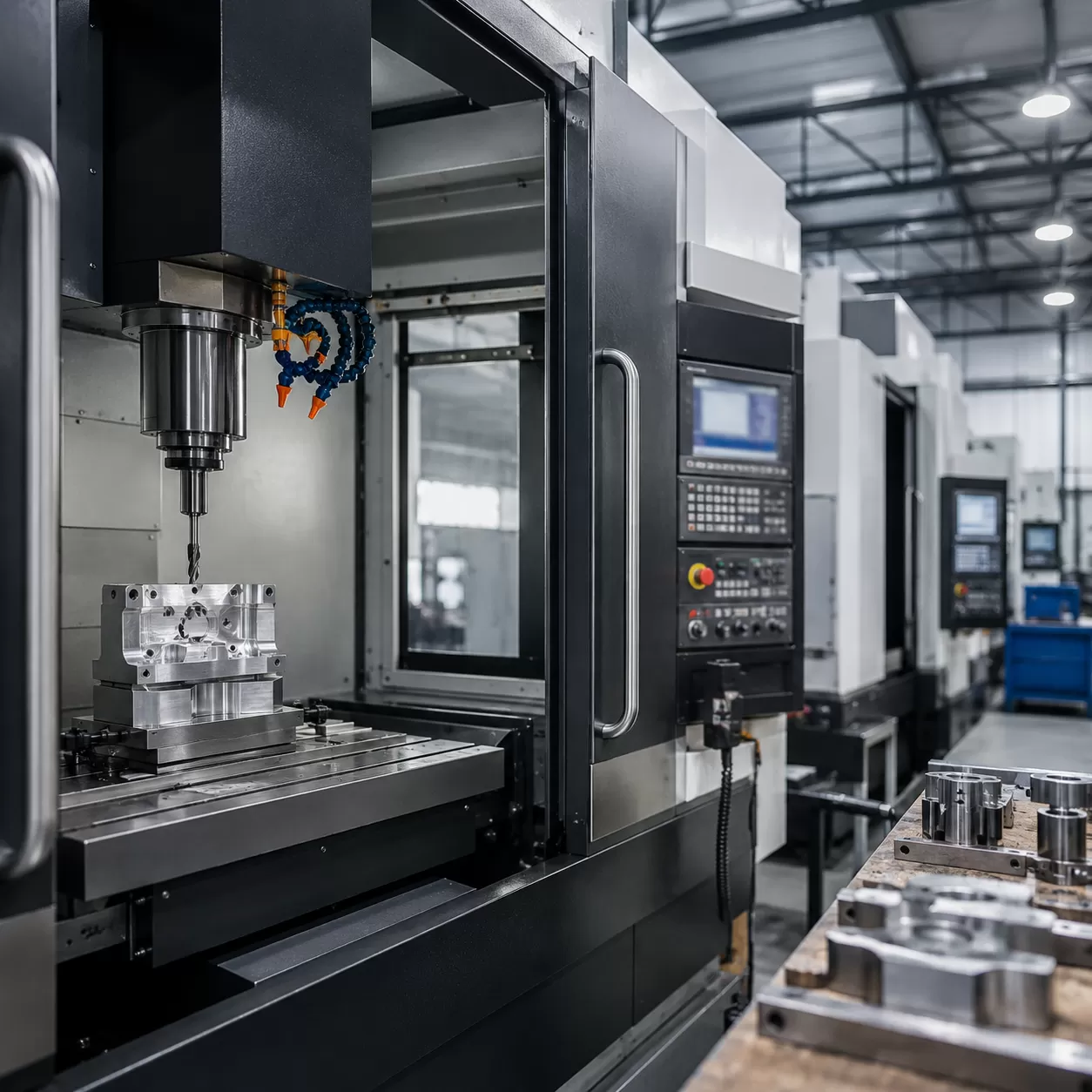
We back our CNC machining milling services with a high-performance fleet of advanced machining centers. By matching your specific project geometry to the right equipment, we optimize production speeds and lower your piece-part costs.
Here is how our shop floor delivers your custom machined parts:
- Vertical Machining Centers (VMC): Ideal for cost-effective setups and rapid turnaround on flatter profiles.
- Horizontal Machining Centers (HMC): Built for complex, high-volume production runs with optimized chip evacuation to prevent tool damage.
- Simultaneous 5-Axis Milling: Eliminates multiple manual setups, ensuring strict feature-to-feature accuracy on highly complex geometries.
Machining Center Capabilities
| Machine Type | Best For | Production Volume | Key Advantage |
|---|---|---|---|
| 3-Axis VMC | Flat parts, brackets, simple enclosures | Low to Medium | Fast setup, lower initial cost |
| 4-Axis HMC | Multi-sided parts, heavy material removal | Medium to High | Continuous cutting, great chip clearing |
| Simultaneous 5-Axis | Complex aerospace & medical geometries | Low to High | Tight tolerance machining, single-setup accuracy |
Our investment in these diverse 3-axis and 5-axis milling technologies ensures we always use the most efficient method for your design, cutting lead times without compromising quality.
Supported Materials Library for CNC Machining Milling
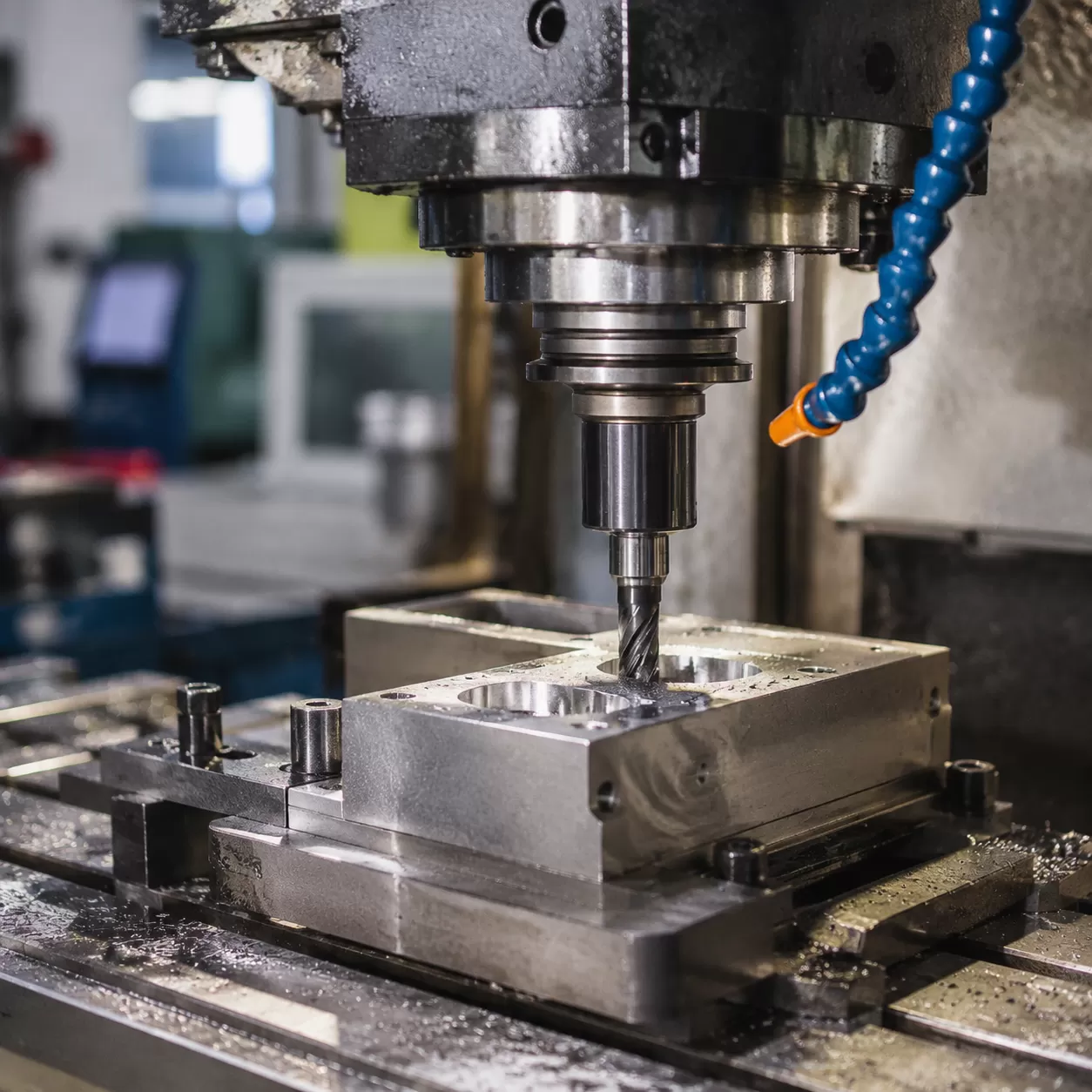
We machine a massive variety of engineering-grade materials to fit your exact project requirements. Whether you need lightweight prototypes or rugged production components, our shop handles everything from everyday metals to high-performance plastics.
Metals and Exotic Alloys
Our precision metal milling capabilities cover standard stocks to hard-to-machine exotics. We optimize our cutting speeds and toolpaths based on the specific metallurgy of your selected material.
- Aluminum (6061-T6, 7075-T6, 2026): The go-to for CNC milling services due to its excellent machinability, high strength-to-weight ratio, and great anodizing response. Ideal for aluminum billet machining.
- Stainless Steel (304, 316, 17-4 PH): Offers superb corrosion resistance and high strength. Widely used for medical devices and marine hardware.
- Steel Alloys & Carbon Steel (4140, 1018): Chosen for high-stress applications requiring structural integrity, tough wear resistance, and heat-treatability.
- Exotic Alloys: We handle demanding materials like Titanium (Ti-6Al-4V) and Inconel. When your project demands extreme environment performance, we focus on choosing the best high-temperature alloys for your applications to ensure part longevity and reliability.
Engineering Plastics & Composites
We deliver tight tolerance machining on raw plastics, managing heat dissipation to prevent warping and burring during the subtractive manufacturing process.
| Material Class | Common Plastics | Key Properties & Common Uses |
|---|---|---|
| High Performance | PEEK, PTFE (Teflon) | Exceptional thermal stability, chemical resistance, low friction. Perfect for aerospace and medical components. |
| Engineering Grade | POM (Delrin), Nylon 66 | High mechanical strength, excellent dimensional stability, easy to machine. Great for gears and wear pads. |
| Commodity / Clear | ABS, Polycarbonate (PC) | High impact strength. Polycarbonate is preferred for optical clarity; ABS is the standard for custom machined parts and rapid prototyping. |
Our vast product inventory ensures we always have the right stock ready to pull for your high-volume production runs or quick-turn prototypes.
Engineering Design Guidelines for CNC Milling
Getting the best results from our CNC milling services means designing your parts with the manufacturing process in mind. Optimizing your 3D models upfront ensures high-precision tight tolerance machining, minimizes tool breakage, and cuts down production costs.
Machining Envelopes & Part Dimensions
We accommodate both rapid prototyping services and large-scale manufacturing runs. Your part geometry must fit within our physical machine travels:
- Maximum Machining Envelope: Up to 40″ x 20″ x 20″ for standard 3-axis and 5-axis milling setups.
- Minimum Feature Size: Standard micro-milling features can go as small as 0.010″, depending on the material and geometry.
Internal Radii vs. Sharp Corners
Because CNC milling bits are round, machining perfectly sharp 90-degree internal corners is impossible.
- Inside Corners: Always add a radius to internal vertical edges.
- Corner Radii: Make the internal corner radius at least 10% larger than the radius of the cutting tool. If a tool has a 0.25″ radius, use a 0.275″ corner radius to reduce tool stress and prevent chatter.
- Floor Radii: A small radius at the bottom of a pocket (0.020″ to 0.040″) improves material flow and tool life.
Wall Thickness & Pocket Depths
Deep pockets and ultra-thin walls slow down precision CNC machining and can cause part distortion or warping.
| Design Feature | Recommended Metric | Absolute Minimum |
|---|---|---|
| Wall Thickness (Metals) | 0.060″ (1.5mm) | 0.030″ (0.8mm) |
| Wall Thickness (Plastics) | 0.120″ (3.0mm) | 0.060″ (1.5mm) |
| Pocket Depth-to-Width Ratio | 3:1 ratio | Maximum 4:1 ratio |
Pro Tip: Limit pocket depths to four times the tool diameter. Deeper cavities require specialized, long-reach tooling that increases cost and risks tool deflection.
Threading and Tapping
We provide precise internal and external threading for custom machined parts using cutting taps, form taps, and thread mills.
- Thread Sizes: Standard UNC, UNF, and metric threads from #2-56 up to 1″.
- Thread Depth: Design tapped holes to a maximum depth of 2 to 3 times the nominal hole diameter. Any deeper does not add holding strength and increases the risk of tap breakage.
- Blind Holes: Leave an unthreaded clearance gap equal to at least half the hole diameter at the bottom of blind holes to allow space for chips to collect during tapping.
Advanced Surface Finishing Options for CNC Machining Milling
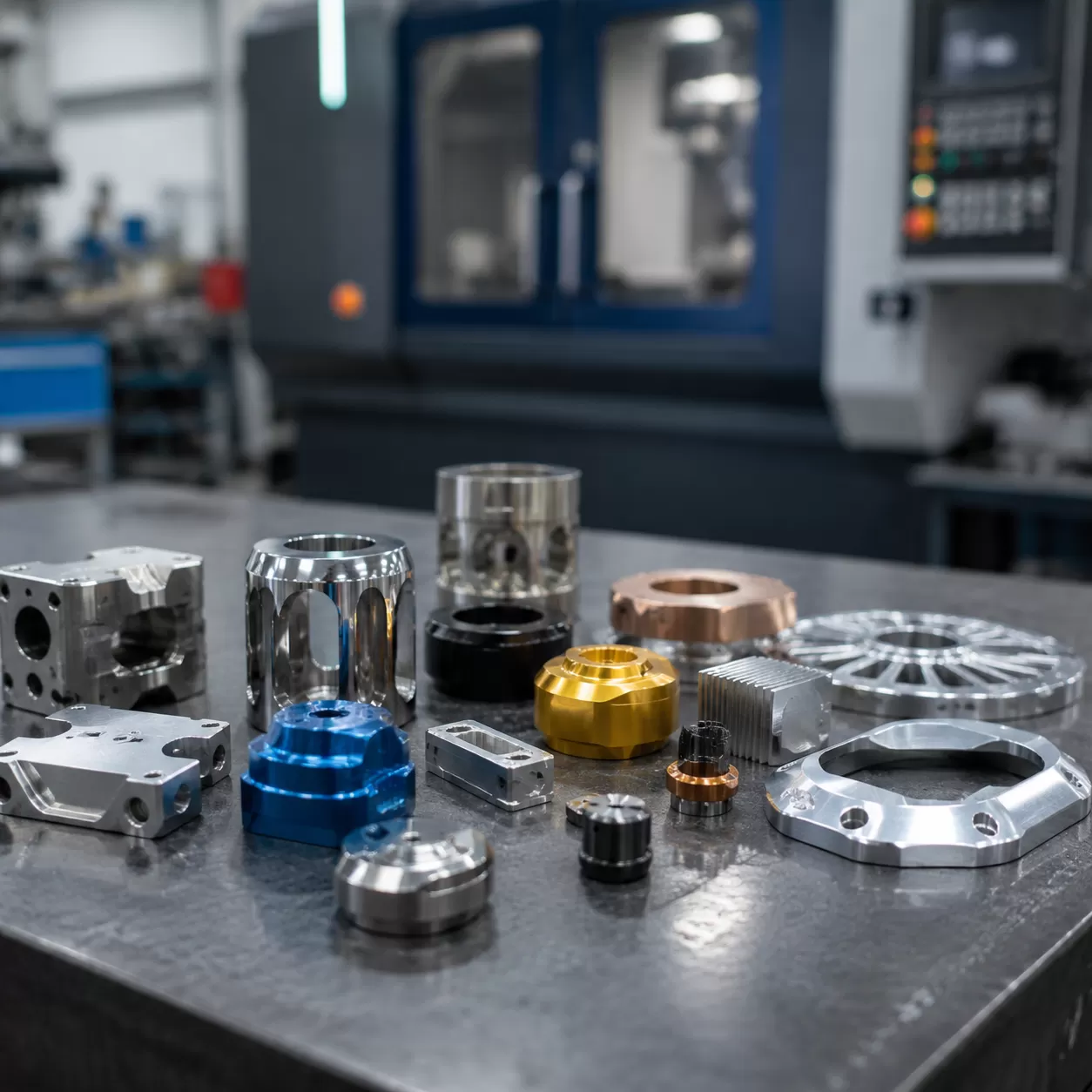
Getting the right surface finish is just as important as the machining itself. At precisionvast, we offer a complete suite of finishing options to ensure your custom milled parts meet exact cosmetic and functional requirements. Whether you need to eliminate tool marks, boost corrosion resistance, or add electrical conductivity, we have you covered.
Here is how we refine your parts after they leave our precision CNC machining centers:
| Finishing Option | Description & Visual Appearance | Primary Benefits |
|---|---|---|
| As-Milled (Standard) | Standard finish with visible tool marks ($Ra$ 3.2 $mu m$ down to 1.6 $mu m$). Edges are broken and deburred. | Most cost-effective, ideal for hidden structural components. |
| Bead Blasting | Parts are blasted with fine glass beads, creating a uniform, satin-matte texture. | Hides tool marks, removes minor imperfections, and cuts down reflectivity. |
| Anodizing (Type II) | An electrochemical process that adds a thin, clear, or colored oxide layer. | Excellent corrosion resistance and a clean aesthetic finish for aluminum. |
| Hardcoat Anodizing (Type III) | Creates a thick, ultra-dense ceramic layer integrated into the metal. | Extreme wear resistance, scratch protection, and maximum durability. |
| Powder Coating | A dry powder is electrostatically applied and cured under heat to form a skin. | High impact resistance, available in a massive range of colors and textures. |
| Electroplating | Depositing a thin layer of another metal (like nickel or chrome) onto the part. | Enhances electrical conductivity, improves solderability, and adds chemical resistance. |
Our finishing services are optimized for both aluminum billet machining and specialized machined plastic components. If your project transitions from standard multi-axis milling into heavy-duty industrial applications, understanding material limitations is key. For instance, while we focus heavily on subtractive milling here, you can check out our guide on understanding cast steel production properties composition to see how raw material manufacturing methods influence final component durability and finishing success.
Real-World Industry Applications for CNC Machining Milling
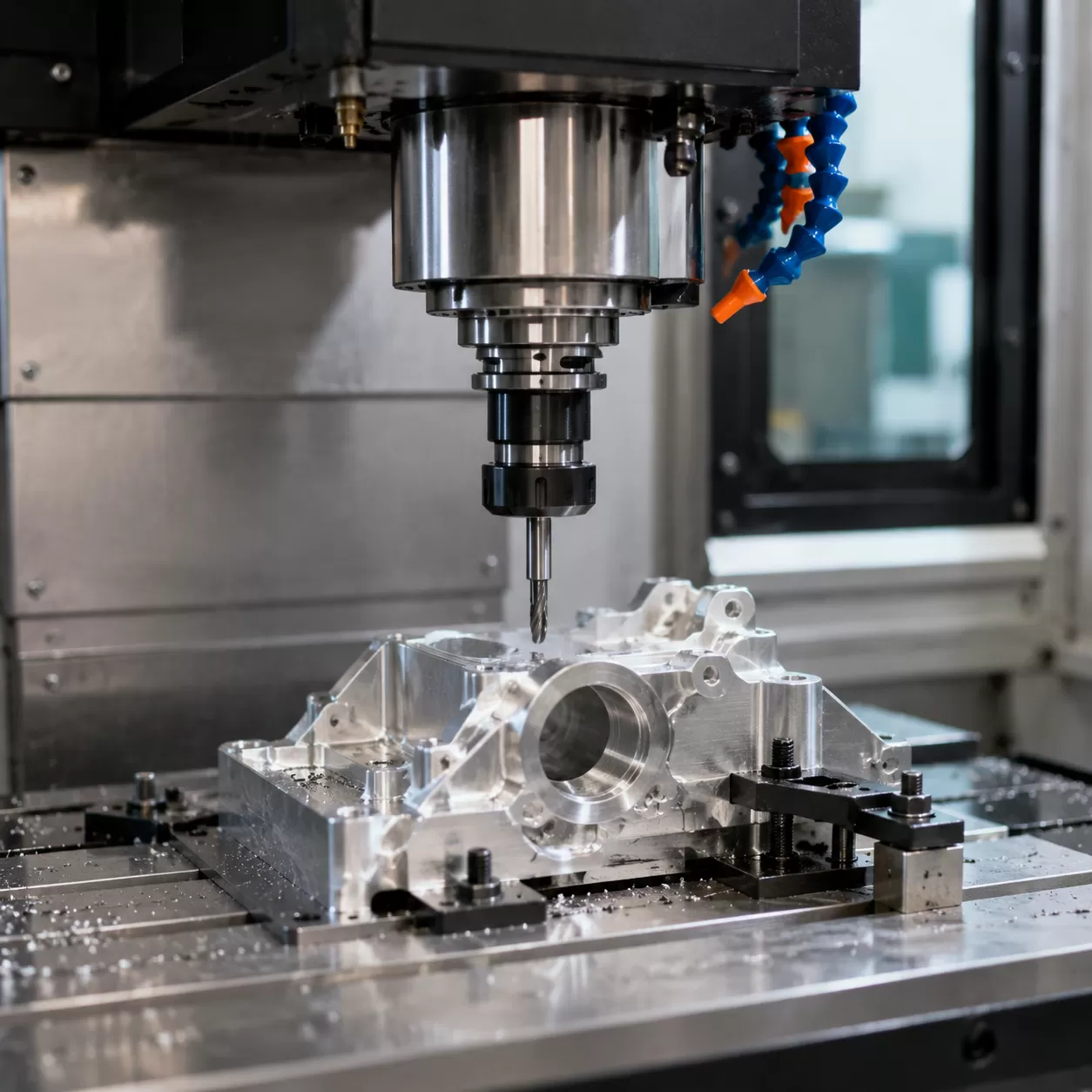
At precisionvast, our high-precision CNC machining milling services deliver exact components across the most demanding United States industrial sectors. We bridge the gap between complex engineering designs and ready-to-assemble custom machined parts.
Aerospace & Defense
We manufacture flight-worthy structural components and ruggedized electronic enclosures. Our multi-axis milling centers easily achieve the tight tolerance machining required to handle extreme vibration, stress, and temperature fluctuations.
Medical Devices
From surgical instruments to biocompatible plastic prototypes, our team ensures absolute precision. We work with specialized medical-grade plastics and metals, delivering flawless surface finishes that meet strict clinical standards.
Automotive & Motorsports
We produce high-strength brackets, engine blocks, and performance custom components. United States racing teams and automotive OEM manufacturers rely on us for fast rapid prototyping services and rugged aluminum billet machining built to endure high stress. For heavier-duty structural applications, we also ensure seamless transitions if your design evolves from CNC milling to specialized aluminum casting services.
Electronics & Semiconductors
Our facility mills complex aluminum heat sinks and high-efficiency EMI/RFI shielded housings. We maintain the flat surfaces and precise dimensional accuracy necessary to protect sensitive electronic assemblies.
Industry Component Overview
| Industry | Common Milled Components | Primary Material Demands |
|---|---|---|
| Aerospace | Bracketry, Spars, Enclosures | High strength-to-weight ratio, Full traceability |
| Medical | Implants, Surgical Guides, Handles | Biocompatibility, Ultra-smooth finishes |
| Automotive | Custom Knuckles, Flywheels, Housings | High fatigue resistance, Lightweight metals |
| Electronics | Heat Sinks, Chassis, Micro-Channels | High thermal conductivity, Precise shielding |
Quality Assurance & Metrology for CNC Machining Milling
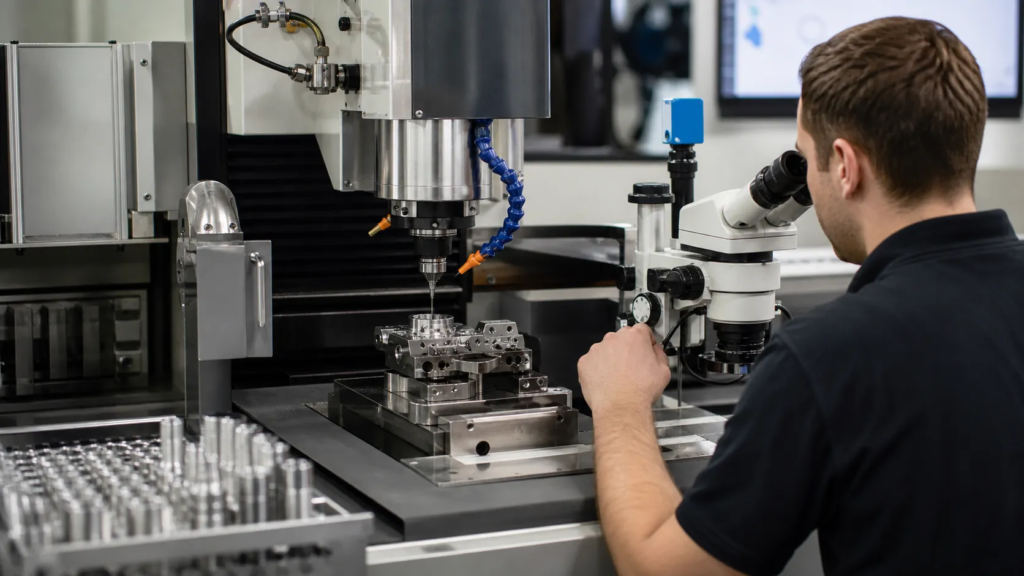
At precisionvast, we back our CNC machining milling services with a strict, data-driven quality control system. We understand that tight tolerance machining is critical for your high-performance components, which is why every part undergoes rigorous inspection before leaving our facility.
Dimensional Testing & Advanced Metrology
Our inspection lab utilizes state-of-the-art equipment to verify that your custom machined parts match your exact specifications:
- Coordinate Measuring Machines (CMM): Automated 3D tracking ensures precise feature-to-feature accuracy on complex geometries.
- Optical Comparators: Non-contact profile analysis allows for rapid, ultra-precise verification of tight dimensions.
- Precision Gauging: Digital micrometers, thread gauges, and bore indicators validate every critical tolerance.
Full Material Traceability
We maintain total transparency and accountability across our complete materials library. Whether you are ordering aluminum billet machining or advanced polymer components, we provide the documentation required to prove material integrity:
- Mill Test Reports (MTR): Full chemical and physical property verification from the raw material stage.
- Certificate of Compliance (CoC): Official validation that your finished parts meet all engineering and order specifications.
Strict Standards Alignment
Our manufacturing processes are structured to meet the high-security and high-quality demands of United States industrial buyers. We maintain strict alignment with top-tier certifications:
- ISO 9001: Global standard for consistent quality management and operational excellence.
- AS9100: Aerospace-level quality controls for mission-critical reliability.
- ITAR Compliance: Secure data and manufacturing protocols required for defense and military-grade components.
The precisionvast Step-by-Step Order Workflow
Getting your custom machined parts from digital design to physical reality is a streamlined, transparent process. We have optimized our CNC machining milling workflow to eliminate bottlenecks, ensure total accuracy, and deliver rapid prototyping services alongside high-volume production runs with zero friction.
1. Secure File Upload
Everything starts when you upload your 3D CAD files (STEP, IGES, or SolidWorks formats) along with your technical PDF prints to our secure platform. Your intellectual property is fully protected. We use these files to generate your CAD file instant quote and evaluate the geometric requirements of your project.
2. Expert DFM Feedback
Before a single machine powers on, our machining specialists conduct a thorough Design for Manufacturability (DFM) review. We look for potential production bottlenecks, such as tight internal radii or deep pockets, ensuring your part is optimized for efficient precision CNC machining. If we spot an opportunity to cut costs or improve part strength, we will pass that feedback directly to you.
3. Precision Production
Once the design is locked in, your project is scheduled on our optimized multi-axis milling centers. We utilize advanced 3-axis and 5-axis milling setups to minimize part handling and guarantee incredible feature-to-feature accuracy. Whether you need aluminum billet machining or high-performance engineering plastics, our automated subtractive manufacturing process handles it with tight tolerance machining.
4. Inspection & Shipping
Every part undergoes rigorous dimensional testing before it leaves our shop floor. After passing our quality control gates, components are carefully cleaned, post-processed with your chosen surface finishing options, and packed securely in protective packaging to prevent any transit damage. Your order arrives at your facility exactly to print, ready for assembly.
Frequently Asked Questions About CNC Machining Milling
What is the difference between CNC milling and CNC turning?
The core difference lies in which part moves. In CNC machining milling, the raw material remains stationary while a high-speed rotating cutting tool moves around it to remove material. This is ideal for complex, asymmetrical shapes with flat surfaces, pockets, and slots. CNC turning, on the other hand, rotates the workpiece at high speeds while a stationary single-point tool cuts along the profile, making it the go-to method for cylindrical or round components.
Can precisionvast machine parts from hardened steel?
Yes. Our advanced CNC machining capabilities allow us to machine hardened steel alloys effortlessly. We utilize high-rigidity 3-axis and 5-axis milling centers paired with premium carbide and ceramic-coated cutting tools. This setup handles tough materials while maintaining tight tolerance machining requirements without compromising tool life or surface finish quality.
How do 3D models interact with technical drawing prints during your quoting stage?
When you submit your project for a CAD file instant quote, our automated system reads the 3D model (like STEP or IGES) to calculate the core geometry, tool paths, and base pricing. However, a 2D technical PDF print is essential for communicating critical specifications that a 3D model cannot hold. We rely on your 2D drawings to identify:
- Critical dimensions with tight tolerances
- Specific surface roughness requirements
- Threaded holes, tapping details, and internal tolerances
- Geometric Dimensioning and Tolerancing (GDining & T) callouts
What are your typical lead times for custom-milled parts?
Our standard turnaround time for custom machined parts typically ranges from 3 to 10 business days, depending on geometry complexity and batch size. For urgent project demands, our rapid prototyping services can expedite production to deliver parts in as little as 2 to 4 days. High-volume production runs requiring specialized surface finishing options may extend total lead times, which we always finalize during the initial design review.

 German
  English