

Premium industrial sheet metal stock and custom fabrication with CNC cutting forming and finishing for precise B2B sheet metal applications.
What is Commercial-Grade Sheet Metal?
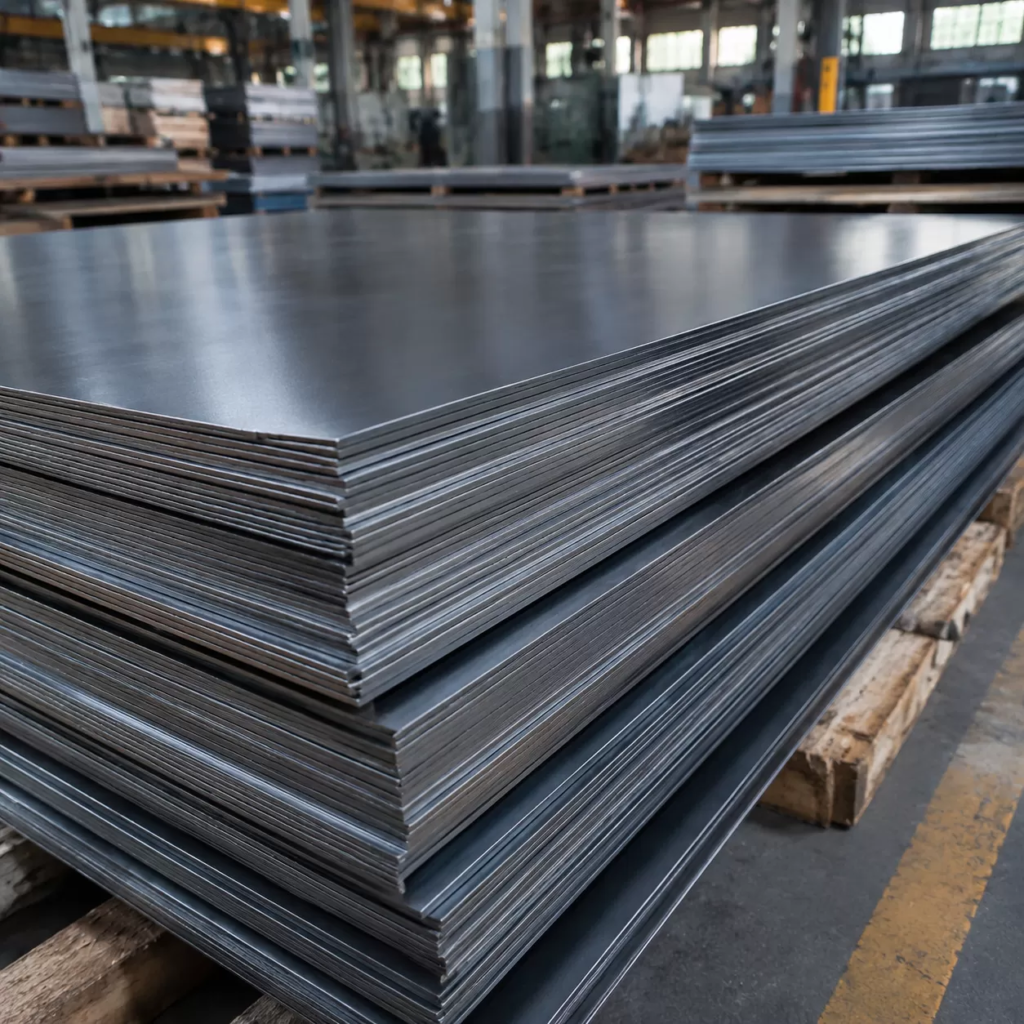
In industrial manufacturing, sheet metal serves as the backbone for everything from rugged automotive chassis to precision medical enclosures. By definition, sheet metal is any metal formed into thin, flat pieces. Our commercial-grade stock spans a precise thickness spectrum from 0.006″ (0.15 mm) to 0.250″ (6.35 mm). Anything thinner falls into the foil category, while anything thicker transitions into heavy gauge plate metal.
Getting the material right from day one is everything. When you select the exact alloy and temper for your project, you eliminate the costly manufacturing headaches that ruin production runs.
Proper material selection directly prevents three major fabrication failures:
- Springback: The tendency of a metal sheet to partially return to its original flat shape after being bent.
- Stress-cracking: Structural failures caused by internal tension during intense geometric forming.
- Micro-fracturing: Tiny, hidden structural tears that develop along the bend radius, compromising the part’s long-term durability.
We maintain a massive inventory of custom metal sheets engineered to handle tight tolerances, keeping your production line smooth, predictable, and efficient.
Technical Specifications & Material Selection Matrix
Choosing the right raw materials dictates the success of your custom sheet metal parts. We maintain a robust inventory of both ferrous and non-ferrous metals to match your precise mechanical and environmental requirements.
Ferrous Alloys: Strength and Longevity
- Stainless Steel (304): The industry standard for excellent corrosion resistance and formability. Perfect for food processing and general commercial enclosures.
- Stainless Steel (316L): Marine-grade alloy featuring molybdenum for superior resistance to chlorides and harsh chemical environments.
- Carbon Steel (A36): The go-to choice for structural applications, offering excellent weldability and cost-effectiveness.
- Alloy Steel (1045): A medium-carbon steel used when your project demands higher strength and wear resistance than standard mild steel.
Non-Ferrous Alloys: Lightweight and Conductive
- Aluminum 5052: Highly workable, excellent corrosion resistance in marine environments, and the top choice for complex sheet metal fabrication.
- Aluminum 6061-T6: Structural-grade aluminum offering high strength and excellent structural integrity, though less formable than 5052. For a deeper dive into picking the right grade, check out our comprehensive comparison of aluminum alloys.
- Copper: Exceptional electrical and thermal conductivity, naturally antimicrobial, and highly malleable.
- Brass: Low-friction, corrosion-resistant copper-zinc alloy favored for electrical connectors and decorative architectural trim.
Material Performance Comparison
The table below outlines the baseline mechanical properties for our most requested sheet metal blanks and metal plate stock:
| Material | Tensile Strength (ksi / MPa) | Yield Strength (ksi / MPa) | Elongation in 2 inches (%) | Primary Benefit |
|---|---|---|---|---|
| Stainless Steel 304 | 75 / 515 | 30 / 205 | 40% | High corrosion resistance |
| Stainless Steel 316L | 70 / 485 | 25 / 170 | 40% | Marine-grade protection |
| Carbon Steel A36 | 58-80 / 400-550 | 36 / 250 | 20% | High structural economy |
| Aluminum 5052-H32 | 33 / 228 | 28 / 193 | 12% | Premium bending & forming |
| Aluminum 6061-T6 | 45 / 310 | 40 / 276 | 12% | High strength-to-weight |
| Copper (C110) | 32 / 220 | 10 / 69 | 45% | Superior conductivity |
| Brass (C260) | 44 / 300 | 16 / 110 | 54% | Low friction & aesthetic |
Understanding the Sheet Metal Gauge & Dimensions Chart
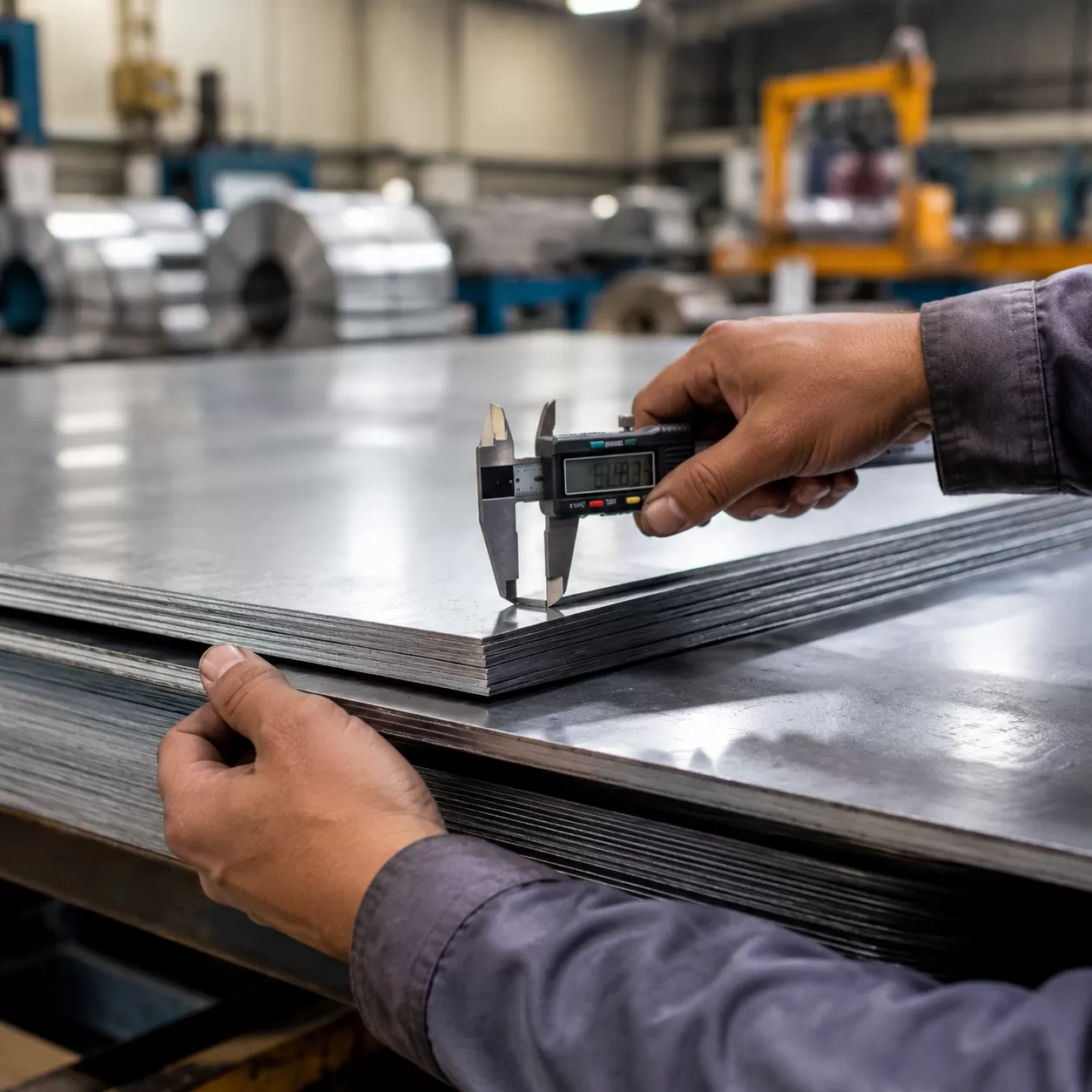
Choosing the right gauge thickness chart is critical for ensuring structural integrity and cost efficiency in your projects. Sheet metal thickness is measured differently depending on the material. Standard steel, galvanized sheet steel, and aluminum each follow distinct measurement scales.
The table below provides a quick breakdown of standard millimeter and fractional equivalencies across these common materials:
| Gauge | Standard Steel (Inches / mm) | Galvanized Steel (Inches / mm) | Aluminum Sheet Stock (Inches / mm) |
|---|---|---|---|
| 10 GA | 0.1345″ / 3.42 mm | 0.1382″ / 3.51 mm | 0.1019″ / 2.59 mm |
| 12 GA | 0.1046″ / 2.66 mm | 0.1084″ / 2.75 mm | 0.0808″ / 2.05 mm |
| 14 GA | 0.0747″ / 1.90 mm | 0.0785″ / 1.99 mm | 0.0641″ / 1.63 mm |
| 16 GA | 0.0598″ / 1.52 mm | 0.0635″ / 1.61 mm | 0.0508″ / 1.29 mm |
| 18 GA | 0.0478″ / 1.21 mm | 0.0516″ / 1.31 mm | 0.0403″ / 1.02 mm |
| 20 GA | 0.0359″ / 0.91 mm | 0.0396″ / 1.01 mm | 0.0320″ / 0.81 mm |
Stock Panel Sizes and Custom Slitting
We stock standard sheet metal blanks in the most widely used American industrial dimensions to keep your lead times short and minimize scrap material:
- 4′ x 8′ Panels: The industry standard for local commercial fabrication and easy transport.
- 4′ x 10′ Panels: Ideal for longer architectural panels and seamless enclosure components.
- 5′ x 10′ Panels: Best for heavy-duty industrial platforms and maximizing yield on large CNC laser layouts.
For high-volume production runs that require precise widths, we utilize custom master coil slitting. This process allows us to deliver exact-width coils directly to your stamping or forming lines, reducing processing waste and optimizing your overall manufacturing workflow.
Advanced Custom Processing & Sheet Metal Fabrication
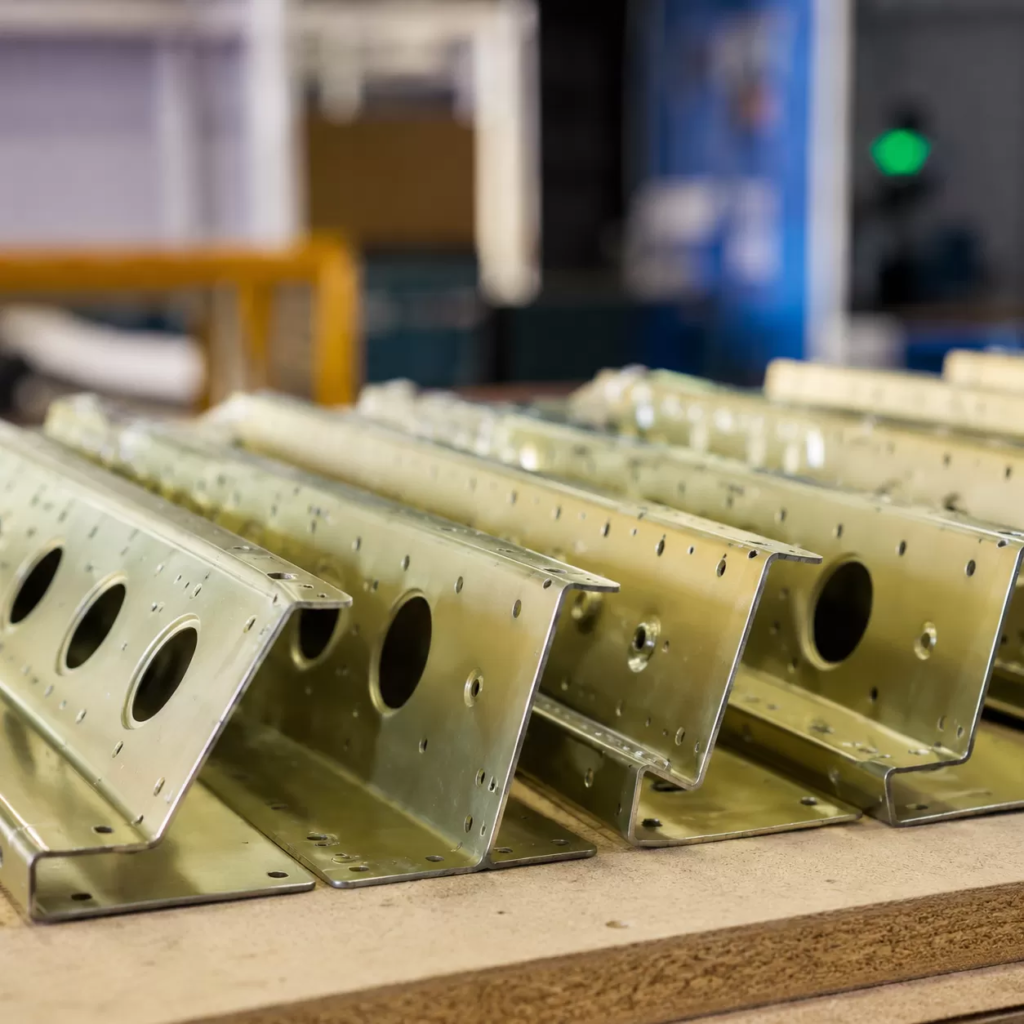
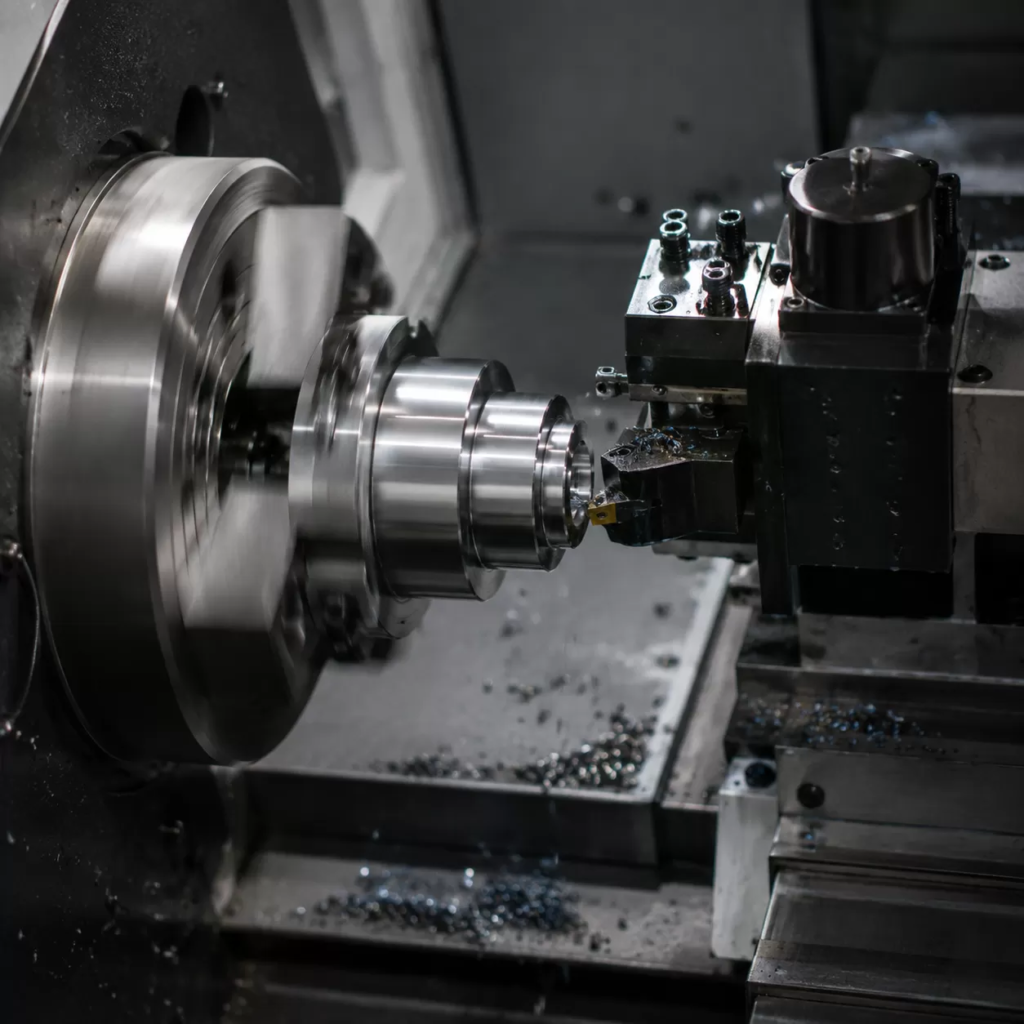
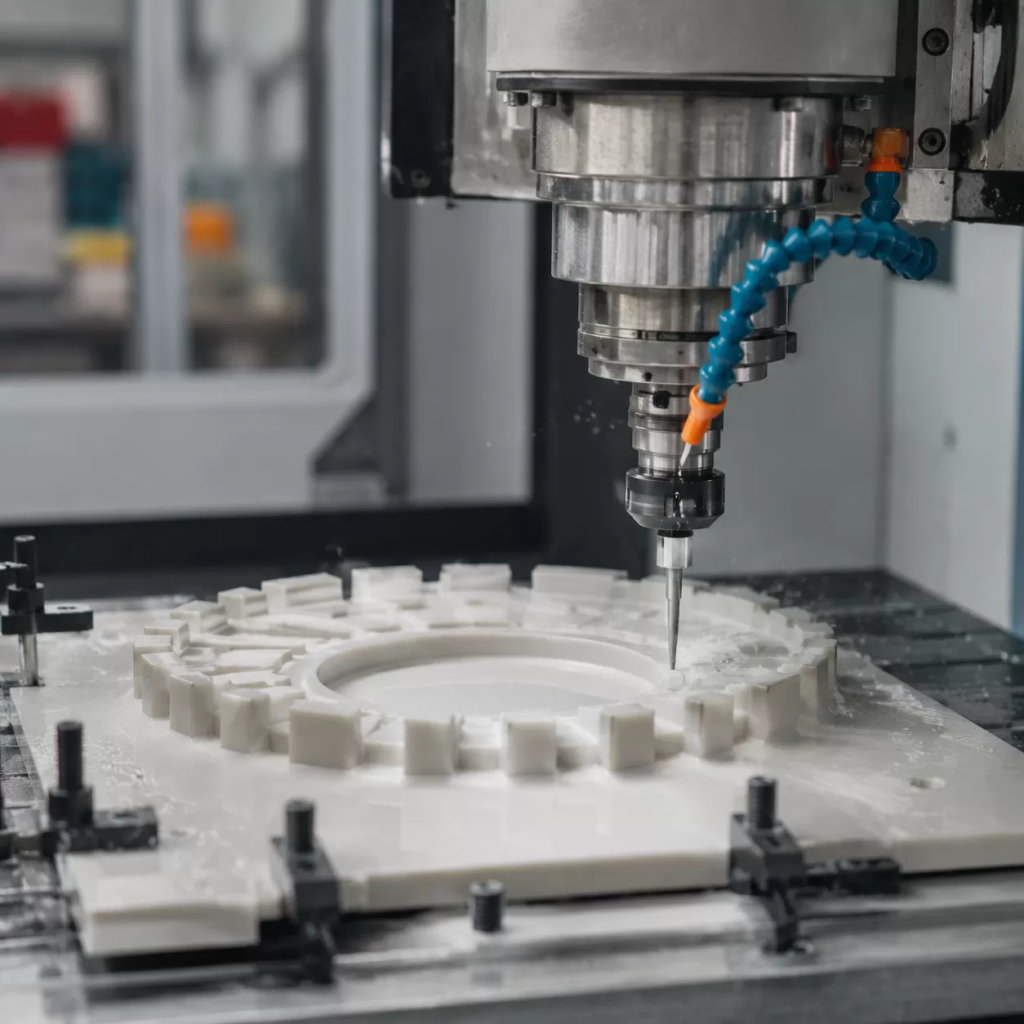
We turn raw sheet metal blanks into high-precision components using a suite of advanced manufacturing capabilities. Our facility leverages cutting-edge technology to handle complex geometries, tight tolerances, and demanding structural requirements for the automobile industry and other high-performance sectors.
High-Precision Geometric Cutting
To deliver clean edges and flawless dimensional accuracy, we utilize three primary cutting methodologies depending on your material thickness and design complexity:
- CNC Fiber Laser Cutting: Ideal for rapid, high-precision cuts on thin to medium gauges with minimal heat-affected zones.
- Waterjet Machining: Perfect for thicker stock or heat-sensitive alloys, preventing thermal distortion and maintaining structural integrity.
- Mechanical Punching: Optimized for high-volume production runs requiring repetitive holes, slots, and complex internal patterns.
CNC Forming and Bending Mechanics
Precision bending requires a deep understanding of material behavior to prevent cracking and deformities. We calculate the exact K-Factor for every alloy to account for material stretching during the bending process. Our technicians strictly adhere to minimum bend radius guidelines, ensuring that high-strength or tempered metals retain their structural integrity without experiencing micro-fracturing along the bend lines.
Structural Assembly and Joining
Our secondary operations transform flat CNC formed metal panels into rigid, fully functional assemblies. We offer multiple industrial joining methods to match your mechanical requirements:
| Assembly Method | Best Used For | Key Advantage |
|---|---|---|
| Robotic MIG/TIG Welding | Structural framing & heavy enclosures | High-strength, permanent fusion |
| Precision Riveting | Dissimilar metals & heat-sensitive parts | Fast, reliable mechanical bond |
| Hardware Insertion | Threaded attachments & standoffs | Clean, reusable fastening points |
Industrial Surface Finishing & Secondary Operations for Sheet Metal
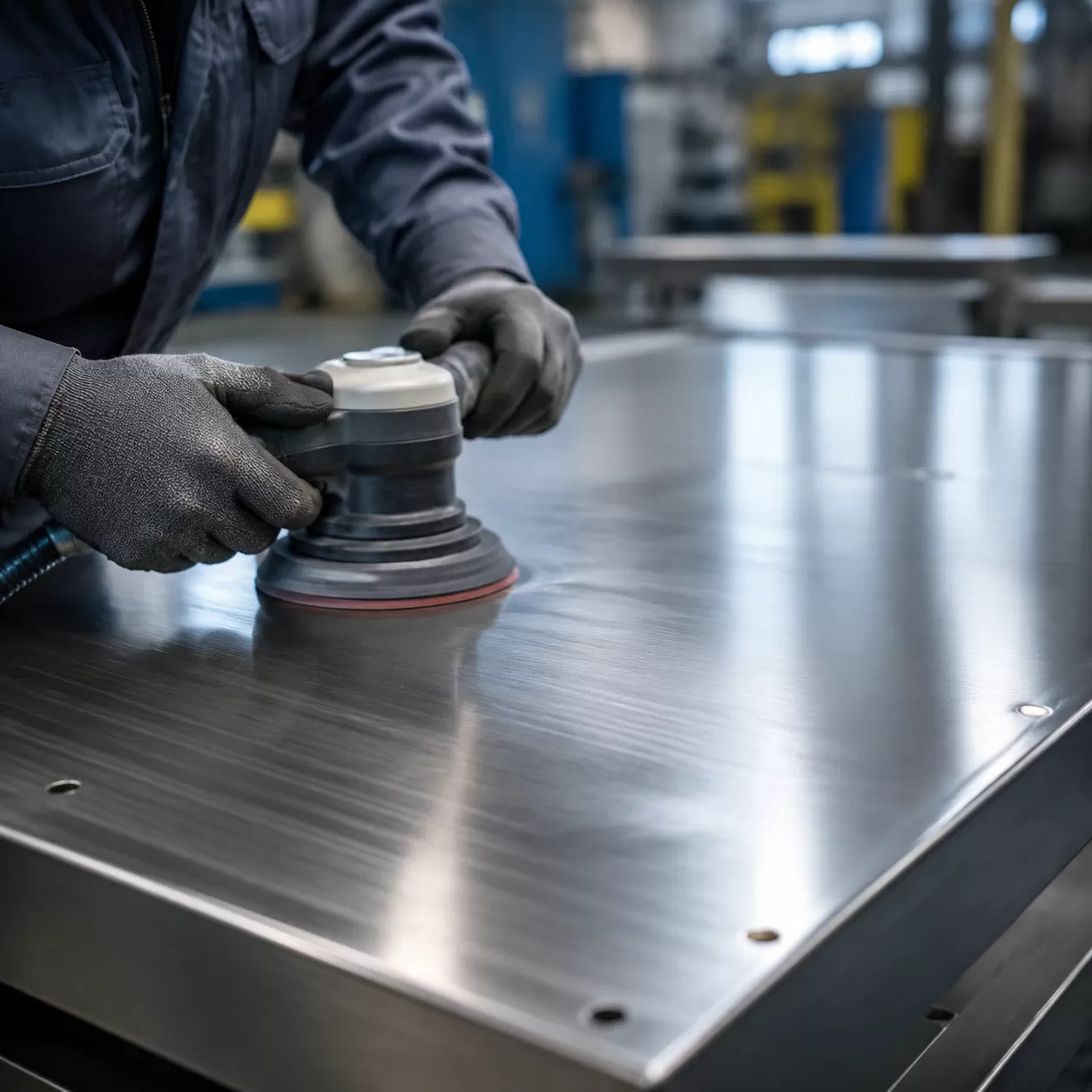
Raw sheet metal needs proper finishing to survive tough industrial environments. We apply high-performance surface treatments to protect your precision sheet metal parts from rust, wear, and environmental degradation while delivering a clean, professional look.
Corrosion Mitigation & Chemical Treatments
- Hot-Dip Galvanizing: Immersing parts in molten zinc creates a thick, robust alloy layer. This provides maximum long-term corrosion protection for heavy-duty outdoor applications.
- Zinc Electroplating: For tighter tolerances, this process applies a sleek, uniform zinc layer that prevents rust without altering part dimensions.
- Chemical Pickling & Oiling: We use this treatment to strip away mill scale and oxides from hot-rolled steel, leaving a clean, oiled surface that resists flash rusting during storage and transport.
Cosmetic & Protective Coatings
To achieve specific aesthetic styles and enhanced wear resistance, we offer advanced topcoat options:
- Powder Coating (RAL System): A durable, scratch-resistant finish available in the full spectrum of standard RAL colors. It delivers a premium look that outlasts traditional liquid paint.
- Hard-Coat Anodizing: Specifically for aluminum sheet stock, this electrochemical process creates a hard, ceramic-like surface layer that excels in high-wear and marine environments.
When choosing between raw finishes and advanced coatings, material composition dictates the best path. For instance, understanding how a nickel alloy vs stainless steel reacts to environmental exposure helps determine if additional plating or anodizing is necessary for your specific application.
Quality Control Standards & Enterprise Compliance for Sheet Metal
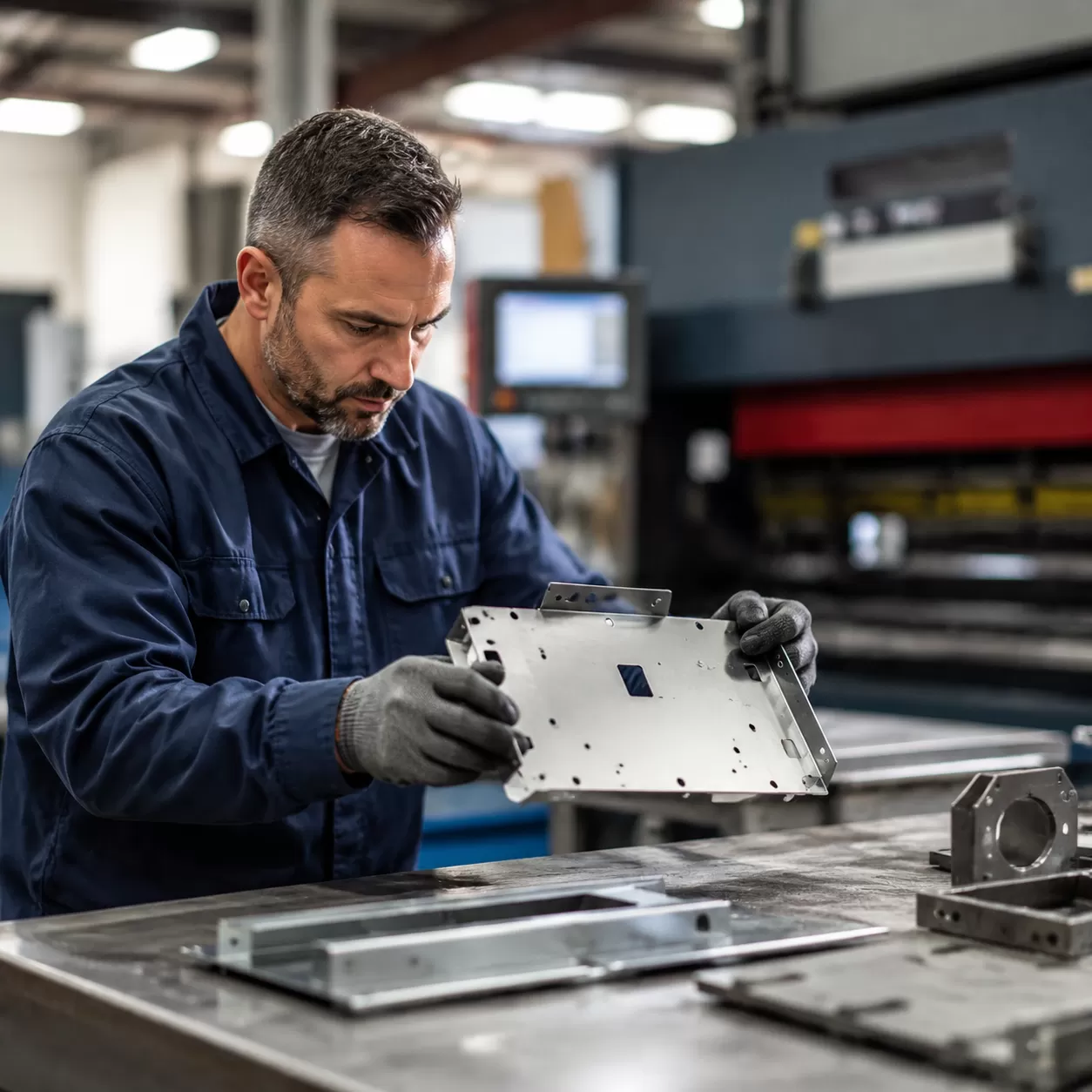
We don’t leave precision to chance. Our sheet metal fabrication process relies on strict metrology validation to ensure every part matches your exact prints. We utilize advanced Coordinate Measuring Machines (CMM) testing, high-speed laser scanner profiling, and rigorous tolerance stack-up controls. This guarantees that multi-component assemblies fit perfectly every time, preventing costly errors during final installation.
Our commitment to quality is backed by full certification alignment. Every production run offers complete material traceability adhering to strict ASTM and AISI standards. Operating under a strict ISO 9001:2015 certified quality management system, we deliver the same level of precision whether you are sourcing parts through custom fabrication or verifying materials like stainless steel sheet metal magnetic properties.
Our Inspection and Compliance Framework
- Dimensional Accuracy: CMM verification and automated laser profiling for tight-tolerance geometries.
- Material Integrity: Complete heat number tracking and material test reports (MTRs) for ASTM/AISI compliance.
- Production Consistency: Statistical Process Control (SPC) to monitor and maintain tolerances across high-volume runs.
B2B Supply Chain, Logistics & Packaging for Sheet Metal
Getting your custom metal sheets from our floor to your production line requires a flawless supply chain. We prioritize damage prevention and flexible scaling so your operations never skip a beat.
Surface Protection Protocols
To ensure your sheet metal blanks arrive without scratches, dings, or scuffs, we employ strict industrial packaging standards:
- Anti-Marring Laser Film: Applied directly to the surface of delicate materials, including aluminum and stainless steel sheet metal, protecting them during processing and transit.
- Interleaving Paper: Placed between individual sheets to eliminate metal-on-metal friction.
- Palletized Edge Protection: Heavy-duty wooden crates and reinforced edge guards prevent strapped bundles from shifting or crushing.
Whether your project involves heavy-gauge plate or intricate parts, choosing the right material finish matters. If you are comparing raw material choices for your broader supply chain, understanding the differences between cast iron vs stainless steel can help guide your early-stage design decisions.
Lead Times & Production Scalability
We balance speed with capacity to match your operational timeline. Our workflow scales seamlessly from initial design to full-scale rollout:
| Production Phase | Typical Lead Time | Best For |
|---|---|---|
| Rapid Prototyping | 3–5 Business Days | Design validation & fit testing |
| Low-Volume Runs | 1–2 Weeks | Market testing & bridge production |
| High-Volume Production | 3–4 Weeks | Blanket orders & continuous supply chains |
Our streamlined sheet metal fabrication logistics ensure dependable freight shipping across the United States, giving your business the predictability it needs.
Industrial Applications of Precision Sheet Metal
Our precision sheet metal parts and custom metal sheets drive performance across the most demanding United States industrial sectors. By matching the right material grades with advanced fabrication techniques, we deliver components engineered for specific operational environments.
Sector-by-Sector Deployment
- Aerospace & Defense: Utilizing lightweight aluminum alloy sheeting and high-strength titanium for structural components, brackets, and internal housing that demand strict weight-to-strength ratios.
- Automotive & Transportation: High-volume production of heavy gauge plate for chassis reinforcement, alongside laser-cut sheet metal brackets, panels, and utility truck bed components.
- Medical Enclosures & Devices: Custom stainless steel sheet metal fabrication for sterile environments, diagnostic equipment chassis, and control panels requiring tight tolerances and flawless surface finishes.
- HVAC & Industrial Ducting: Bulk manufacturing of galvanized sheet steel panels, transitions, and durable ductwork designed to withstand continuous airflow and environmental moisture.
Proven Case Studies
+———————+————————-+————————-+
| Industry Sector | Component Type | Material Solution |
+———————+————————-+————————-+
| Medical Diagnostics | Server Enclosure | 304 Stainless Steel |
| — | — | — |
| Commercial HVAC | High-Volume Ducting | Galvanized Sheet Steel |
| EV Automotive | Battery Pack Housing | 5052 Aluminum Stock |
+———————+————————-+————————-+
Our facility specializes in turning raw sheet metal blanks into high-performance CNC formed metal panels. For specialized heavy-duty applications requiring exceptional environmental endurance, we optimize material choices by analyzing the corrosion resistance of brass and other copper-based alloys to ensure your hardware survives rugged field conditions. From rapid prototyping to full-scale contract manufacturing, we deliver the exact specifications your project demands.
Frequently Asked Questions for Technical Buyers
Sheet Metal vs. Plate Metal: What Is the Distinction?
The primary difference between sheet metal and plate metal comes down to thickness. While both start from the same raw material alloys, they serve completely different structural roles based on their gauge.
- Sheet Metal: Measures between 0.006 inches and 0.250 inches in thickness. It is highly formable and ideal for precision sheet metal parts, enclosures, and automotive panels.
- Plate Metal: Measures over 0.250 inches in thickness. This heavy gauge plate stock is used for structural applications, heavy machinery, and high-load frameworks.
| Material Category | Thickness Range (Inches) | Primary Fabrication Methods | Common Applications |
|---|---|---|---|
| Sheet Metal | 0.006″ to 0.250″ | Laser cutting, CNC punching, press brake bending | Enclosures, brackets, HVAC ducting, chassis |
| Plate Metal | Over 0.250″ | Waterjet cutting, plasma cutting, heavy welding | Structural beams, heavy machinery, armor plating |
How Bend Radius Alters Aluminum Structural Integrity
When working with high-strength aluminum sheet stock (like 6061-T6 or 5052), choosing the correct bend radius is critical to prevent part failure. Selecting a bend radius that is too tight forces the outer fibers of the metal to stretch beyond their tensile limit.
This causes immediate micro-fracturing and stress-cracking along the bend line, which severely compromises the structural integrity of the component. To maintain material strength and reduce the effects of springback, we always calculate the minimum bend radius based on the specific material thickness and temper.
Files Required for a Custom Sheet Fabrication Quotation
To get a fast, accurate quote for your custom metal sheets and CNC formed metal panels, our engineering team requires specific digital design files. Providing the correct formats ensures your parts are quoted accurately without manufacturing delays.
- 3D Models (.STEP or .IGS): Essential for verifying geometry, calculating bend deductions, and checking for interference.
- 2D Vector Files (.DXF or .DWG): Required for flat-pattern laser-cut sheet metal profiles and nesting optimization.
- Production Drawings (.PDF): Must include critical tolerances, hardware insertion specifications, hardware part numbers, and your desired surface finishing (such as powder coating or anodizing).
When designing parts that integrate cast components with fabricated sheet metal housings, ensuring tight tolerances between the two systems is crucial. For projects requiring high-precision cast elements alongside sheet metal production, understanding advanced validation methods like X-ray testing for investment casting ensures complete structural reliability across the entire assembly.
 German
  English