

Medical precision components with ISO 13485 machining tight tolerances biocompatible materials and full traceability for MedTech applications.
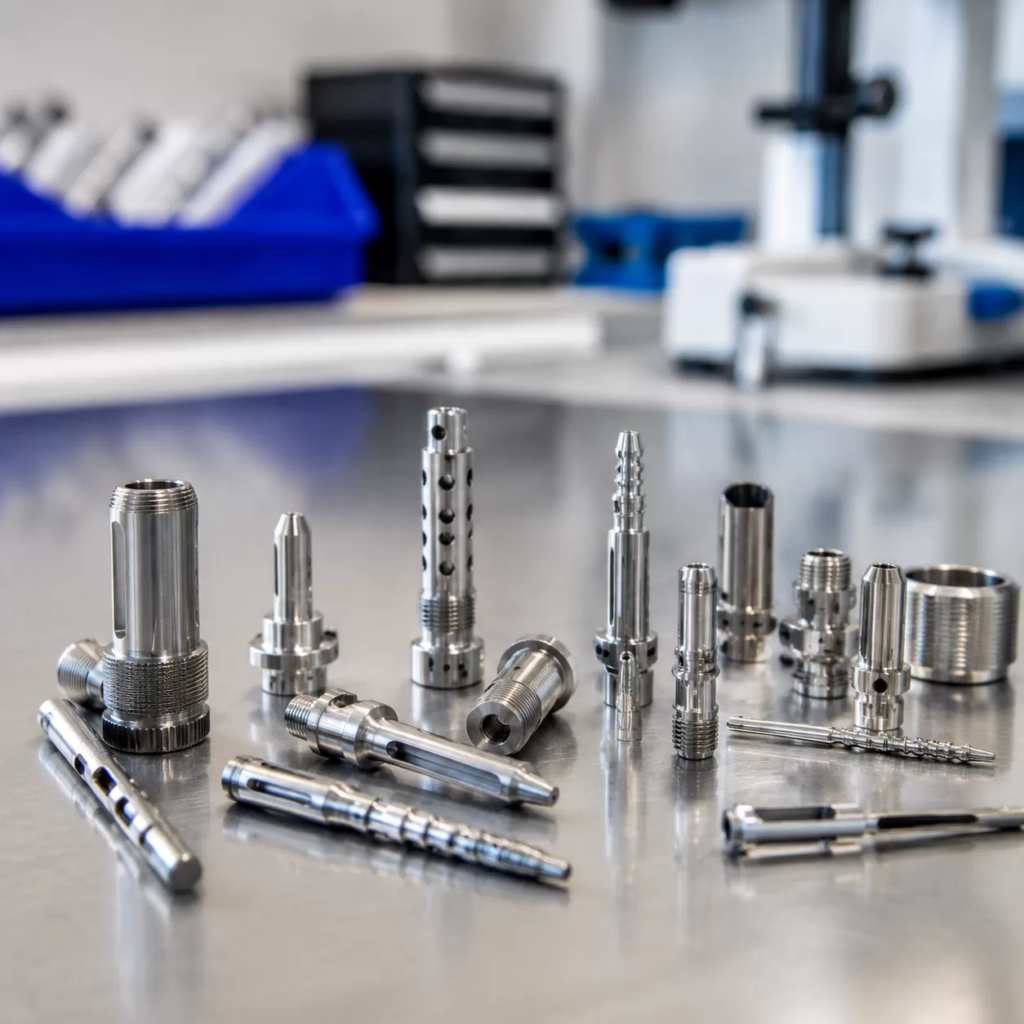
Advanced MedTech Production & Machining Capabilities
We understand that in the medical field, there is zero room for error. When you are developing life-saving technology, you need medical precision components that meet exact specifications every single time. At precisionvast, we utilize a suite of high-end technologies to ensure your designs move from the CAD file to the clinic without compromise.
CNC Swiss Screw Machining
For high-volume production of small, complex parts, our CNC Swiss screw machining is the gold standard. This process is essential for:
- Micro-machining long, slender components without deflection.
- Achieving ultra-tight tolerances for cardiovascular device components.
- High-speed output of bone screws and dental implants.
5-Axis Milling & Mill-Turn Centers
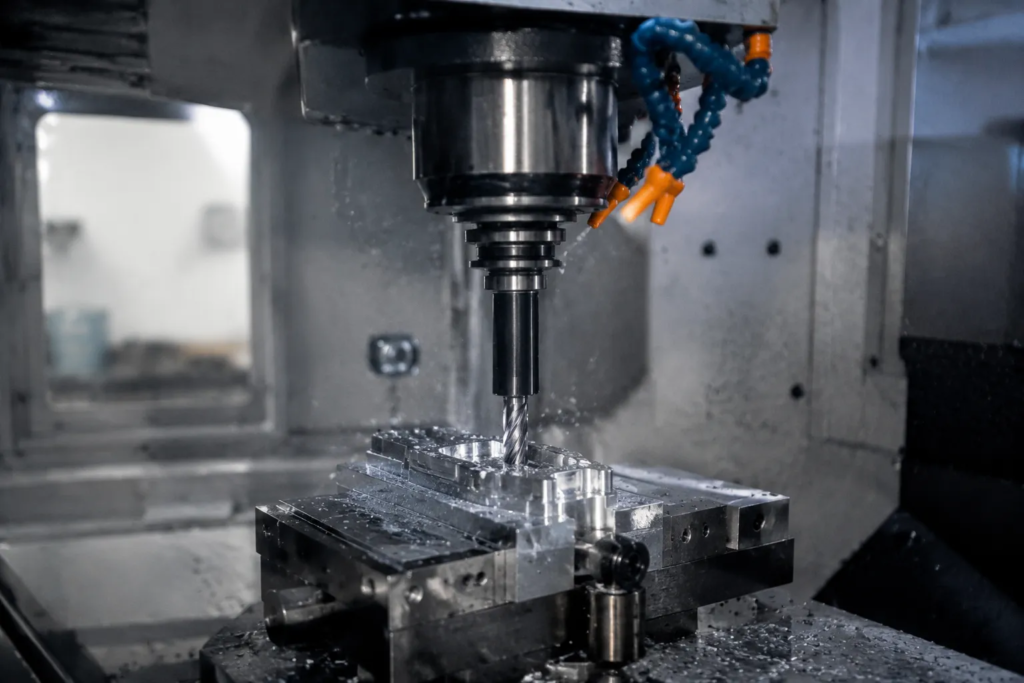
Our 5-axis medical milling and mill-turn centers allow us to handle the most organic and complex geometries. By reducing setups, we improve accuracy and speed up delivery for:
- Complex orthopedic surgery components.
- Sophisticated housings for surgical robotics.
- One-hit machining of multi-featured precision machined medical parts.
Wire & Sinker EDM
When traditional cutting tools can’t reach, our Electrical Discharge Machining (EDM) takes over. We use Wire and Sinker EDM to create:
- Intricate slots and sharp internal corners in hardened titanium medical components.
- Feature-heavy surgical instrument parts with no mechanical stress.
- Highly detailed molds for medical-grade plastics.
Deep Drawn Stamping & Progressive Dies
For high-efficiency production of seamless metal shells and structural parts, we employ implantable metal stampings. Our progressive die capabilities ensure:
- Consistent wall thickness for battery cases and sensor housings.
- Cost-effective scaling from prototype to mass production.
- Repeatable precision for high-tolerance MedTech device components.
| Capability | Best For | Typical Materials |
|---|---|---|
| Swiss Machining | Tiny, cylindrical parts | Titanium, Stainless 316LVM |
| 5-Axis Milling | Complex, organic shapes | PEEK, Cobalt Chrome |
| Wire EDM | Tight tolerances & hard metals | Nitinol, Tool Steels |
| Deep Drawing | Hollow, cylindrical shells | Bio-compatible Tantalum |
Precision Components Engineered for Critical Medical Applications
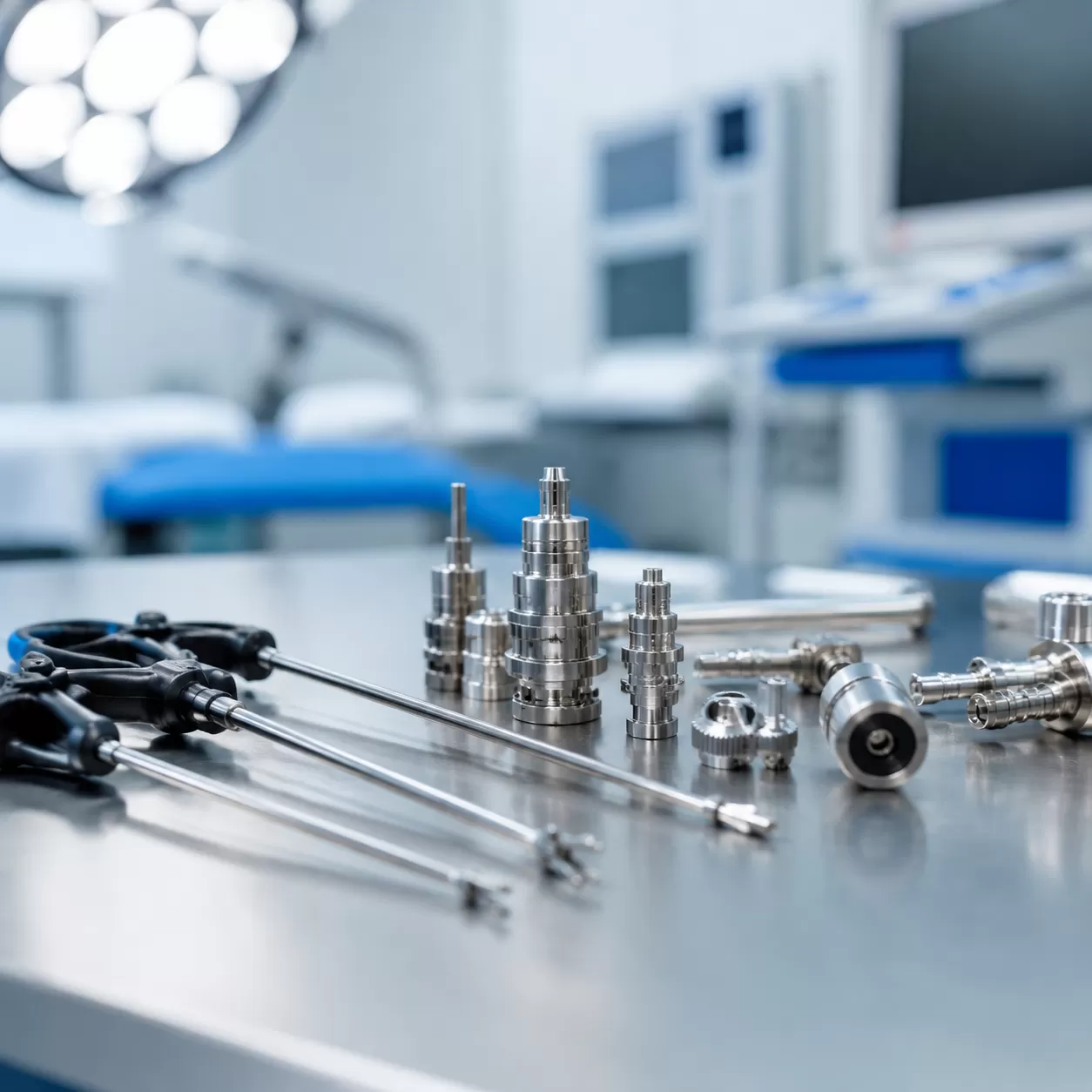
We manufacture high-tolerance medical precision components designed to perform flawlessly under the most demanding clinical conditions. When human lives depend on device reliability, there is no room for error. We produce intricate, ultra-precise parts that meet the strict compliance and safety standards of the United States healthcare sector.
Surgical & Endoscopic Instruments
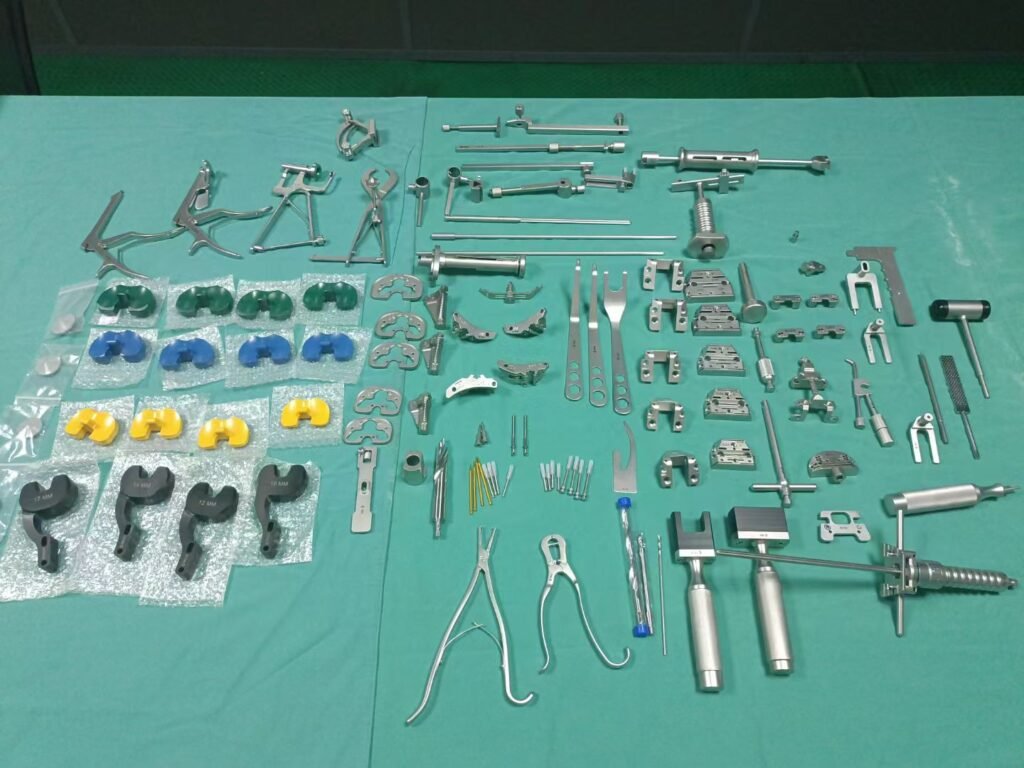
Modern surgery requires lightweight, ergonomic, and extremely sharp tools. We specialize in the high-volume production of surgical instrument manufacturing components, including scalpel handles, endoscopic graspers, biopsy punches, and robotic surgery components. Our advanced machining processes ensure burr-free edges and smooth surface finishes that resist corrosion during repeated sterilization cycles.
Implantable Devices & Orthopedics
Implants must achieve flawless biocompatibility and extreme structural integrity. We machine custom medical implants and orthopedic surgery components like bone screws, joint replacements, fixation plates, and spinal cages. Because these parts remain inside the human body permanently, we rely heavily on biocompatible raw materials. For instance, understanding the role of titanium in modern medicine allows us to leverage its high strength-to-weight ratio and osseointegration properties to deliver premium implantable solutions.
Diagnostic & Critical Care Equipment
Reliable diagnostics save lives. We supply critical hardware for ventilators, MRI machines, ultrasound equipment, and CT scanners. Our production pipeline handles everything from complex internal valve assemblies to heavy-duty structural parts, ensuring that sensitive monitoring and diagnostic machinery operates without a hitch.
Micro-Fluidics & Laboratory Analysis
The push toward miniaturization in medicine requires complex fluid paths and tiny internal geometries. We utilize specialized micro-machining for medical devices to produce high-precision micro-fluidic chips, chromatography components, and lab-on-a-chip systems.
| Application Type | Common Components | Key Requirements |
|---|---|---|
| Surgical | Endoscopic jaws, trocars, robotic arms | Razor-sharp tolerances, smooth finish |
| Orthopedic | Bone screws, hip stems, trauma plates | High fatigue strength, bio-inertness |
| Diagnostic | Valve bodies, sensor housings, pump gears | Zero-leak seals, material stability |
| Micro-Fluidics | Nozzles, manifold blocks, capillary channels | Sub-micron accuracy, mirror finishes |
Specialized Materials for Rigorous Clinical Environments
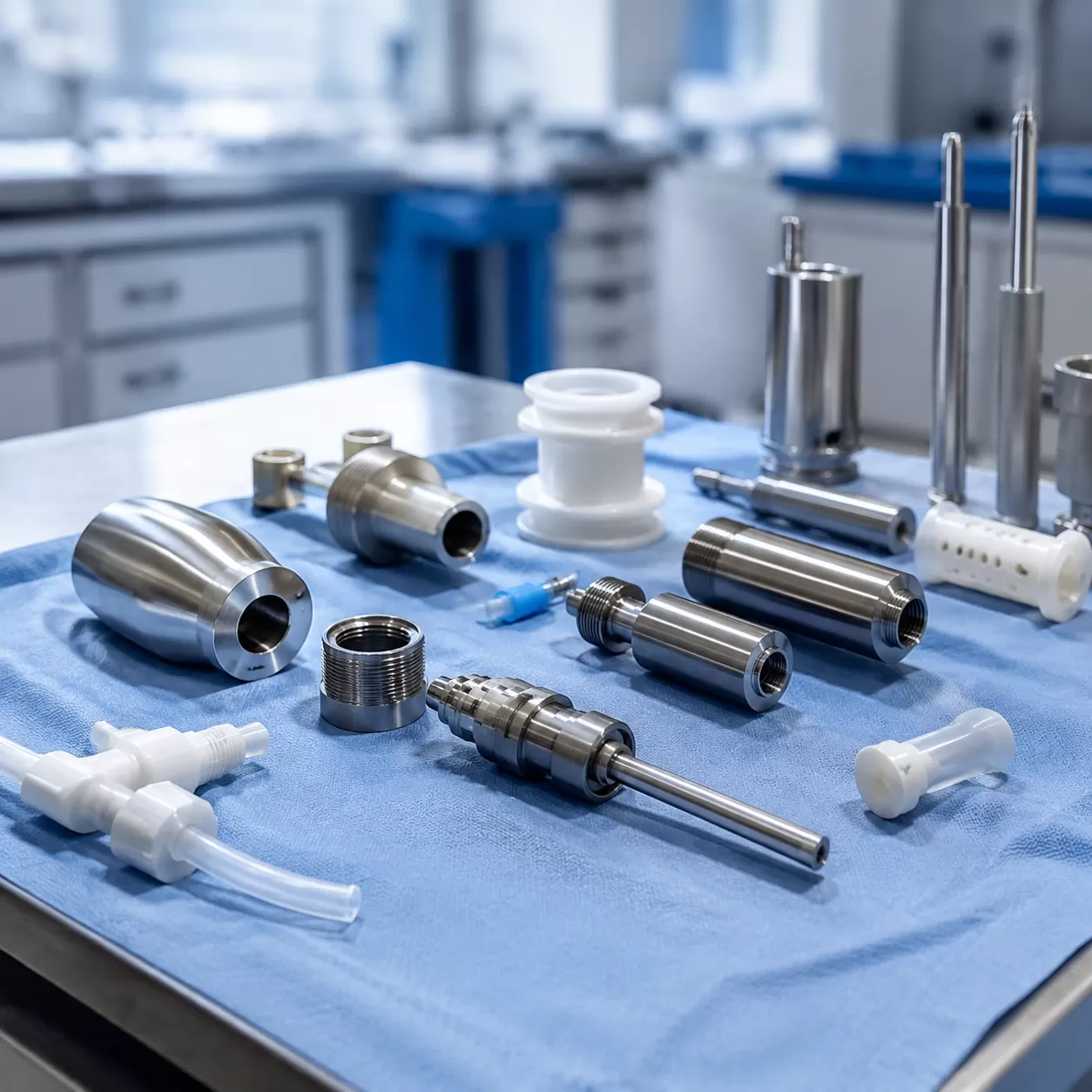
When we manufacture medical precision components, the choice of material isn’t just a technical spec—it’s a safety requirement. We source and machine materials that withstand sterilization, resist corrosion, and maintain structural integrity under extreme stress.
Medical-Grade Metals & Alloys
We work with high-strength, biocompatible raw materials that are standard in the U.S. healthcare market. Our expertise includes:
- Titanium (Grade 5 & 23): Essential for custom medical implants due to its strength-to-weight ratio and osseointegration properties.
- Stainless Steel (316L, 17-4 PH): The gold standard for surgical instrument manufacturing and structural components.
- Cobalt-Chrome: Used extensively for orthopedic surgery components that require superior wear resistance.
- High-Temp Alloys: We leverage innovations in high-temperature alloy properties to ensure parts remain stable during repeated autoclave cycles.
High-Performance Engineered Plastics
For lightweight or radiolucent applications, we process advanced polymers that meet strict USP Class VI standards:
- PEEK (Polyetheretherketone): Ideal for spinal implants and reusable medical devices.
- Ultem (PEI): High dielectric strength and chemical resistance for diagnostic equipment.
- Radal (PPSU): Excellent for trays and handles that undergo frequent chemical sterilization.
| Material Type | Key Benefit | Typical Application |
|---|---|---|
| Titanium Alloys | Biocompatibility | Bone Screws, Joint Replacements |
| 316L Stainless | Corrosion Resistance | Endoscopic Tools, Catheter Parts |
| PEEK Plastic | Radiolucency | Spinal Cages, Surgical Trials |
| Nitinol | Shape Memory | Stents, Vascular Guidewires |
We understand that MedTech device components must be flawless. Whether you need the rigidity of a specialty alloy or the chemical inertness of a high-performance plastic, we ensure every material used is fully certified and fit for its clinical purpose.
Uncompromising Quality Systems & Regulatory Adherence for Medical Precision Components
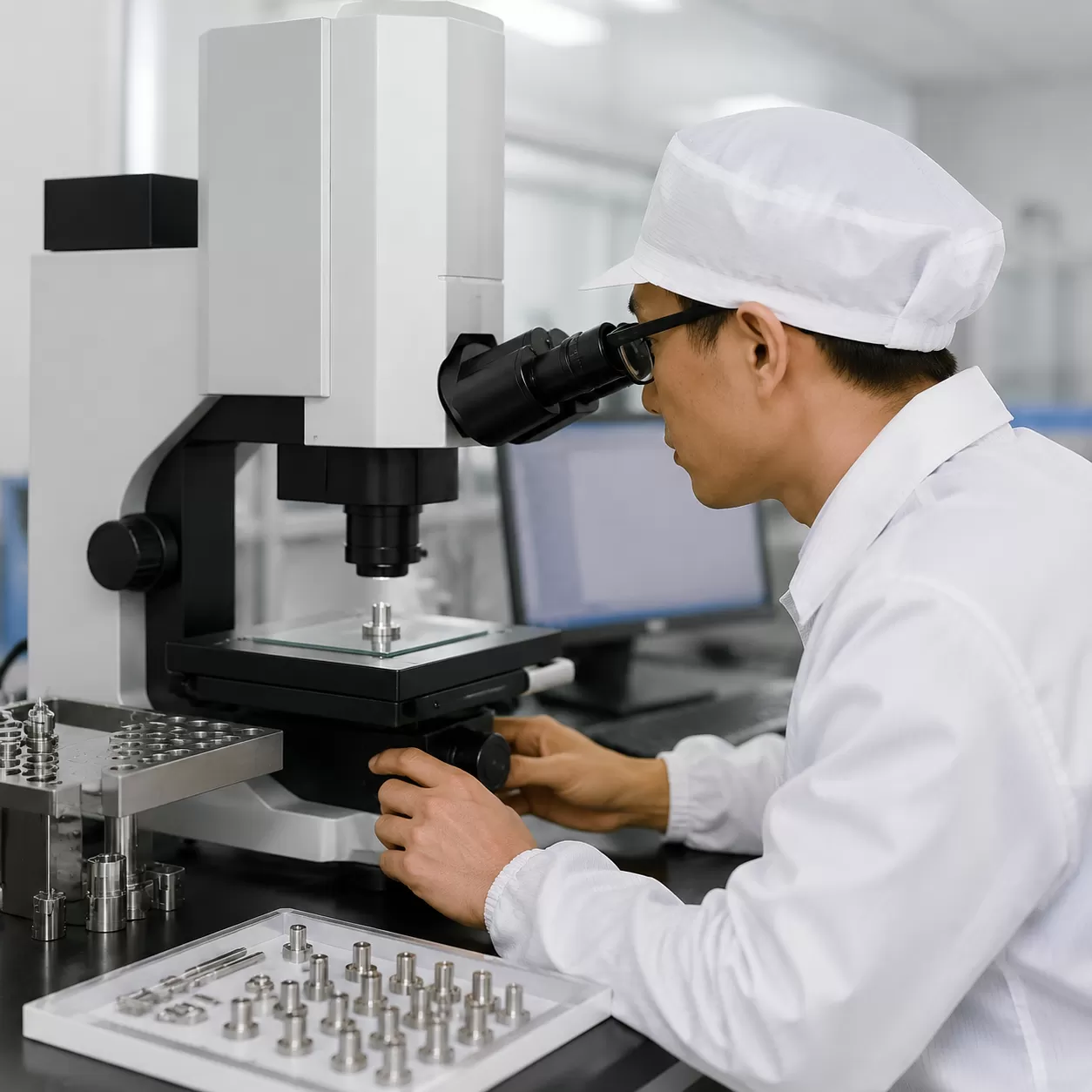
In MedTech manufacturing, there is absolutely zero room for error. When producing medical precision components, our quality control systems are designed to guarantee total compliance, safety, and performance for every single part that leaves our facility.
ISO 13485 Certified Framework
We operate under a strict ISO 13485 certified machining framework specifically tailored for the medical device industry. Every production run undergoes rigorous risk management and full lot traceability. From raw material intake to final packaging, we document every step to ensure your components meet all FDA and international regulatory requirements.
Advanced Metrology & Validation Laboratory
To maintain the micro-tolerances required for complex medical devices, our facility features a climate-controlled validation lab equipped with state-of-the-art inspection technology:
- Multi-sensor CMMs for automated, high-precision dimensional tracking.
- Optical gauging systems for non-contact measurement of delicate micro-machined parts.
- Nondestructive testing (NDT) to identify internal material flaws early. Understanding structural integrity is critical, much like identifying where are the weak points in alloy casting processes during early metallurgical evaluation.
Post-Processing & Surface Finish Protocols
The performance of a medical component depends heavily on its surface integrity. Our post-processing protocols eliminate contamination and enhance biocompatibility:
- Citric and Nitric Passivation: Removes free iron from the surface of stainless steel and titanium medical components to prevent corrosion.
- Ultrasonic Cleaning: Multi-stage cleaning cycles in controlled environments to eliminate microscopic oils and debris.
- Electropolishing: Achieves ultra-smooth, debris-free microscopic finishes necessary for implantable devices and surgical instruments.
Why Partner with precisionvast for Contract Manufacturing?
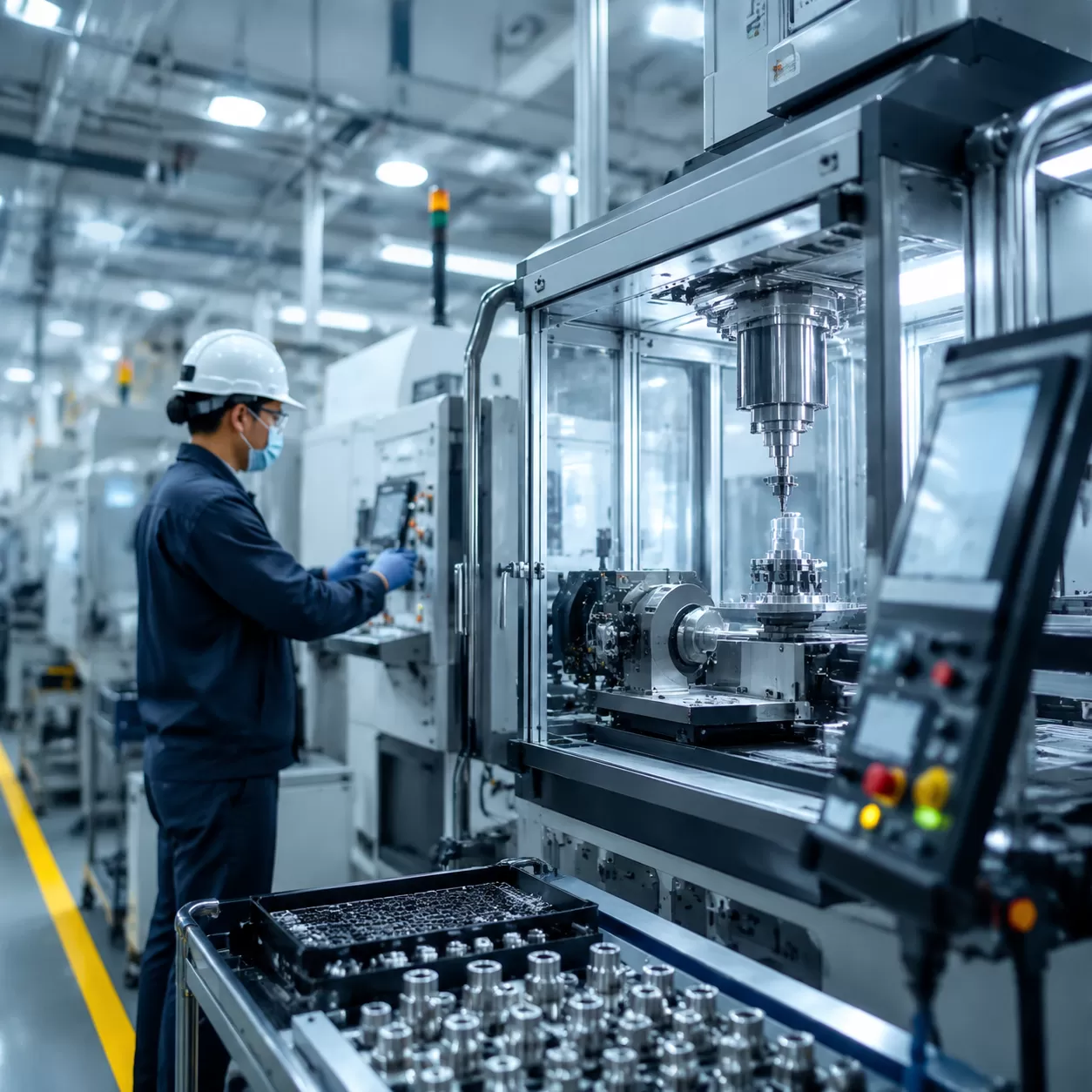
Choosing the right contract manufacturer for medical precision components dictates how fast your device makes it to market. At precisionvast, we do more than just cut metal. We serve as an extension of your engineering team to ensure your MedTech device components are production-ready, cost-effective, and fully compliant.
DFM (Design for Manufacturability) Consultation
The best time to optimize a part is before production starts. Our engineering team reviews your CAD models to identify complex geometries that could drive up costs or cause failures during high-tolerance medical parts production. We look at everything from thread depths to tool clearances, suggesting minor adjustments that preserve design intent while streamlining medical CNC machining steps.
Prototype to Production Pipeline
Moving from a proof-of-concept to full-scale automated manufacturing requires absolute consistency.
- Rapid Prototyping: We build functional, 1-to-1 scale prototypes using the exact biocompatible raw materials your final design requires.
- Seamless Scalability: Because we use identical 5-axis medical milling and CNC Swiss screw machining setups for both prototyping and production, transitioning to high-volume manufacturing is seamless and risk-free.
- Component Testing: Our comparison of nickel with other metals guides raw material choices during prototyping to ensure exceptional corrosion resistance in clinical settings.
Supply Chain Integration
We eliminate logistical headaches by managing the entire lifecycle of your custom medical implants and surgical instrument manufacturing. Our team handles everything from raw material sourcing with full lot traceability to final cleanroom packaging. By integrating kitting, inventory management, and reliable shipping protocols directly into our quality system, we ensure your production lines stay up and running without interruption.
Frequently Asked Questions About Medical Machining
What specific tolerances can precisionvast maintain for micro-medical parts?
We routinely hit ultra-precise tolerances down to $pm0.0001$ inches ($pm0.0025text{ mm}$) for high-tolerance medical parts. Our advanced CNC Swiss screw machining and micro-machining centers allow us to manufacture microscopic medical precision components with extreme repeatability, ensuring flawless performance in critical clinical applications.
Do you provide full material certification and lot traceability?
Yes. Every single order of precision machined medical parts comes with complete documentation. We offer:
- Full Mill Test Reports (MTRs)
- Certificate of Conformance (CoC)
- End-to-end lot traceability from raw material to final inspection
This ensures your biocompatible raw materials meet strict regulatory frameworks. For high-performance projects utilizing specialized metals, you can see how we evaluate premium material characteristics in our guide on steel casting methods.
How do you handle cleaning and contamination control for implant-grade components?
We enforce strict multi-stage cleaning protocols to eliminate manufacturing oils, debris, and bioburden. Our process includes automated ultrasonic cleaning lines, citric or nitric acid passivation for titanium medical components, and final inspection under high-magnification microscopy. All custom medical implants and cardiovascular device components are handled in controlled environments to prevent cross-contamination before packaging.
What is the typical lead time for a custom medical component prototype?
Standard lead times for medical CNC machining prototypes typically range from 1 to 2 weeks, depending on part complexity and material availability. If you utilize our DFM (Design for Manufacturability) consultation early in the design phase, we can often fast-track the pipeline to get functional MedTech device components into your hands for testing even faster.
 English
  German