

Learn shell casting process steps benefits and applications with resin coated sand molds for precise small to medium metal parts
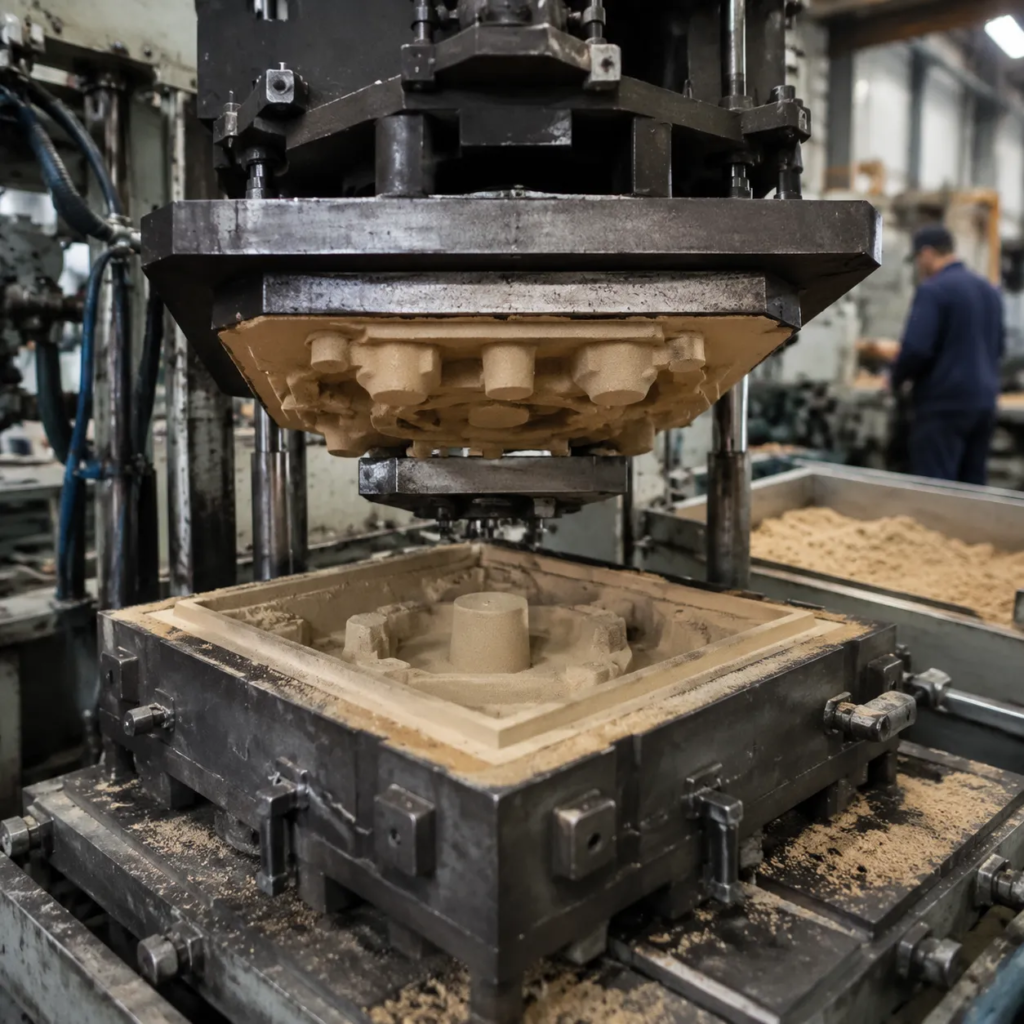
What is Shell Casting?
We use shell casting—often called the shell molding process—as a precision fabrication method to create high-quality metal components. The core mechanic relies on a thin, hardened “shell” of sand mixed with a phenolic resin binder, which is formed by applying the mixture to a heated metal pattern plate. Once cured, this durable crust acts as the mold cavity for receiving molten metal.
[Image of shell molding process]
Sand Casting vs Shell Casting
While both are foundational foundry techniques, we choose shell molding when standard sand casting cannot deliver the required precision.
| Feature | Traditional Sand Casting | Shell Casting |
|---|---|---|
| Mold Material | Raw, moist green sand | Resin-coated silica sand |
| Mold Thickness | Thick, heavy flask filling | Thin, lightweight shell (typically 1/4 to 3/8 inch) |
| Dimensional Tolerance | Moderate | Exceptional (highly precise) |
| Surface Roughness | Rough, requires heavy machining | Smooth, near-net-shape finish |
Why It Is an Expendable Mold Process
We classify shell molding as an expendable mold casting process because the resin-bonded shell is destroyed to extract the finished part. Every production cycle requires a brand-new shell mold. This sacrifice guarantees that every single piece we cast maintains immaculate detail, free from the wear and tear that degrades permanent molds over time.
The Step-by-Step Shell Molding Process
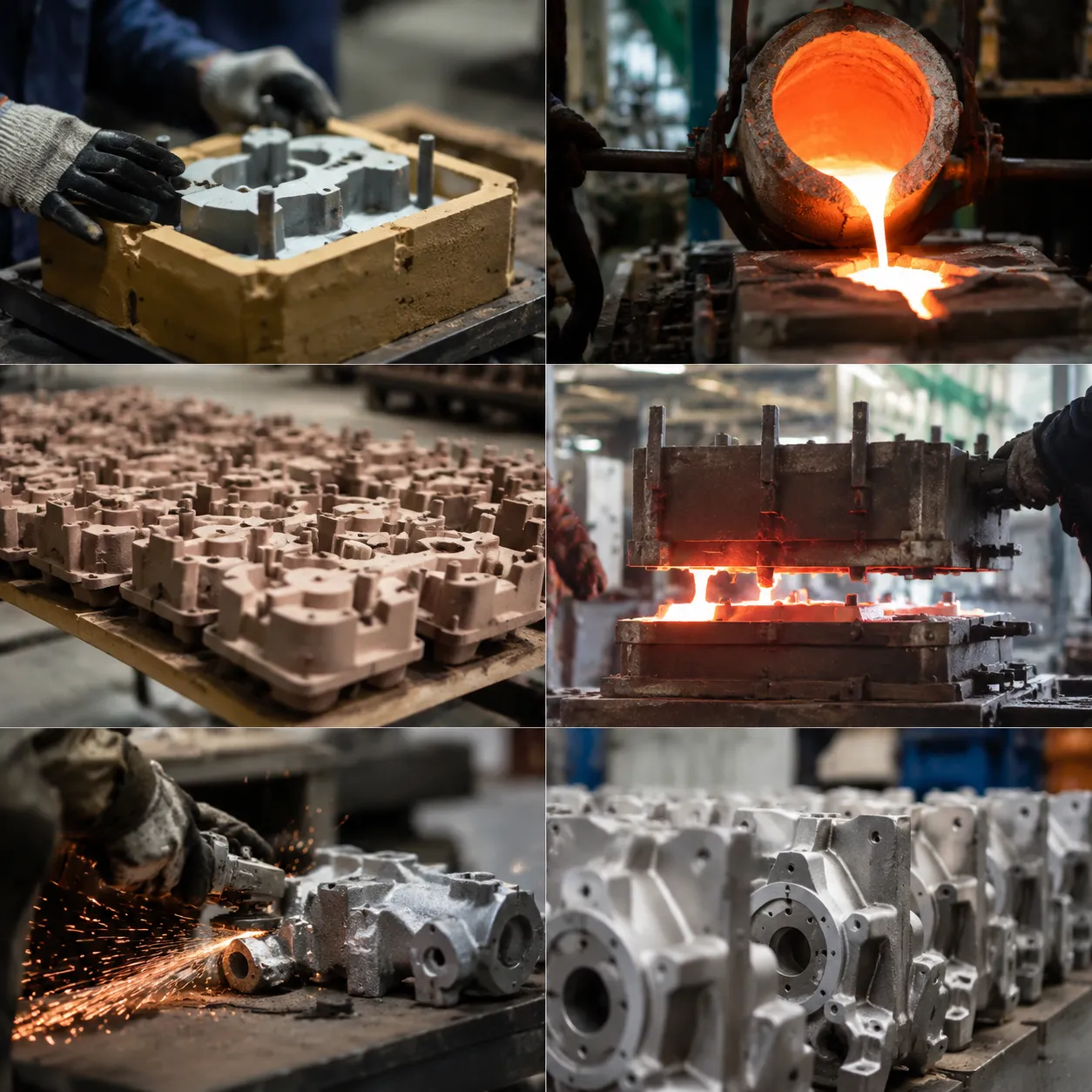
Creating high-precision components requires a meticulous, controlled sequence. We utilize an advanced shell molding process to transform raw sand and metal into highly accurate industrial parts.
[Image of shell molding process step by step]
1. Pattern Preparation and Heating
The process begins with a two-piece metal pattern plate, typically machined from cast iron or steel to match the shape of the final part. We preheat this metal pattern to temperatures ranging from 350°F to 700°F (175°C to 370°C) and apply a silicone release agent to ensure the cured sand shell releases cleanly later on.
2. Applying the Sand-Resin Mixture
Next, we clamp the heated pattern to a dump box filled with fine silica sand coated in a heat-reactive phenolic resin binder. When the dump box is inverted—a technique known as the dump box method—the sand mixture coats the hot pattern. The heat melts the resin, forming a partially cured, uniform sand crust around the pattern plate.
3. Curing and Hardening the Shell Halves
Once the desired thickness is achieved, the dump box is rotated back, and the excess sand falls away. We place the pattern plate with the adhering sand layer into an oven to fully cure the resin. This bakes the mixture into a rigid, rock-hard sand shell. Ejector pins then push the completed shell half off the metal pattern.
4. Assembling the Mold and Molten Metal Pouring
We repeat the step to create both halves of the mold. If the part requires internal cavities, we insert a separate sand core. The two shell halves are securely clamped or glued together and placed into a flask supported by backing material like metal shot. We then initiate the molten metal pouring phase, filling the thin shell cavity with liquid alloy.
5. Cooling Down and Shakeout
After the metal solidifies and cools, the brittle sand shell is broken away during the shakeout process. Because our advanced techniques minimize defects, the resulting https://www.precisionvast.https://www.precisionvast.com/”>precision cast parts feature exceptional surface finishes and dimensional accuracy, significantly reducing the need for costly post-machining operations.
Key Advantages of Shell Casting
When we manufacture components for our US clients, we often rely on the shell molding process because it strikes the perfect balance between precision and high-volume efficiency. If you need consistent parts without the heavy cleanup work of traditional methods, here is why shell casting stands out in modern foundry manufacturing.
- Tight Dimensional Tolerance: We achieve exceptional accuracy from part to part. This high level of precision means your components fit perfectly every single time, drastically reducing variance across large production runs.
- Superior Surface Roughness: The fine sand-resin mix creates an incredibly smooth finish. By significantly lowering the surface roughness right out of the mold, we eliminate the need for costly post-machining work.
- Built for Automation: This process is highly compatible with automated machinery. Once the tooling is ready, we can scale up production rapidly to meet demanding timelines with minimal labor.
- Complex and Thin-Walled Geometries: If your design features intricate details or thin sections, this method handles it beautifully. The rigid shell holds its shape perfectly under the heat and pressure of the pour, allowing for complex shapes that other processes struggle to replicate.
Shell Casting Limitations and Challenges
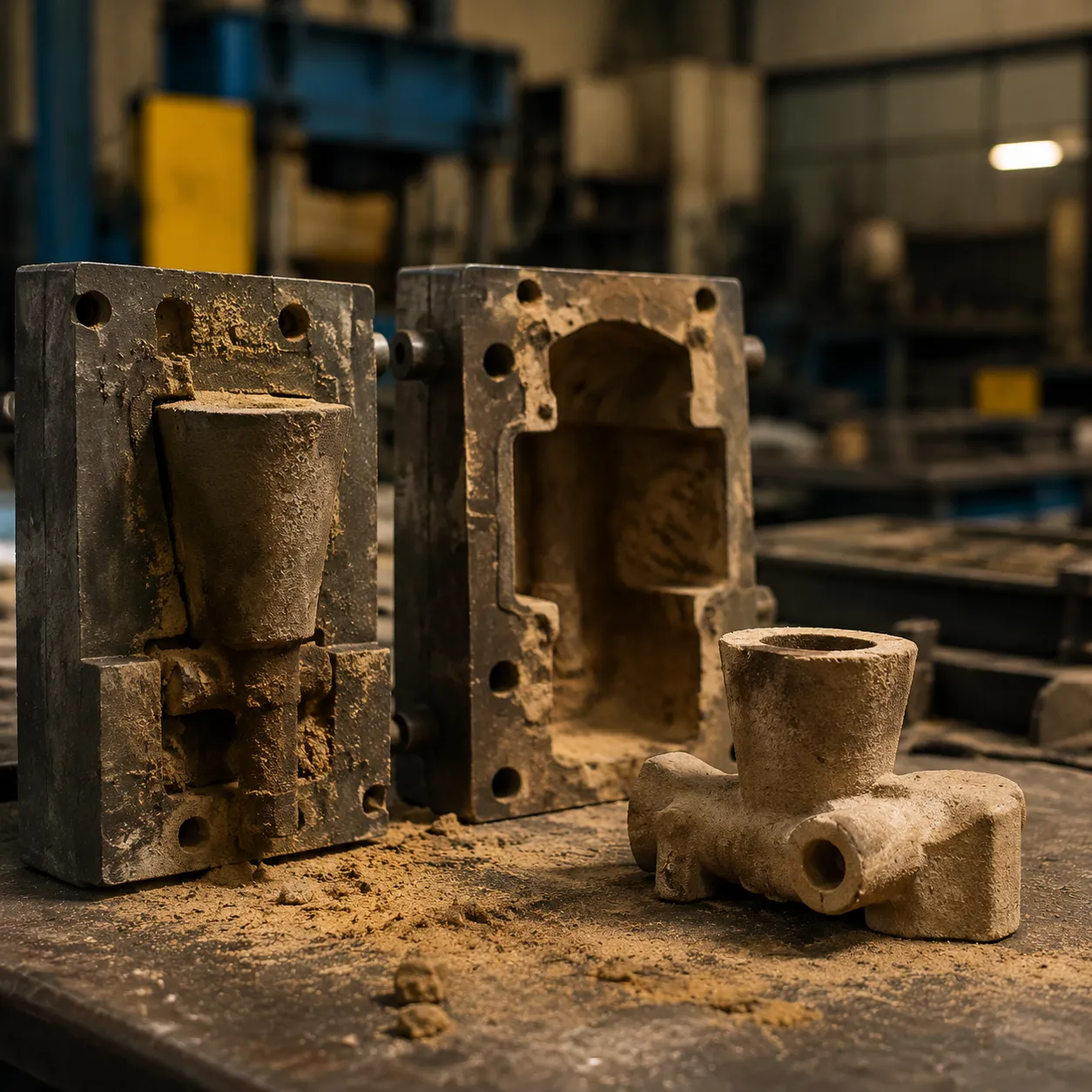
While we love the precision of the shell molding process, it is not always the perfect fit for every project. Like any foundry manufacturing method, we have to balance the high-quality output against a few practical downsides.
Key Disadvantages of Shell Molding
- High Initial Tooling Costs: We have to use a precision-machined metal pattern plate (usually iron or steel) instead of cheap wood patterns. If you are doing a short run, this upfront expense makes it hard to justify.
- Size and Weight Restrictions: Unlike traditional sand casting vs shell casting where you can pour massive, multi-ton components, shell molds have a lower weight limit. We typically limit this process to small-to-medium parts.
- Pricey Consumables: The special phenolic resin binder used to coat the silica sand costs significantly more than the standard clay and water used in green sand casting.
- Specialized Equipment Needs: You need dedicated heated dump boxes or shell-injection machinery to cure the shells properly, which drives up our initial shop investments.
- Risk of Gas Defects: Because the resin burns when it meets molten metal pouring temperatures, it releases gases. If we do not vent the mold perfectly, it can cause trapped porosity in the final cast iron components or aluminum parts.
Best Metals for Shell Casting
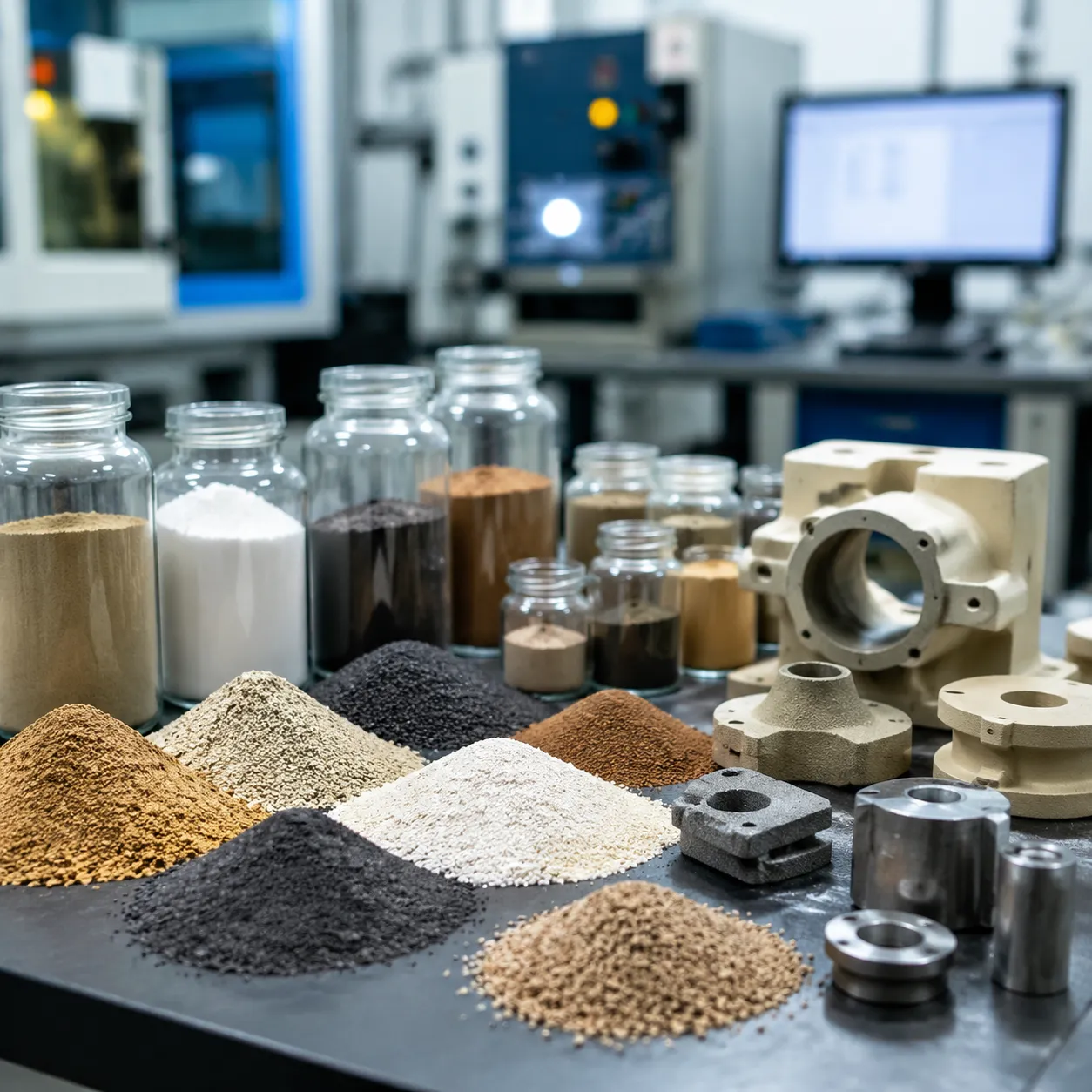
We use shell casting for a wide variety of metals, but the process shines brightest with specific materials. Choosing the right metal directly impacts our shell thickness and curing time, as heavier, hotter metals require a more robust sand-resin shell to prevent breakouts.
Ferrous Metals
Ferrous alloys are a staple in our foundry manufacturing setups due to their strength and compatibility with the high-heat resistance of shell molds.
- Cast Iron: Exceptional fluidity makes cast iron components perfect for filling thin, intricate shell walls.
- Carbon Steel: Offers high tensile strength for heavy-duty industrial parts.
- Alloy Steel: Ideal for custom applications requiring extreme wear and heat resistance.
Non-Ferrous Metals
For lighter or more corrosion-resistant components, non-ferrous metals flow easily into shell molds, yielding incredible surface smoothness.
- Aluminum Alloys: Popular in aluminum shell molding for aerospace and automotive parts due to its low weight and fast cooling times.
- Bronze & Brass: Chosen for excellent wear resistance, tight dimensional tolerance, and great aesthetic finish.
Material Impact on Shell Specs
| Metal Type | Pouring Temp | Required Shell Thickness | Curing Time Impact |
|---|---|---|---|
| Ferrous (Steel/Iron) | High | Thicker Shell (0.3″ – 0.5″) | Longer cure time to withstand intense heat |
| Non-Ferrous (Aluminum) | Low | Thinner Shell (0.2″ – 0.3″) | Faster cure and cool-down cycles |
Industrial Applications of Shell Molded Parts
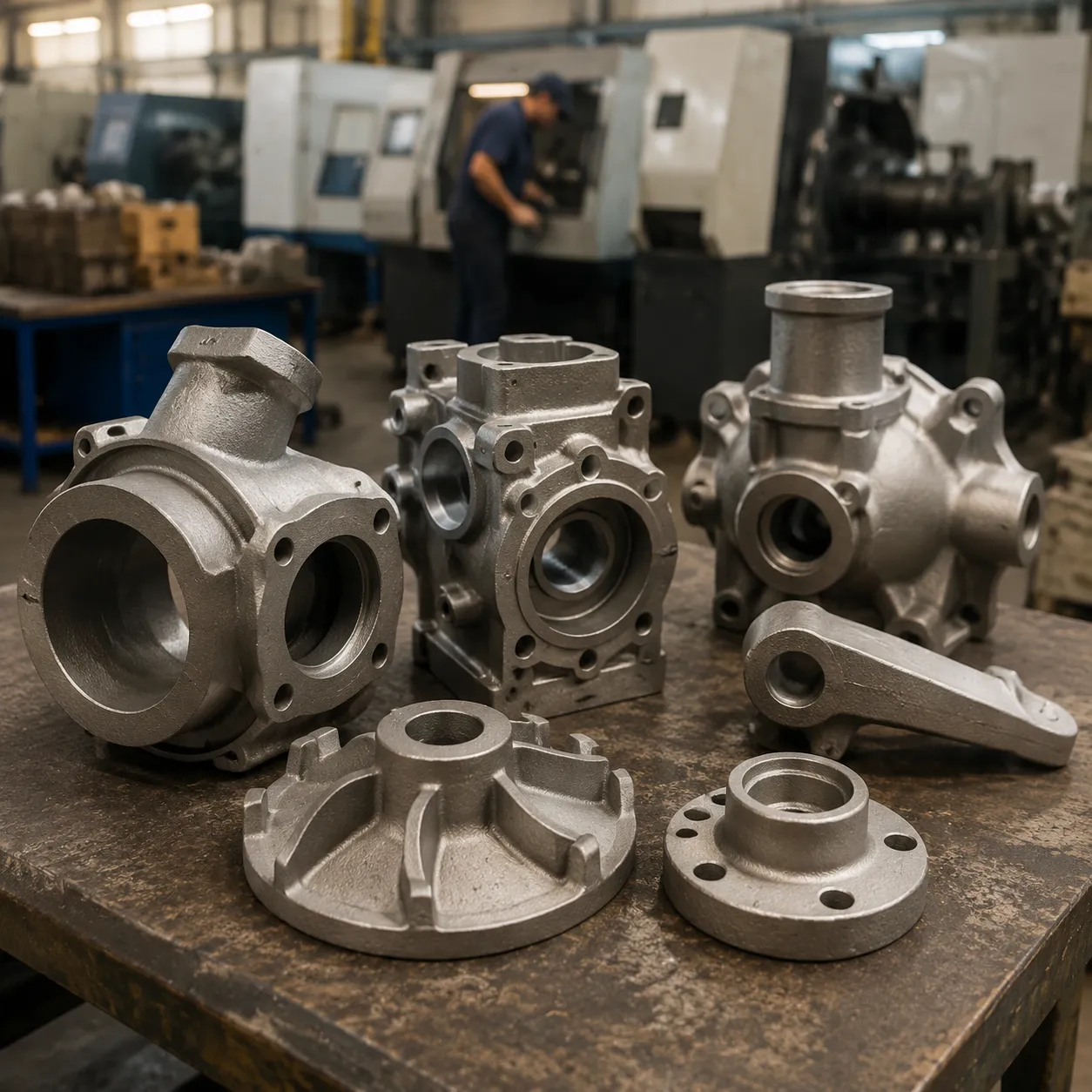
We use the shell casting process to manufacture high-precision components across several demanding American industries. Because shell molding delivers exceptional dimensional accuracy and smooth surface finishes, it is our go-to method for parts that require minimal post-machining and reliable performance under pressure.
Automotive Components
The automotive sector relies heavily on foundry manufacturing to produce high-wear, high-stress parts. By utilizing durable metal pattern plates, we ensure every single cast meets exact specifications. Camshafts and Crankshafts: Requiring excellent wear resistance and perfect balance. Cylinder Heads: Complex internal geometries that demand precise thin-wall structures. Brake Rotors and Drums: High-density cast iron components that safely dissipate heat.
Aerospace and Defense Hardware
For aerospace and defense applications, weight reduction and material integrity are critical. We frequently utilize aluminum shell molding to create lightweight, high-strength structural parts that meet strict regulatory standards. Fuel manifold systems Engine housing brackets Missile guidance components Inert munitions bodies
Heavy Machinery, Valves, and Gear Housings
Industrial equipment must withstand extreme environments. We deploy expendable mold casting using premium phenolic resin binders to create robust components that resist mechanical failure.
| Industry Sector | Common Shell Cast Parts | Primary Material Used |
|---|---|---|
| Fluid Control | Valve bodies, pumps, and impellers | Bronze, Brass, & Stainless Steel |
| Power Transmission | Gear housings, sprockets, and sheaves | Ductile Iron & Carbon Steel |
| Agriculture & Mining | Brackets, levers, and heavy-duty hinges | Alloy Steel |
Shell Casting FAQs
We get a lot of questions from US manufacturers about how the shell molding process fits into their production lines. Here are the quick, direct answers to the most common queries we receive at our foundry.
Sand Casting vs Shell Casting vs Investment Casting
Choosing the right foundry manufacturing method depends heavily on your budget, production volume, and required surface roughness.
| Feature | Shell Mold Casting | Traditional Sand Casting | Investment Casting |
|---|---|---|---|
| Mold Material | Resin-coated silica sand shell | Moist green sand or dry sand | Ceramic slurry/shell |
| Dimensional Tolerance | Tight and precise | Generous / Loose | Exceptionally tight |
| Surface Finish | Smooth, minimal machining | Rough, requires cleanup | Excellent, net-shape |
| Production Speed | High (Highly automated) | Medium to Low | Low (Labor-intensive) |
| Pattern Cost | Moderate to High (Metal plates) | Low (Wood or plastic) | High (Wax injection dies) |
How thick is a typical shell mold?
A standard shell mold is usually 0.3 to 0.4 inches (8 to 10 mm) thick. Because we use a heated metal pattern plate and a thermosetting phenolic resin binder, the sand mixture cures rapidly into a rigid, lightweight crust. This thin shell provides more than enough strength to hold heavy molten metal pouring while remaining highly permeable for escaping gases.
What type of sand is used in the shell molding process?
We use washed and dried silica sand with a very fine grain size, pre-coated with a phenolic resin binder and catalysts. The fine grain size is the secret behind the superior surface finish and tight dimensional tolerance of our cast iron components and aluminum shell molding pieces.
Is shell casting suitable for low-volume production?
Generally, no. Shell casting is not ideal for low-volume or prototyping runs. The process requires precision-machined metal patterns, which come with a high initial tooling cost. To get the best return on your investment, we recommend this process for medium to high-volume production runs where the cost of the tooling is easily absorbed by the high production rates and reduced post-machining costs.
 English
  German