

Learn EDM wire EDM machining basics, advantages, tolerances, materials and cost to compare machines and find precision manufacturing services.
What is Wire EDM?
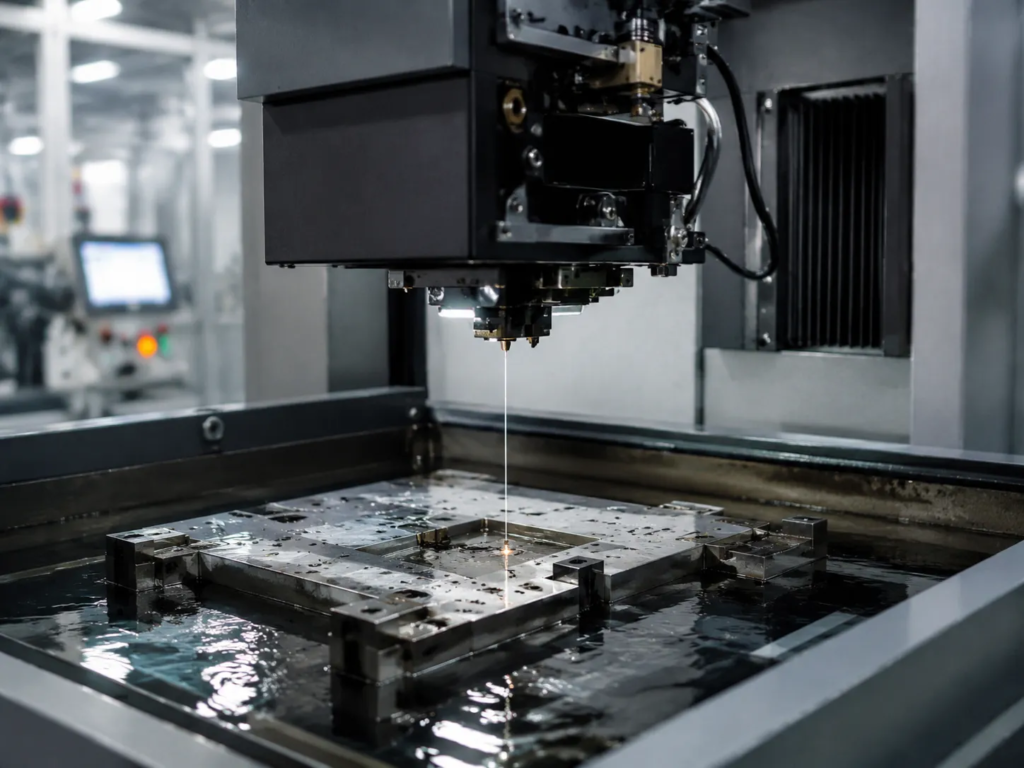
When manufacturing requires extreme precision that traditional cutting tools cannot achieve, we turn to electrical discharge machining (EDM). Wire EDM is a highly specialized thermal production process used to slice through conductive materials with microscopic accuracy. Instead of relying on mechanical force, we use a continuously moving thin wire to vaporize material along a programmed path.
[Image of wire EDM process diagram]
The Wire Erosion Process
The wire erosion process works by creating a controlled electrical circuit between the traveling wire and the workpiece. The two components never actually touch. Instead, they are submerged in a dielectric fluid, and as the wire approaches the metal, a powerful electrical current passes between them. This intense voltage melts and vaporizes the target material, precisely eroding the metal away to leave a perfectly smooth, accurate cut.
Why It Is Called Spark EDM
We frequently refer to this technology as spark EDM or a spark erosion machine because of the millions of localized electrical sparks generated every second during operation. Each individual spark acts as a microscopic cutting tool, eroding a tiny bit of metal. Because the wire is constantly moving off a spool, a fresh, un-eroded section of wire is always engaging the workpiece, preventing the wire from snapping and ensuring uniform accuracy throughout the entire cut.
How Wire EDM Works Step-by-Step
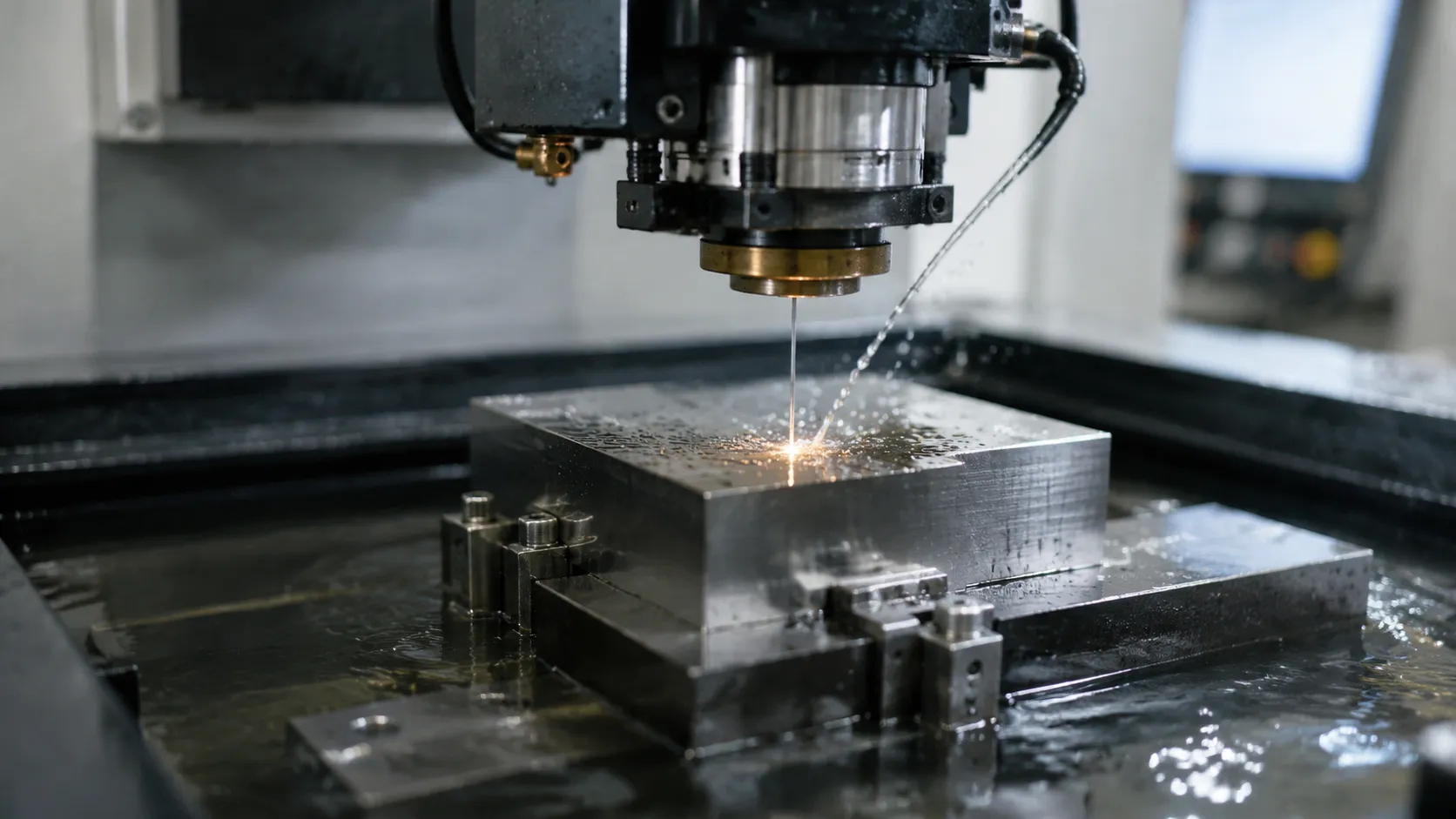
Understanding the wire erosion process is simple once you break it down into how our machines manage electricity and motion. We don’t use mechanical force; instead, we use controlled electricity to slice through metal with extreme accuracy.
Here is exactly how our https://www.precisionvast.com/precision metal cutting system achieves those perfect results:
- The Traveling Wire: We use a thin, spool-fed brass or zinc-coated wire as the electrode. This traveling wire EDM setup ensures that a fresh, un-eroded wire surface is constantly touching the workpiece, preventing the wire from snapping during intense cuts.
- The Dielectric Fluid: The entire cutting zone is submerged in or flushed with dielectric fluid (specifically deionized water). This fluid acts as an insulator until the voltage gets high enough, cools the metal down, and flushes away the microscopic eroded metal chips.
- Spark Erosion Machine Actions: Our system charges the wire and the workpiece with opposing electrical currents. As they get close without actually touching, the electricity bridges the gap, creating an electrical spark erosion. This spark vaporizes a tiny bit of the metal.
- CNC Precision Tracking: A CNC wire cutting computer tracks the path automatically. The computer constantly adjusts the wire position to maintain a microscopic gap, allowing us to cut complex shapes out of hardened steel machining blocks with zero physical contact.
Key Benefits of Wire EDM for Manufacturing
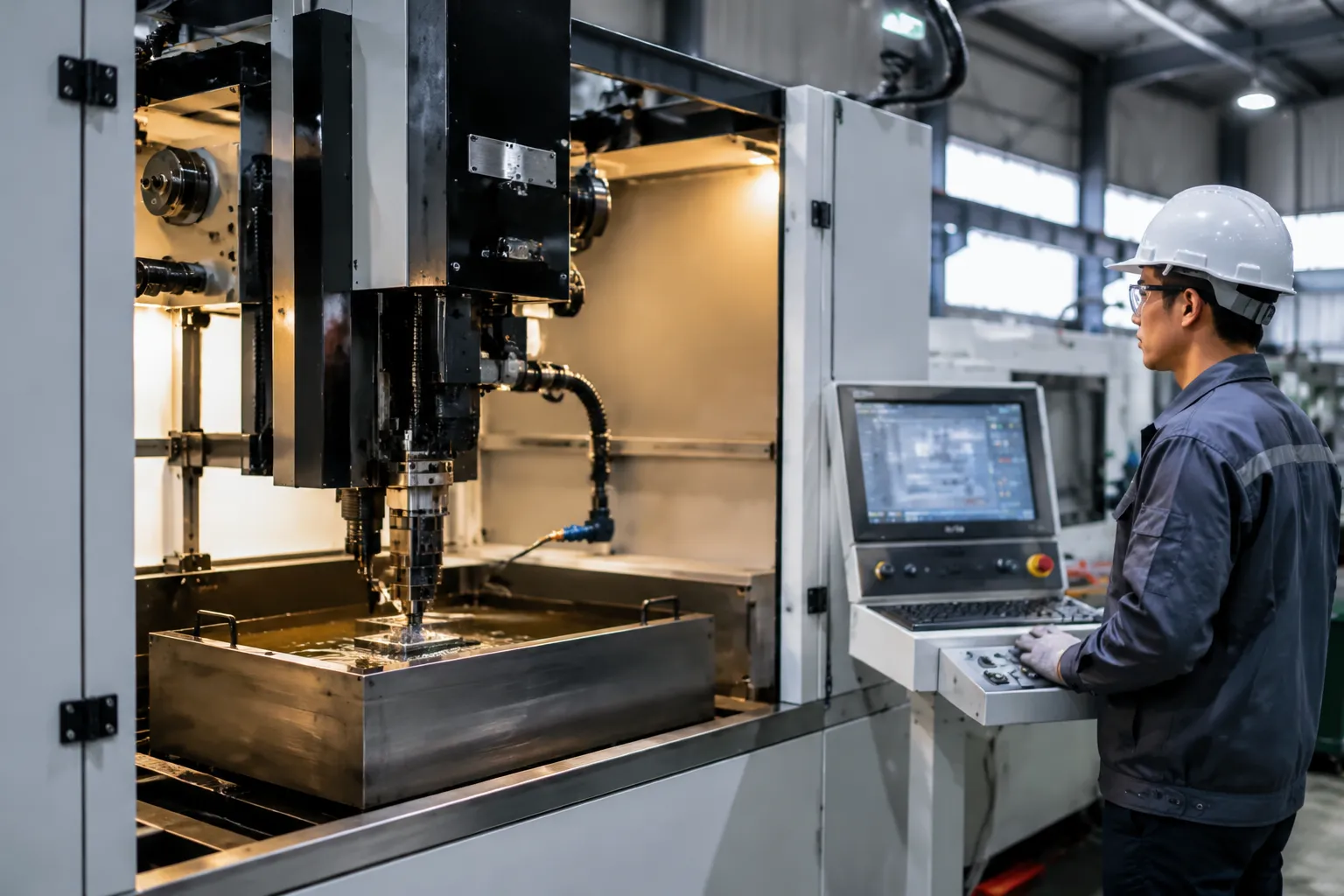
When we manufacture complex components for our clients, traditional milling often hits a wall. That is where wire EDM (electrical discharge machining) becomes indispensable. Because the wire erosion process relies on electrical sparks rather than mechanical cutting tools, it completely changes what is possible in precision manufacturing.
Here is exactly why we use edm wire edm setups to solve the toughest machining challenges:
Why Choose Wire EDM?
- Zero Mechanical Force: Since the traveling wire never actually touches the workpiece, there is no tool pressure. This allows us to machine ultra-thin, delicate parts without the risk of distortion or bending.
- Burr-Free Finishes: Traditional CNC machining leaves burrs that require secondary deburring. CNC wire cutting leaves a perfectly clean, smooth edge right out of the machine.
- Intricate Geometries: We can easily cut sharp internal corners, narrow slots, and complex profiles that are physically impossible to achieve with a rotating CNC milling bit.
Performance Breakdown: Wire EDM vs. Conventional Machining
| Manufacturing Challenge | Traditional Milling / Cutting | Our Wire EDM Capability |
|---|---|---|
| Tight Tolerances | Difficult to maintain on hardened metals due to tool deflection. | Achieves extreme precision down to +/- 0.0001 inches effortlessly. |
| Hardened Steel Machining | Causes rapid tool wear, chipping, and frequent breakdowns. | Cuts through hardened steel and titanium regardless of material hardness. |
| Complex Internal Shapes | Limited by the radius of the cutting tool (no sharp square holes). | Perfect for sharp inside corners and intricate die-making geometries. |
Common Applications of Wire EDM
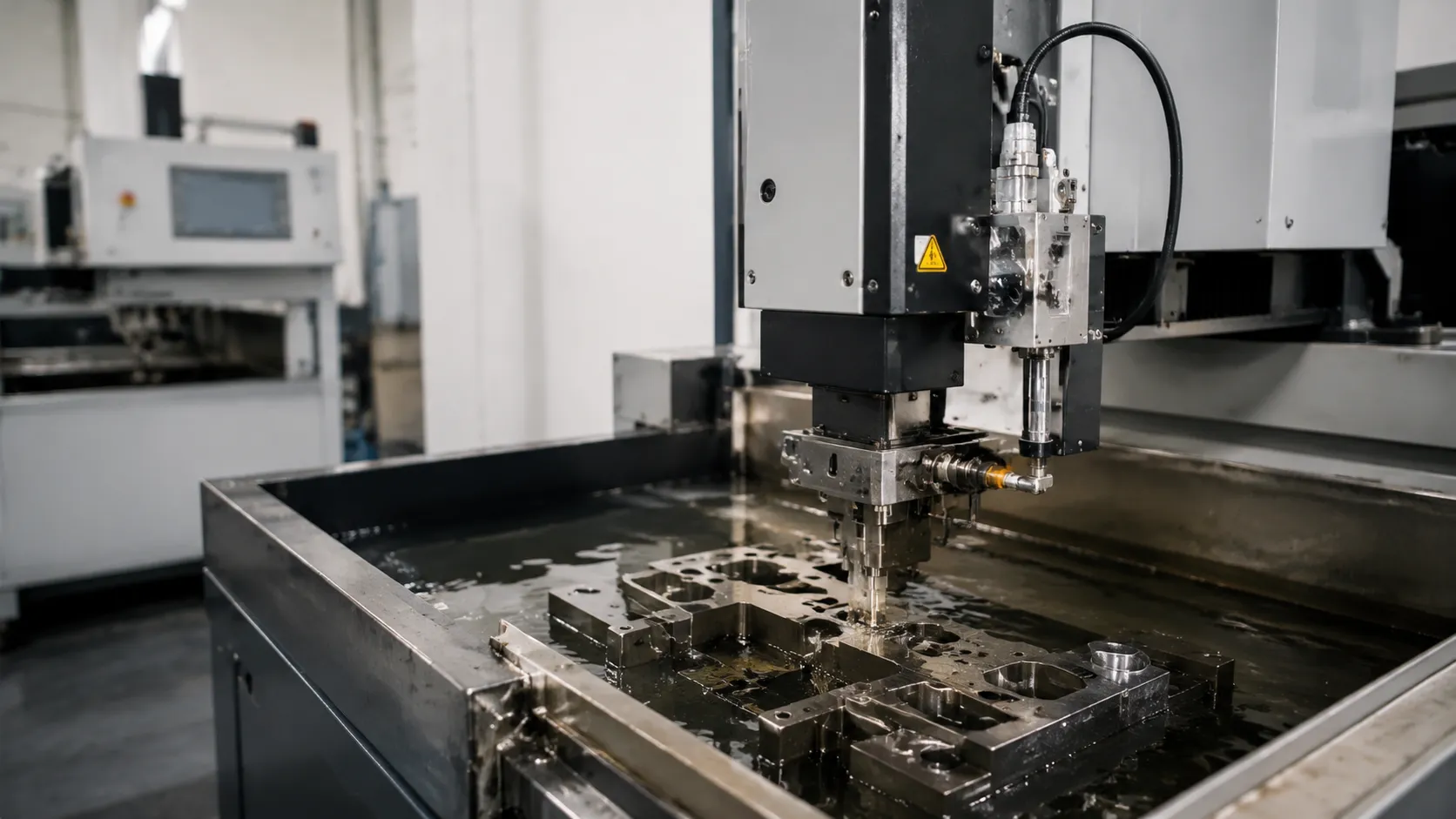
From surgical suites to outer space, we rely on traveling wire EDM to handle the jobs traditional machining tools can’t touch. When a project demands extreme precision with zero room for error, this spark erosion machine setup is our go-to solution.
Here is where we put edm wire edm technology to work across the US manufacturing landscape:
- Aerospace & Medical Devices: We use precision metal cutting to manufacture ultra-critical components like aircraft turbine blades, fuel system parts, and intricate orthopedic implants. The process leaves no burrs, ensuring total compliance with strict medical and aerospace standards.
- Die Making & Mold Manufacturing: Creating injection molds and stamping dies requires cutting through hardened steel machining blanks. Our CNC wire cutting processes carve out complex internal geometries and sharp corners with perfect repeatability.
- Prototypes & Micro-Machining: When you need a proof-of-concept fast, or when the parts are too microscopic for a physical drill bit, we deploy electrical discharge machining to slice delicate, miniature components without distorting the metal.
Wire EDM vs. Conventional EDM
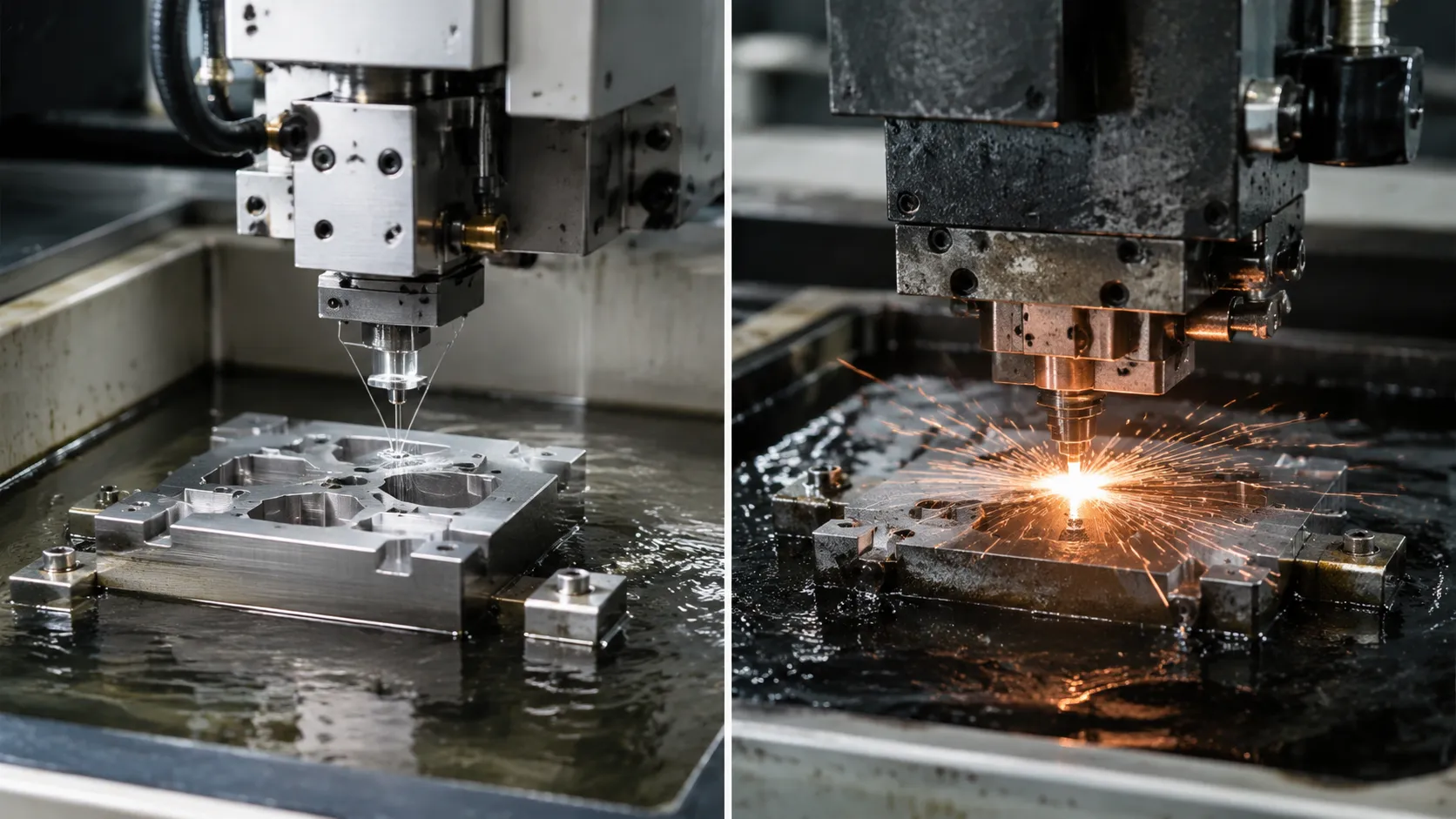
When we look at precision metal cutting, choosing the right electrical discharge machining setup is everything. We generally group these into two main camps: wire EDM (traveling wire EDM) and conventional EDM (often called sinker or plunge EDM). While both rely on spark erosion, they solve entirely different manufacturing problems.
Sinker EDM vs Wire EDM
The core difference lies in the electrode. Wire EDM uses a continuously moving, thin brass or zinc-coated wire to slice through metal like a high-tech bandsaw. Sinker EDM, on the other hand, uses a custom-machined graphite or copper electrode that “sinks” vertically into the workpiece to create a specific 3D cavity.
| Feature | Wire EDM (CNC Wire Cutting) | Sinker EDM (Plunging/Conventional) |
|---|---|---|
| Electrode Used | Continuous spool of thin wire | Custom-shaped 3D electrode |
| Cutting Action | Through-hole slicing and 2D/4D profiling | Blind cavities, molds, and deep pockets |
| Tool Wear | Zero (the wire constantly feeds fresh) | Moderate (electrode wears down over time) |
| Best For | Extrusion dies, intricate gears, brackets | Injection molds, blind keyways, stamping dies |
When to Choose Wire Cutting Over Plunge EDM
We recommend choosing the edm wire edm process when your project requires complex, through-hole geometries, tight tolerances, and thin walls. Because the wire erosion process cuts all the way through a workpiece, it is the absolute best choice for blanking dies and medical prototypes.
Opt for plunge EDM only when you need to machine a blind hole, a complex cavity that does not go all the way through the metal, or when the geometry requires a molded 3D stamp. For everything else, the speed and automated precision of CNC wire cutting offer a more cost-effective turnaround.
FAQs About Wire EDM
We get a lot of questions about how our edm wire edm setups handle tight tolerances and tough materials. Here are the quick, direct answers to the most common questions we hear from US manufacturers.
How accurate is wire EDM?
It is incredibly precise. Our CNC wire cutting processes routinely hold tolerances as tight as +/- 0.0001 inches (0.0025 mm). Because the wire erosion process relies on spark erosion rather than mechanical force, there is no tool deflection, allowing us to achieve extreme, repeatable accuracy on every run.
What materials can be cut with wire EDM?
If it conducts electricity, we can cut it. This includes: Hardened steel and tool steels Titanium and high-temp alloys (Inconel, Hastelloy) Aluminum, copper, and brass Graphite and carbide
Does wire EDM cause thermal damage?
Because it is a spark erosion machine process, a microscopic heat-affected zone (HAZ) does occur where the spark melts the metal. However, our continuous flush of dielectric fluid instantly cools the material. Any recast layer is exceptionally thin—often less than a few microns—and can be easily managed or eliminated with specialized skim cuts.

 English
  German