

Precisionvast offers high precision CNC turning services for custom metal and plastic parts tight tolerances rapid prototyping and mass production.
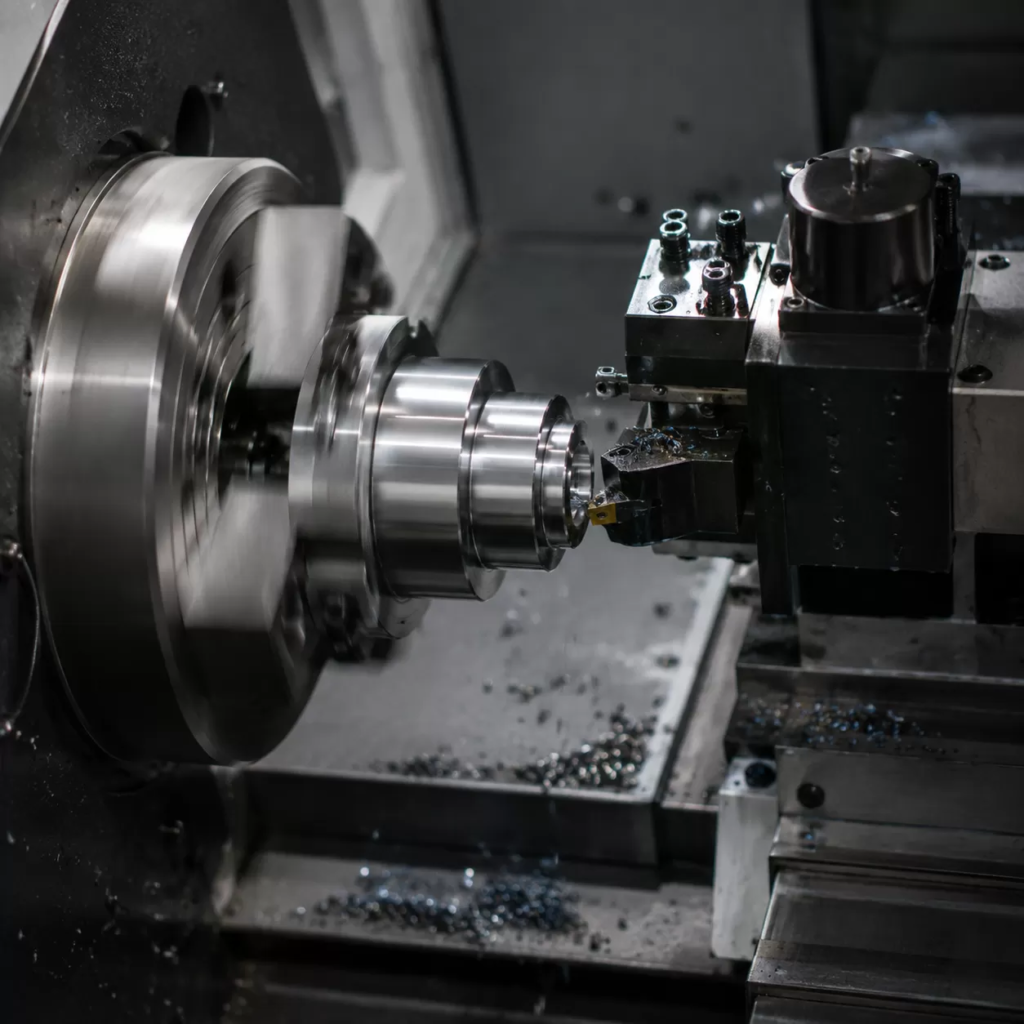
Advanced CNC Turning & Lathe Machining Capabilities
We deliver high-precision machining solutions designed to handle your most complex geometry and tightest tolerance requirements. Our facility utilizes advanced technology to optimize production speed, reduce setups, and guarantee part-to-part consistency.
Multi-Axis Compound Turning
Our advanced CNC turning center setup features multi-axis live tooling and dual-spindle configurations. By combining traditional lathe operations with milling capabilities in a single setup, we eliminate the need for secondary operations, drastically improving part accuracy and reducing lead times.
- Simultaneous Machining: Turning and milling occur in the same cycle.
- Dual-Spindle Efficiency: Seamless part transfer between main and sub-spindles for complete front and back-side machining.
- Reduced Total Indicator Runout (TIR): Single-setup processing ensures superior alignment and concentricity.
Swiss Type Screw Machining
For small, intricate, and high-volume custom turned components, our Swiss screw machining services offer unmatched precision. This subtractive manufacturing process uses a sliding headstock that guides the raw bar stock through a guide bushing, providing maximum rigidity right at the cutting point.
- Ideal Diameter Range: Perfect for micro-components from 0.030 inches to 1.25 inches.
- High Aspect Ratios: Machining long, slender parts without deflection or bending.
- Bar Feeding Automation: Continuous operation for fast, cost-effective high-volume production runs.
Horizontal vs. Vertical Turning Centers
We utilize both configuration styles to optimize production based on part size, weight, and geometry.
| Feature | Horizontal CNC Turning Centers | Vertical CNC Turning Centers |
|---|---|---|
| Best For | Longer parts, shafts, and custom bushings | Heavy, large-diameter, and short components |
| Material Feeding | Optimized for bar feeding automation | Manual or robotic overhead crane loading |
| Gravity Impact | Minimal effect on part roundness | Uses gravity to seat heavy parts securely in the chuck |
Process Optimizations
Maximum efficiency requires smart engineering. We continuously upgrade our manufacturing workflows to keep piece-part costs low and quality high.
- Real-Time Tool Life Monitoring: Automated systems track wear to prevent tool breakage and surface flaws before they happen.
- High-Pressure Coolant Delivery: Direct-to-tip cooling manages heat and forces chips out of deep bores instantly.
- Custom Workholding: Specially designed jaws and collets protect delicate surfaces and eliminate part distortion during high-RPM operations.
Supported Materials for Precision Turned Components
We machine a wide variety of materials to meet your exact specifications. Whether your project requires high-strength industrial alloys or tight-tolerance polymers, our CNC turning center capabilities ensure clean finishes and precise dimensions.
Premium Metals
Our metal lathe turning services handle everything from free-machining stocks to challenging, hard-to-machine alloys. We optimize cutting speeds and feeds for each material to prevent work hardening and ensure structural integrity.
- Aluminum (6061-T6, 7075-T6, 2026): Highly machinable, lightweight, and excellent for aerospace and automotive components.
- Stainless Steel (304, 316, 17-4 PH): Offers superior corrosion resistance and strength. Ideal for medical devices and marine hardware.
- Titanium (Grade 5 / Ti-6Al-4V): Exceptional strength-to-weight ratio and biocompatibility, though it requires precise thermal control during subtractive manufacturing processes.
- Brass & Copper (C360, C101): High conductivity and excellent machinability, perfect for electrical contacts and custom bushings and shafts.
- Carbon & Alloy Steels (1018, 4140, 8620): Chosen for heavy industrial infrastructure requiring high tensile strength and wear resistance.
For projects that integrate both machined components and cast housings, choosing the right material grade is essential. You can review our guide on the different types of investment casting materials explained to see how we match raw material properties across different production methods.
Engineering Plastics
Plastic CNC lathe machining requires specialized tooling and heat management to avoid deformation and burrs. We routinely produce high-precision turned parts from advanced polymers.
| Material Type | Key Characteristics | Common Applications |
|---|---|---|
| POM (Delrin/Acetal) | High stiffness, low friction, excellent dimensional stability | Gears, bearings, custom bushings |
| PEEK | Exceptional thermal and chemical resistance, high strength | Aerospace, medical implants, oil & gas |
| PTFE (Teflon) | Superior chemical inertness, high temperature limits | Seals, gaskets, insulator components |
| Nylon (6/6) | High wear resistance, good mechanical damping | Rollers, wear pads, structural guides |
| UHMW-PE | High impact strength, self-lubricating surface | Chute liners, guide rails, marine bumpers |
CNC Turning Tolerances & Surface Finish Standards
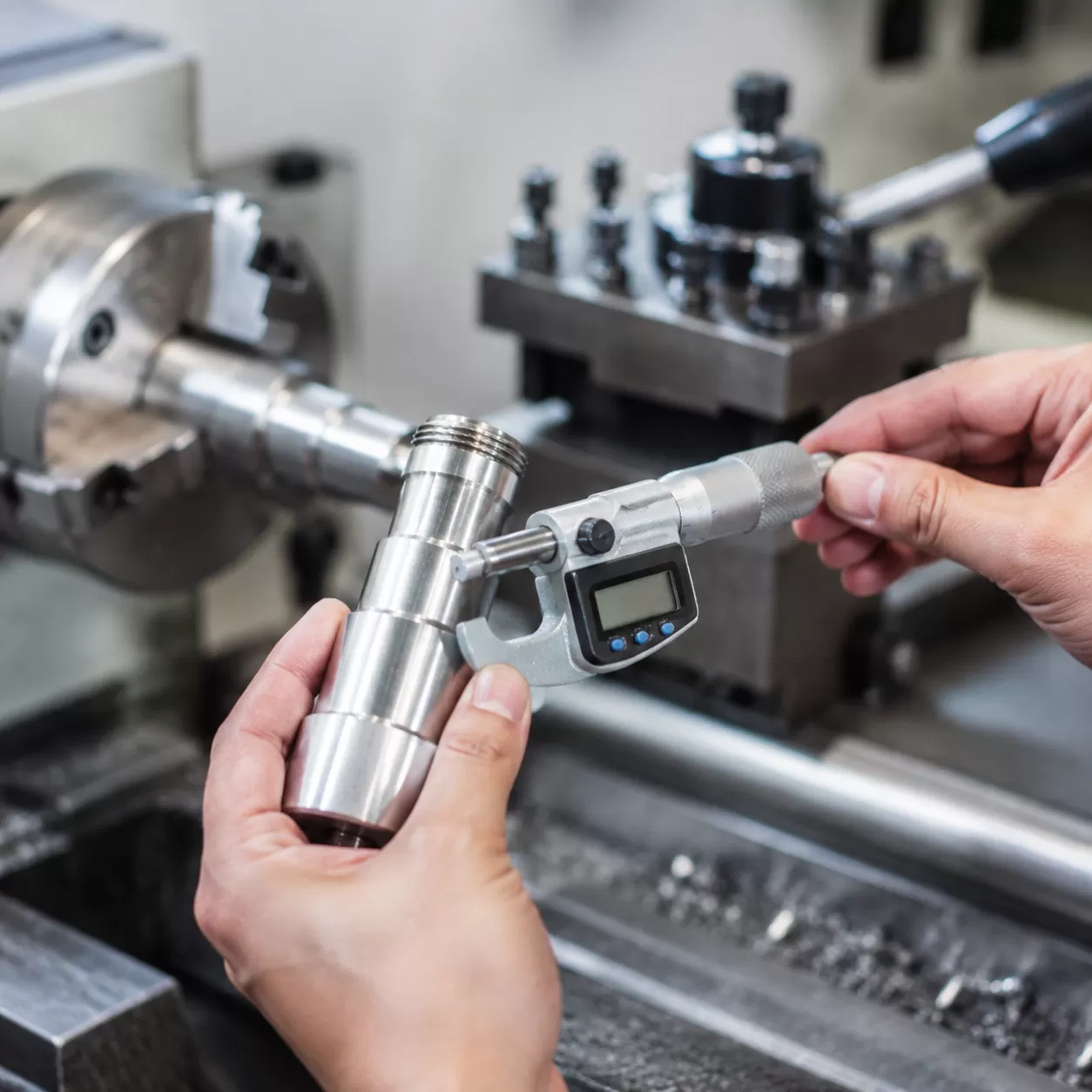
We hold some of the tightest tolerances in the industry to ensure your high-precision machining jobs hit spec every single time. Our CNC turning center configurations are optimized to control total indicator runout (TIR), concentricity, and roundness on every production run.
Dimensional & Geometric Bounds
Our precision turned parts meet strict dimensional requirements. Whether we are running a metal lathe turning service for heavy industrial shafts or producing delicate custom bushings, our production lines achieve repeatable accuracy across all dimensions.
| Metric / Feature | Standard Tolerance | Precision Tolerance |
|---|---|---|
| Linear Dimensions | $pm$ 0.005″ (0.127 mm) | $pm$ 0.0002″ (0.005 mm) |
| Diameter (ID/OD) | $pm$ 0.003″ (0.076 mm) | $pm$ 0.0001″ (0.0025 mm) |
| Concentricity & Roundness | 0.002″ (0.050 mm) | 0.0005″ (0.012 mm) |
| Total Indicator Runout (TIR) | 0.003″ (0.076 mm) | 0.0005″ (0.012 mm) |
Surface Roughness Capabilities
The choice of subtractive manufacturing process directly impacts part performance, friction, and wear resistance. Our multi-axis live tooling and rigid workholding allow us to control surface textures straight off the machine.
- Standard Turned Finish: 63–125 $mu$in Ra (Suitable for general mechanical components)
- Fine Machined Finish: 32 $mu$in Ra (Ideal for press-fits and sealing surfaces)
- High-Precision Micro-Finish: 16 $mu$in Ra or better (Achieved via specialized tooling and micro-turning)
Post-Processing Options
To complement our core CNC turning capabilities, we provide standard surface treatments to improve durability, corrosion resistance, and aesthetics.
- Anodizing (Type II & Type III): Adds wear resistance and color to aluminum components.
- Plating: Electroless nickel, zinc, and chrome plating for enhanced surface hardness.
- Passivation & Black Oxide: Essential chemical treatments for stainless steel and steel components to prevent environmental degradation.
- Bead Blasting & Polishing: Removes machining lines to deliver a clean, uniform finish.
Typical Custom Turned Parts & Configurations
We manufacture a diverse range of precision turned parts engineered to meet strict industrial specifications. By leveraging advanced CNC lathe machining, we transform raw bar stock into complex, symmetrical geometries with absolute repeatability. Our production floor routinely handles both high-volume runs and specialized custom components, ensuring optimized material utilization and rapid turnaround times.
Rotational Components Showcase
Our core rotational parts manufacturing capabilities cover a wide array of everyday and specialized geometries, including:
- Custom Bushings and Shafts: Engineered with strict concentricity and roundness control to minimize friction and wear in high-speed drive assemblies.
- Pins and Needles: High-precision alignment pins, dowels, and hinge pins featuring ultra-smooth surface finishes for seamless mechanical mating.
- Connectors and Fittings: Threaded fluid and electrical connectors designed to maintain airtight seals under extreme pressure.
- Fasteners and Spacers: Custom standoffs, specialty bolts, and stepped spacers tailored for compact electronic hardware and heavy machinery alike.
- Flanges and Couplings: Heavy-duty structural interface components that require exact total indicator runout (TIR) limits to eliminate system vibration.
| Component Type | Common Applications | Key Critical Parameters |
|---|---|---|
| Drive Shafts | Motors, Pumps, Actuators | Concentricity, Straightness, Journal Tolerances |
| Custom Bushings | Material Handling, Suspension | Inner/Outer Diameter Parallelism, Surface Finish |
| Threaded Fittings | Hydraulic Systems, Fluid Control | Thread Pitch Accuracy, Pressure Retention |
| Precision Pins | Aerospace Gearing, Medical Devices | Micro-inch Surface Smoothness, Hardness Profile |
Whether your project requires complex internal boring, external threading, or intricate deep-hole drilling, our CNC turning center setups deliver production-ready components that drop right into your assembly line.
Stringent Quality Assurance & Traceability Framework
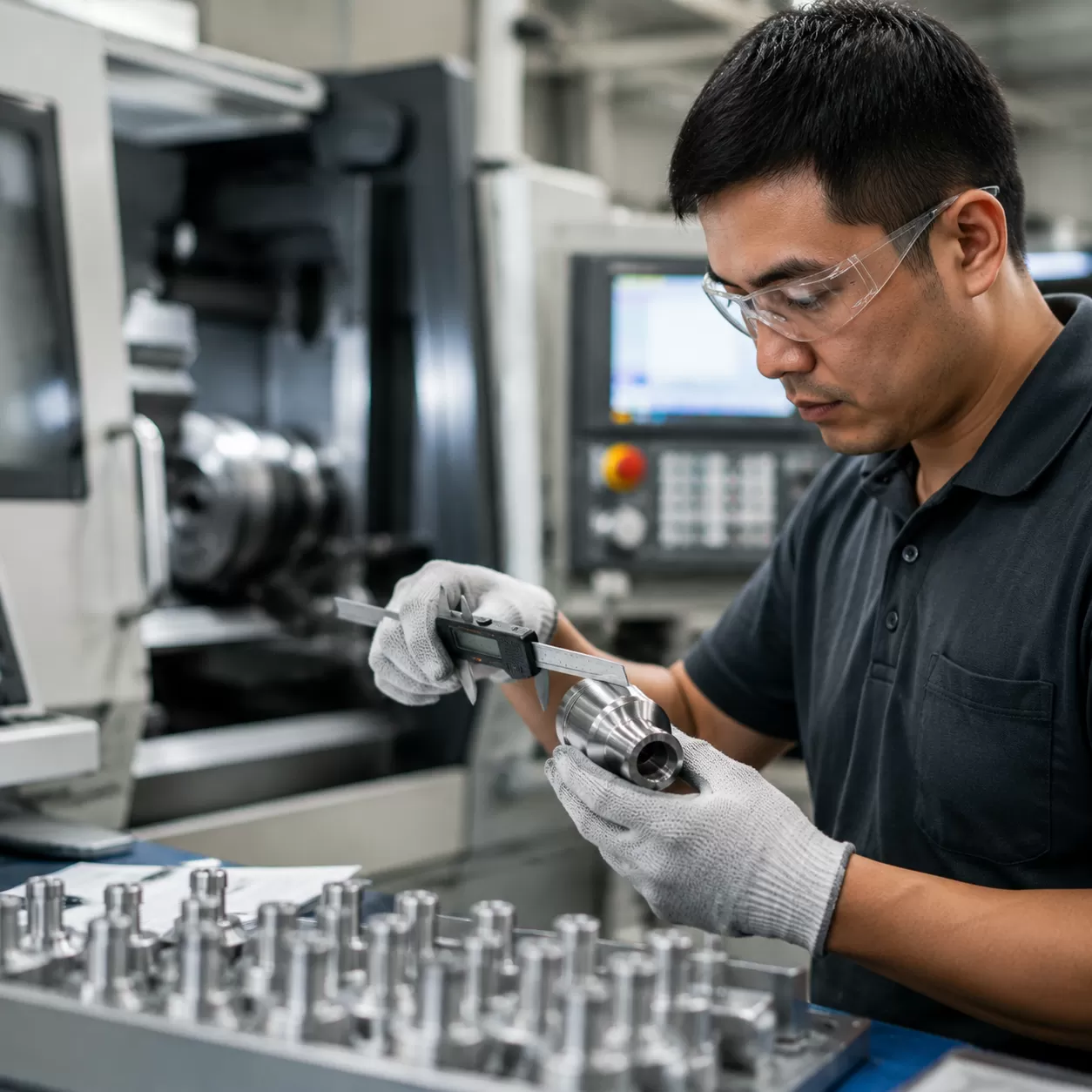
We don’t just cut metal; we guarantee perfection. Our facility utilizes a multi-layered quality control system to ensure every single batch of precision turned parts meets your exact blueprints. From raw material receipt to final packaging, every step is logged, tracked, and verified.
Advanced Metrology Equipment
To maintain tight dimensional bounds, our quality labs are equipped with state-of-the-art inspection technology:
- Coordinate Measuring Machines (CMM): Automated tactile and optical scanning for complex geometric dimensions.
- Vision Inspection Systems: High-speed optical measurement for micro-machined and Swiss-turned components.
- Profilometers & Surface Roughness Testers: Digital analysis to verify exact micro-inch finishes.
- Precision Micrometers & Thread Gauges: Calibrated daily for real-time shop floor inspections.
Comprehensive Process Controls
Quality is baked directly into our CNC turning center workflows, not just checked at the end. We minimize variance through rigorous shop-floor protocols:
| Control Phase | Action Items & Tolerances Monitored |
|---|---|
| First-Article Inspection (FAI) | Full dimensional validation before launching production runs. |
| In-Process SPC Tracking | Statistical Process Control to monitor concentricity and roundness. |
| Total Indicator Runout (TIR) | Strict alignment checks on high-speed rotational parts. |
| Lot Sampling | AQL-standard inspections before parts clear for shipping. |
Quality Certification Deliverables
We back up our work with full documentation so you can plug our components straight into your supply chain. Every shipment can be provided with full traceability paperwork, including material test reports (MTRs), Certificate of Conformance (CoC), dimensional inspection reports, and specialized testing documentation when working with advanced heat-resistant metals or aerospace-grade alloys.
Serving Demanding B2B Industrial Supply Chains
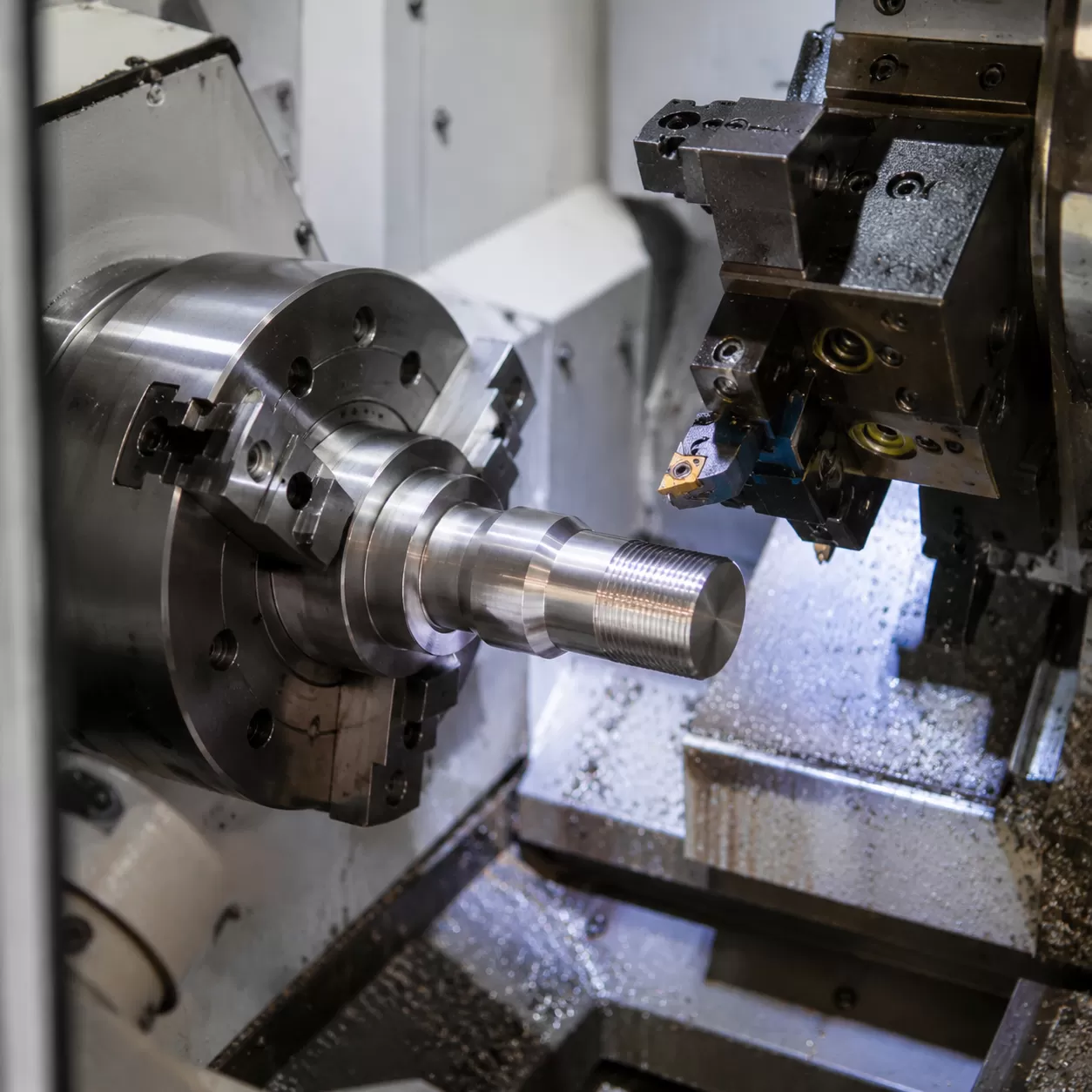
We engineer high-precision machined components to meet the rigorous vendor demands of top-tier US manufacturing sectors. Our heavy-duty CNC turning infrastructure delivers the repeatability, traceability, and material compliance required by mission-critical applications.
Aerospace & Defense
Flight-hardware and defense systems require zero-fail reliability. We produce custom bushings and shafts, landing gear elements, and fuel system parts using aerospace-grade titanium and stainless steel. Every production run adheres to strict AS9100-level quality expectations, providing full material traceability and total indicator runout (TIR) documentation to guarantee performance under extreme stress.
Medical & Healthcare
The medical device sector demands pristine surfaces and micro-tolerances. Our Swiss screw machining lines output surgical instruments, implantable components, and diagnostic equipment hardware. We work with biocompatible materials like titanium and PEEK, ensuring flawless geometric concentricity and roundness right off the machine.
Automotive & E-Mobility
As the automotive supply chain transitions toward electric platforms, we provide light-weighted, ultra-precise rotational parts manufacturing. From EV motor shafts to custom sensor housings, our automated CNC turning center lines support high-volume production with the rapid turnaround times expected by tier-1 automotive suppliers.
Oil & Gas / Heavy Industrial Infrastructure
Downhole tools, valves, and fluid power systems require rugged components that survive corrosive environments. We turn heavy-wall piping joints, specialized fasteners, and high-pressure flanges from Inconel, Monel, and carbon steels. Our heavy-duty metal lathe turning services ensure these parts withstand massive torque and extreme pressure variables out in the field.
Seamless 4-Step CNC Turning Sourcing Workflow
Getting custom precision turned parts shouldn’t be a logistical headache. We have streamlined our production pipeline into a fast, transparent four-step system designed to move your project from a digital blueprint to physical components with zero friction.
1. CAD File Submission
Everything starts when you upload your 3D models and 2D technical drawings through our secure portal to initiate a request for quote (RFQ) for machining. We accept all industry-standard formats to ensure your design intent transfers perfectly to our system.
2. DFM Review & Quoting
Our engineering team immediately conducts a thorough Design for Manufacturability (DFM) review. We analyze your part geometry, check critical tolerances like concentricity and roundness, and evaluate material choice—whether you are utilizing high-strength aluminum alloys or complex engineering plastics. You receive a comprehensive, actionable quote backed by real manufacturing data.
3. Automated Production
Once you greenlight the project, your files program our advanced CNC turning center line directly. We utilize automated bar feeding, multi-axis live tooling, and high-speed CNC lathe machining setups to maintain tight tolerances and flawless surface finishes. This automation minimizes human error and maximizes production speed.
4. Global Delivery
After passing final inspection and quality verification, your custom turned components are packed securely and shipped out. We handle the logistics to deliver your parts straight to your facility, meeting your tightest supply chain schedules.
CNC Turning FAQ
What is the main structural difference between CNC turning and CNC milling?
The core difference comes down to which part moves. In CNC turning, the workpiece rotates rapidly while the cutting tool remains stationary, shaving away material to create cylindrical or round shapes. In CNC milling, the raw block stays fixed to a bed while the cutting tool spins at high speeds to carve out complex, blocky, or angular geometries.
What are the minimum order quantities (MOQ) for custom turning services at PrecisionVast?
We do not enforce rigid, high-volume minimum order quantities. We support your project at every stage, offering single-unit prototyping for engineering validation up to high-volume production runs. This flexibility ensures you only pay for the exact volume your supply chain demands.
How do you prevent work hardening when processing difficult materials like titanium or stainless steel?
Titanium and stainless steel harden quickly under heat and stress. We counteract this by maintaining sharp tool edges, using heavy feed rates, and ensuring a consistent depth of cut to stay underneath the work-hardened zone. We also utilize high-pressure targeted coolant to keep temperatures low. For parts requiring extreme durability, we optimize our machining paths before applying specialized post-treatments, such as a high-quality brush finish for stainless steel castings or machined components.
What raw file formats do you accept for engineering evaluations?
We accept most industry-standard 3D CAD and 2D technical drawings for our Design for Manufacturability (DFM) reviews. The preferred file formats include:
- 3D Models: .STEP, .STP, .IGS, .IGES, and .X_T
- 2D Drawings: .PDF, .DWG, and .DXF (highly recommended for specifying tolerances and surface finish requirements)
 English
  German