

High precision five axis machining services for complex parts tight tolerances fast lead times and superior surface finish.
Advanced 5-Axis CNC Machining: Basics and Capabilities
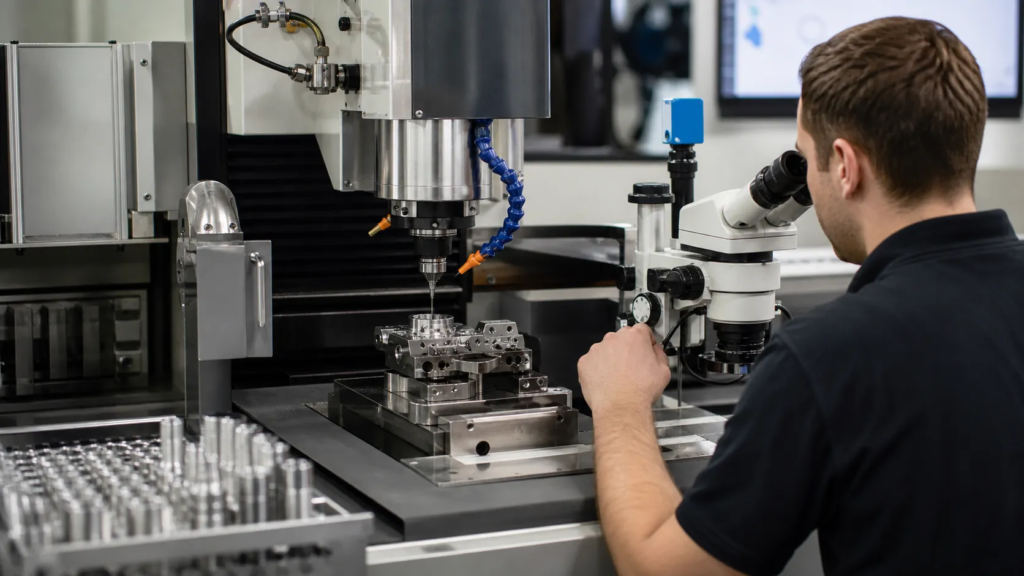
Five-axis machining represents the pinnacle of modern subtractive manufacturing, offering a level of precision and complexity that standard 3-axis systems cannot achieve. While traditional milling operates along the X, Y, and Z linear axes, a 5-axis CNC machining center introduces two additional rotational axes. These rotations—typically the A and B or C axes—allow the cutting tool to approach the workpiece from virtually any direction, enabling the production of highly intricate parts.
Core Capabilities of Multi-Axis CNC Services
Our facility utilizes simultaneous 5-axis machining to handle the most demanding design requirements. This technology is not simply about adding more directions; it is about continuous, synchronized movement that ensures the tool remains in the optimal cutting position at all times.
- Complex Geometry Manufacturing: We produce intricate shapes, deep undercuts, and organic contours that are impossible to create with traditional methods.
- Enhanced Surface Finish: By maintaining the ideal tool-to-part contact angle, we minimize tool deflection and eliminate chatter for superior finishes.
- Tight Tolerance Milling: Completing a part in a single setup eliminates “stack-up” errors, ensuring every dimension meets your exact specifications.
- Subtractive Manufacturing Efficiency: Shorter tool lengths increase rigidity, allowing for higher cutting speeds and improved accuracy.
By leveraging multi-axis CNC services, we provide a streamlined path from digital design to high-precision physical components, ensuring that even the most aggressive tolerances are met with absolute consistency.
Evolution of Multi-Axis Machining: Why Five-Axis Machining Matters
Manufacturing has come a long way from the days of basic manual milling. We’ve transitioned from standard 3-axis setups—which move strictly along the X, Y, and Z planes—to advanced five-axis machining. This shift is critical for shops looking to stay competitive in the US market. While 3-axis machines are reliable for simple parts, they often require multiple setups and manual repositioning, which increases the risk of alignment errors and adds significant labor costs.
By integrating a modern CNC machining center capable of multi-axis movement, we eliminate those extra steps. This evolution allows us to handle:
- Complex Geometries: Machining undercuts and deep cavities that are physically impossible with 3-axis equipment.
- Improved Surface Finish: Utilizing shorter tools for higher stability, which reduces vibration and “chatter.”
- Reduced Lead Times: Completing parts in a single setup rather than five or six separate operations.
- Higher Accuracy: Maintaining a single datum point throughout the process to ensure tight tolerances.
Many of our high-precision projects begin by understanding aluminum casting processes to create a near-net shape, but we rely on 5-axis CNC milling to achieve the final, exact specifications. Whether we are using 3+2 axis machining for positional work or full simultaneous movement, this evolution ensures we deliver parts that meet the highest industry standards without the overhead of traditional subtractive manufacturing methods. Moving to five axes isn’t just an upgrade; it’s a necessity for modern engineering.
How Five-Axis Machining Works: Movement and Speed
In our facility, five-axis machining represents the pinnacle of subtractive manufacturing. Unlike traditional 3-axis machines that move strictly along the X, Y, and Z linear planes, our CNC machining center utilizes two additional rotational axes (typically A and B, or B and C). This allows the cutting tool to approach the workpiece from virtually any angle, reaching undercuts and deep cavities that are impossible to access with standard equipment.
Advanced Toolpath Optimization
We rely on sophisticated CAD/CAM toolpath optimization to orchestrate these complex movements. This software calculates the most efficient trajectory for the tool, ensuring smooth transitions and constant engagement with the workpiece. By keeping the tool at an optimal angle relative to the part surface, we minimize vibration and maximize tool life.
Speed and Efficiency through HSM
Efficiency is driven by high-speed machining (HSM). By combining high spindle speeds with precise axis synchronization, we achieve several critical advantages:
- Faster Material Removal: We significantly reduce the time the part spends on the machine.
- Superior Surface Finishes: The constant tool orientation eliminates the need for secondary hand-polishing or grinding.
- Enhanced Accuracy: We maintain tight tolerances even during rapid directional changes by utilizing advanced encoders and drive systems.
Our approach to modern CNC production focuses on reducing cycle times while pushing the limits of what’s possible with complex geometries. This ensures your parts are delivered faster and with higher precision than traditional methods allow.
Simultaneous 5-Axis vs. 3+2 Machining
We determine the best approach based on your part’s geometry and required tolerances. While both methods utilize a five-axis machining center, the execution of the toolpath differs significantly in terms of movement and rigidity.
Key Differences at a Glance
| Feature | Simultaneous 5-Axis | 3+2 Machining (Positional) |
|---|---|---|
| Axis Movement | X, Y, Z, A, and B move concurrently. | A and B axes lock; X, Y, and Z perform the cut. |
| Best Use Case | Organic shapes, impellers, and curved surfaces. | Prismatic parts with features on multiple faces. |
| Surface Finish | Superior, continuous finish across contours. | High quality, but may show slight transition marks. |
| Tooling | Often requires specialized, longer reach tools. | Uses shorter, more rigid tools for heavy cutting. |
| Programming | Requires advanced CAD/CAM toolpath optimization. | Simpler programming, similar to 3-axis milling. |
When to Use Each Approach
- Simultaneous 5-axis machining is the gold standard for complex geometry manufacturing. We use this for parts like turbine blades or medical implants where the tool must stay perpendicular to a changing surface. This continuous movement eliminates the “dwell marks” often found in positional machining, resulting in a flawless finish.
- 3+2 axis machining is often the more stable choice for parts with many flat features or deep pockets on different planes. By locking the rotary axes, we increase the machine’s rigidity, allowing for faster feed rates and higher precision. This is especially useful when we are finishing parts where understanding pattern and shrinkage in cast aluminum is vital to ensuring the final machined dimensions align perfectly with the original casting.
We analyze every project to decide which method offers the best balance of speed, surface integrity, and cost-efficiency. Our goal is to minimize setups while maximizing the geometric freedom that five-axis machining provides.
Key Benefits of Five-Axis Machining
We utilize five-axis machining to deliver parts that standard 3-axis shops simply can’t handle. By moving the cutting tool and the workpiece across five different axes simultaneously, we achieve a level of “one-and-done” efficiency that keeps your project on schedule and within budget.
Why We Use Simultaneous 5-Axis Machining
- Reduced Setup Time: We machine complex shapes in a single operation. This eliminates the need for manual repositioning, which is where most human errors occur.
- Extreme Precision: Fewer setups mean less “stack-up error.” We maintain tight tolerance milling across every face of the part because the workpiece never leaves the fixture.
- Geometric Freedom: Our multi-axis CNC services allow for intricate undercuts, deep cavities, and complex curves that are essential for aerospace grade machining.
- Better Surface Finishes: By using CAD/CAM toolpath optimization, we keep the tool at the perfect contact angle. This enables high-speed machining (HSM) with shorter tools, reducing chatter and leaving a mirror-like finish.
3-Axis vs. Five-Axis Machining Comparison
| Feature | 3-Axis Machining | Five-Axis Machining |
|---|---|---|
| Setups | Multiple (3-5+) | Single Setup |
| Part Complexity | Simple / Prismatic | Highly Complex / Organic |
| Tooling | Long tools (more flex) | Short tools (more rigid) |
| Accuracy | Moderate | High Precision |
| Lead Times | Slower due to handling | Faster through automation |
While some high-volume components are better suited for aluminum casting, our CNC machining center provides the geometric freedom and precision required for critical prototypes and end-use parts. This subtractive manufacturing approach ensures that even the most difficult designs are executed with total accuracy and structural integrity.
Material Compatibility for Five-Axis Machining
Our five-axis machining capabilities allow us to cut through a massive variety of materials, from standard aluminum to superalloys that would chew up a lesser machine. We select the right tooling and CAD/CAM toolpath optimization strategies based on the specific properties of the stock to ensure high-speed machining (HSM) efficiency and superior surface finish quality.
Metals and High-Performance Alloys
We frequently handle aerospace-grade machining projects using metals that demand extreme heat resistance and strength-to-weight ratios.
- Aluminum: 6061-T6, 7075, and 2026. While we often process die casting aluminum components for secondary finishing, we also mill complex parts directly from solid billet.
- Stainless Steel: 303, 304, 316L, and 17-4 PH for medical and marine applications.
- Titanium: Grade 5 (Ti-6Al-4V) for high-strength, lightweight components.
- Steel Alloys: Including carbon and low alloy steel castings that require precision CNC turning-milling to reach final tolerances.
- Superalloys: Inconel 625/718 and Cobalt-Chrome for extreme environments.
Engineering Plastics and Composites
For rapid prototyping 5-axis projects or lightweight industrial components, we work with high-grade polymers that maintain stability during the subtractive manufacturing process:
- PEEK: High temperature and chemical resistance for oil and gas.
- Delrin (POM): Excellent machinability and dimensional stability.
- Nylon/PA66: High toughness for mechanical wear parts.
- Ultem (PEI): High-strength dielectric properties for electronics.
| Material Category | Common Grades | Key Benefit for 5-Axis |
|---|---|---|
| Lightweight Metals | Aluminum 6061, 7075 | Fast cycle times, great finish |
| Hard Metals | Stainless Steel, Titanium | Tight tolerance milling |
| High-Temp Alloys | Inconel, Hastelloy | Precision for complex geometry |
| Plastics | PEEK, PTFE, Acetal | Non-conductive, lightweight |
Our multi-axis CNC services are designed to handle both soft and hard materials with the same level of precision. By matching the right spindle speeds and feed rates to the material type, we ensure every five-axis machining project meets your exact specifications without compromising tool life or part integrity.
Industry Applications for Five-Axis Machining
We leverage five-axis machining to meet the rigorous demands of sectors where failure is not an option. By utilizing simultaneous 5-axis machining, we produce parts with complex geometries that traditional methods simply cannot handle.
Aerospace and Defense
In the aerospace sector, weight reduction and structural integrity are everything. We use multi-axis CNC services to create:
- Turbine blades and impellers with intricate aerodynamic profiles.
- Structural airframe components that require aerospace grade machining.
- Engine housings made from heat-resistant metals to withstand extreme thermal stress.
Medical Technology
Precision is a life-or-death requirement in the medical field. Our 5-axis CNC milling capabilities allow us to manufacture:
- Orthopedic implants that mimic organic bone structures for better patient outcomes.
- Complex surgical instruments requiring tight tolerances and smooth finishes.
- Specialized components using the marvels of titanium from aerospace to medicine for biocompatibility and strength.
Automotive and Performance Racing
The automotive industry relies on us for rapid prototyping and high-performance production. We deliver:
- Cylinder heads and intake manifolds optimized for maximum airflow.
- Lightweight suspension components that improve vehicle handling.
- Custom gearbox housings designed for high-stress racing environments.
Energy and Robotics
From renewable energy to advanced automation, five-axis machining provides the geometric freedom needed for:
- Wind turbine components and complex valve bodies for the oil and gas sector.
- Robotic joints and housings that require high strength-to-weight ratios.
- Customized sensors and actuators for precision robotic assemblies.
Quality Control for Five-Axis Machining
Precision is the backbone of our multi-axis CNC services. Because five-axis machining involves complex toolpaths and simultaneous movements, we implement a multi-layered inspection strategy to ensure every part meets your exact specs. We don’t just rely on the machine’s readout; we verify every angle and surface to guarantee total compliance.
Our Inspection Standards
We maintain a rigorous quality management system to handle aerospace grade machining and other high-stakes projects. Our shop floor is equipped to handle the most demanding requirements:
- In-Process Probing: We use advanced on-machine probes to check part alignment and critical dimensions during the simultaneous 5-axis machining process.
- CMM Verification: Our Coordinate Measuring Machines (CMM) provide automated, high-precision reports to confirm tight tolerance milling accuracy against your CAD model.
- First Article Inspection (FAI): We validate the first part of every production run to ensure the setup is perfect before proceeding.
- Surface Finish Analysis: We use digital profilometers to guarantee that high-speed machining (HSM) results meet your specific roughness requirements.
| Inspection Type | Equipment Used | Purpose |
|---|---|---|
| Dimensional | CMM / Digital Micrometers | Verify complex geometry manufacturing |
| Surface | Profilometers | Ensure smooth finishes for critical contact points |
| Material | Spectrometer / Mill Certs | Confirm alloy composition and structural purity |
Maintaining strict investment casting tolerance and machining precision is critical for high-performance components. Our commitment to quality ensures that every part coming off our CNC machining center is ready for immediate assembly, with no surprises and no rework.
From CAD to Finished Part: Our 5-Axis Workflow
We transform your digital concepts into high-precision reality through a disciplined five-axis machining workflow. By integrating advanced CAD/CAM toolpath optimization, we eliminate guesswork and ensure that every cut is efficient, precise, and repeatable. Our process is designed to handle complex geometry manufacturing while maintaining the tightest tolerances required by modern industry standards.
| Stage | Action | Key Focus |
|---|---|---|
| 1. Design Review | CAD File Analysis | Checking for manufacturability and feature accessibility. |
| 2. Programming | CAM Development | Creating simultaneous 5-axis machining strategies. |
| 3. Setup | Machine Preparation | Calibrating the CNC machining center and workholding. |
| 4. Machining | Material Removal | Executing high-speed machining (HSM) for peak efficiency. |
| 5. Finishing | Post-Processing | Applying surface treatments and final inspections. |
Professional Post-Processing Options
The subtractive manufacturing process doesn’t end when the spindle stops. We provide a variety of finishing services to ensure your parts are ready for immediate assembly or end-use application. Whether you need specialized coatings for medical equipment components or rugged finishes for industrial hardware, we have the capabilities in-house.
- Surface Refinement: Bead blasting, polishing, and deburring for a clean, professional look.
- Protective Coatings: Anodizing, powder coating, and chemical film (Chem-film) for superior corrosion resistance.
- Material Conditioning: Heat treatment and stress relieving to ensure stability in aerospace grade machining applications.
- Final Inspection: Every part undergoes rigorous verification to confirm it meets the original CAD specifications and tight tolerance milling requirements.
Our streamlined approach ensures that your project moves from the computer screen to a finished, high-performance part with maximum speed and zero compromise on quality.
Picking the Right Partner for Five-Axis Machining
Choosing a shop for five-axis machining is a high-stakes decision. It’s not just about who owns the latest equipment; it’s about the engineering expertise behind the spindle. When you’re evaluating multi-axis CNC services, you need a partner that understands the nuances of complex geometry and tight tolerances.
Here is what we recommend looking for in a reliable manufacturing partner:
- Technical Mastery: Ensure the team excels at CAD/CAM toolpath optimization. Poor programming leads to vibration and surface finish issues, regardless of how expensive the machine is.
- Equipment Capability: Verify if they use trunnion-style or swivel-head CNC machining centers capable of true simultaneous movement rather than just basic positioning.
- Material Expertise: Your provider should have deep experience with diverse materials. For example, understanding specific A356 aluminum alloy properties is essential for ensuring the structural integrity of cast-then-machined components.
- Quality Standards: Look for shops that provide full CMM inspection reports and maintain rigorous quality control processes to meet industry-specific regulations.
- Prototyping to Production: A versatile partner should handle everything from rapid prototyping 5-axis runs to high-volume production without losing precision.
We focus on transparency and technical precision. We don’t just cut metal; we optimize the entire manufacturing workflow to reduce your lead times and part costs. When you work with us, you’re getting a team that treats your complex designs with the professional rigor they deserve.
Frequently Asked Questions About Five-Axis Machining
We get a lot of questions about how to maximize the value of five-axis machining. Here are the quick answers to the most common inquiries we receive regarding our multi-axis CNC services.
Common Technical Specifications
| Category | Requirement / Limit |
|---|---|
| Standard Part Envelope | Up to 20″ x 20″ x 16″ (Varies by machine) |
| Preferred File Formats | .STEP, .STP, .IGES, Parasolid (.X_T) |
| Achievable Tolerances | ±0.0002″ (0.005mm) depending on geometry |
| Surface Finish | As machined (Ra 32) up to mirror polish |
Is 5-axis machining more expensive?
While the hourly rate for a CNC machining center with 5-axis capability is higher than a standard 3-axis mill, the total cost is often lower for intricate parts. By using simultaneous 5-axis machining, we eliminate multiple setups and expensive custom fixtures. This reduces manual labor and improves accuracy, making it the most cost-effective choice for complex geometry manufacturing.
What industries benefit most?
Our high-precision capabilities are essential for sectors requiring extreme reliability. We frequently apply these techniques to titanium alloys in orthopedic devices and aerospace components where organic shapes and tight tolerances are non-negotiable.
Do I need to provide special toolpath data?
No. You only need to provide the 3D CAD file. Our engineering team handles the CAD/CAM toolpath optimization in-house. We determine the most efficient strategy—whether it’s 3+2 axis machining for deep cavities or full simultaneous motion for complex contours—to ensure your part is delivered on time and to spec.
Start Your Five-Axis Machining Project
We simplify the transition from a digital model to a finished component. Our team is ready to handle your most complex designs with a streamlined quotation and production process designed for the American manufacturing market.
Our Quotation Workflow
- File Submission: Upload your 3D CAD files (STEP, IGES, or Parasolid) through our secure portal.
- Engineering Review: We perform a Design for Manufacturing (DFM) analysis to ensure simultaneous 5-axis machining is the most efficient path for your part.
- Material Selection: We verify your specs, ensuring compatibility with high-performance materials like heat-resistant metals or aerospace-grade alloys.
- Detailed Quote: You receive a comprehensive breakdown of costs, lead times, and shipping options usually within 24 hours.
Once the quote is approved, our engineers begin the CAD/CAM toolpath optimization to maximize precision and minimize cycle times. We take pride in delivering high-tolerance parts that meet your exact specifications on the first run. Our facility is equipped to handle everything from rapid prototyping to full-scale production runs. Submit your design files to receive a professional evaluation and a competitive quote for your five-axis machining requirements.

 English
  German