

precisionvast low volume injection molding for custom plastic parts rapid tooling 100 to 10000 units multiple resins fast quotes.
What is Low-Volume Injection Molding?
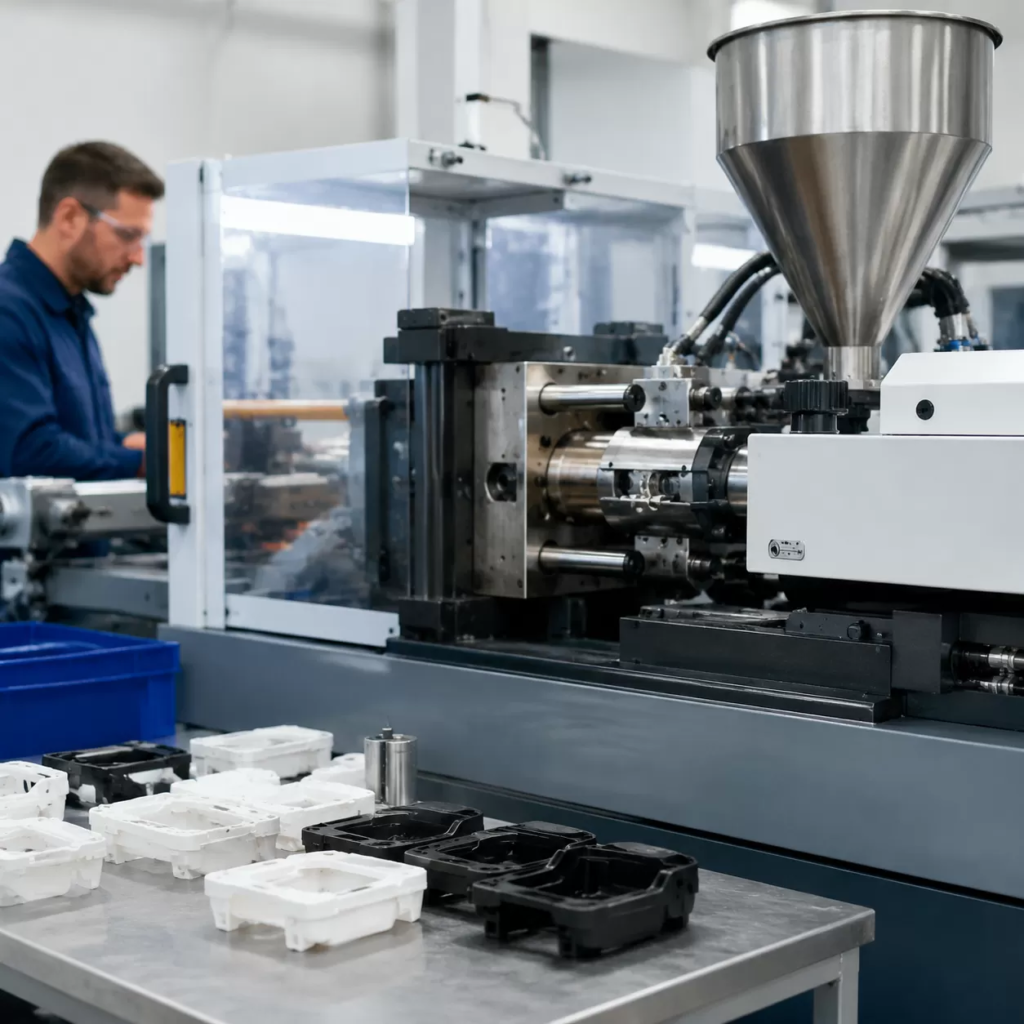
When you need more than a handful of prototypes but aren’t ready to commit to a massive production run, low-volume injection molding is the ideal solution. This manufacturing process bridges the critical gap between early-stage prototyping and full-scale mass production, typically covering orders from 100 to 10,000+ parts.
The Cost Gap Solution
For small batches, traditional manufacturing methods often fall short. Rapid prototyping like 3D printing and CNC machining is great for testing designs, but it becomes too expensive and slow as your quantities scale. On the flip side, high-volume mass production offers a low per-part cost but demands massive upfront investments in hardened steel tooling.
Low-volume manufacturing provides the perfect middle ground, giving you real, production-grade plastic parts without the financial risk.
| Production Method | Typical Volume | Tooling Cost | Turnaround Time | Material Quality |
|---|---|---|---|---|
| Rapid Prototyping (3D Printing/CNC) | 1 – 10 parts | None / Very Low | 1 – 3 Days | Prototype Grade |
| Low-Volume Injection Molding | 100 – 10,000+ parts | Low to Moderate | 1 – 2 Weeks | Production Grade |
| High-Volume Mass Production | 100,000+ parts | Very High | 4 – 8 Weeks | Production Grade |
Why Choose Precisionvast?
At Precisionvast, we specialize in short run injection molding and bridge tooling services tailored specifically for the United States market. We optimize tool costs by utilizing modular mold bases and high-grade aluminum injection molds instead of expensive, multi-cavity steel tooling.
This approach slashes your upfront expenses, lowers financial risk, and delivers custom plastic part production on demand, ensuring your project moves from concept to market efficiently.
Benefits of Small-Batch Injection Molding for Your Project
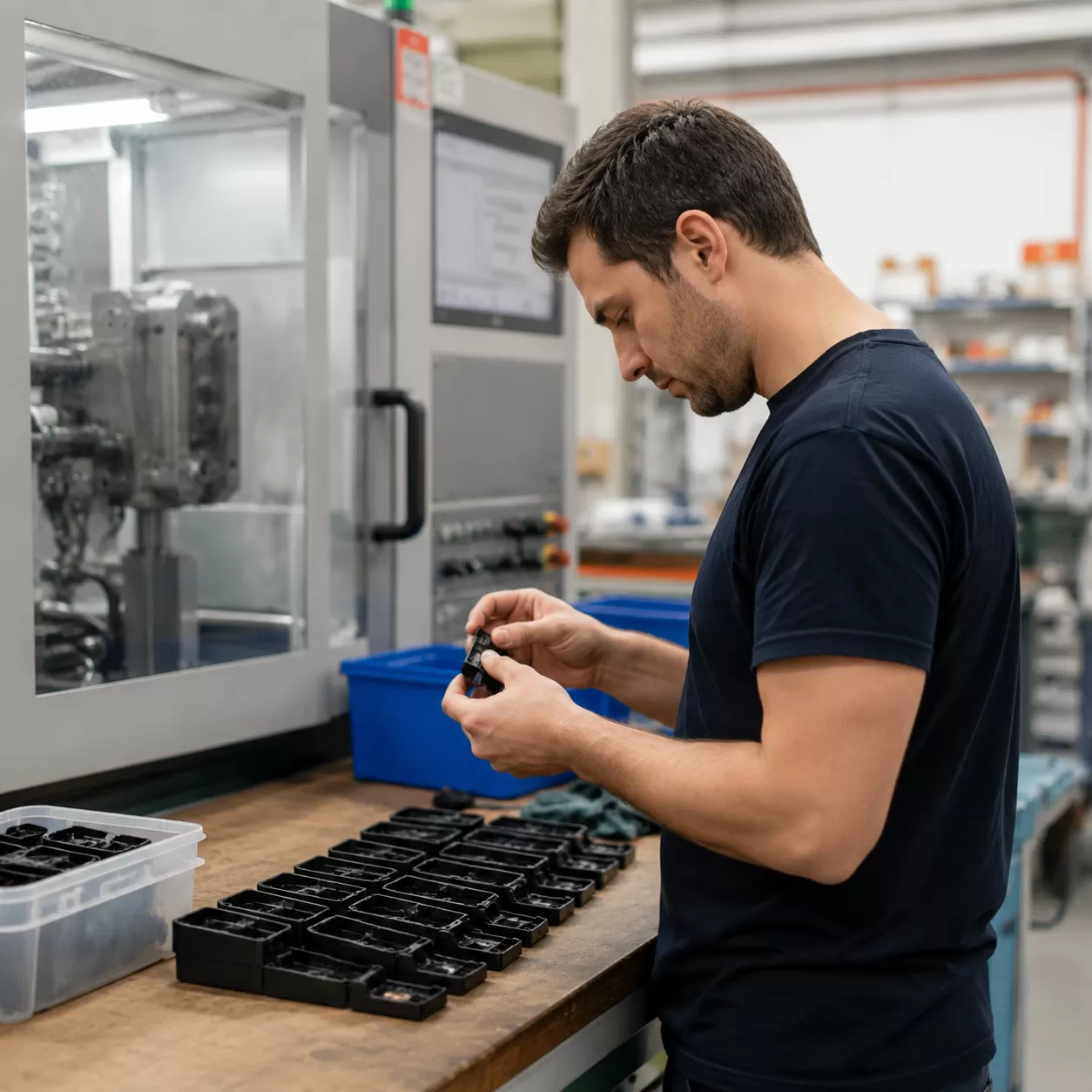
Choosing small batch plastic molding offers distinct competitive advantages for launching new products or managing targeted production runs. By avoiding the massive upfront costs and long lead times of traditional manufacturing, you keep your project agile and cost-effective.
Key Advantages of Low-Volume Production
- Lower Initial Tooling Investments: We use high-grade aluminum injection molds or soft steel instead of costly hard steel. This slashes your upfront tooling expenses significantly, making short-run production financially viable.
- Accelerated Time-to-Market: Traditional multi-cavity steel molds take months to build. Our rapid tooling services deliver functional molds in just 1 to 3 weeks, getting your product to customers ahead of the competition.
- Design Iteration Flexibility: If you need to make design tweaks based on real-world pilot runs, modifying our bridge tooling services is simple and inexpensive compared to modifying hardened steel production molds.
- Bridge Production & Risk Mitigation: Validate your market and test actual user response without committing to massive inventory overhead. This approach eliminates the supply chain bottleneck risks often tied to high-volume mass production.
Traditional Tooling vs. Low-Volume Rapid Tooling
| Feature | Traditional Steel Tooling | precisionvast Low-Volume Tooling |
|---|---|---|
| Mold Material | Hardened Steel | High-Grade Aluminum / Soft Steel |
| Upfront Tooling Cost | Very High | Low to Moderate |
| Lead Time | 8 to 12+ Weeks | 1 to 3 Weeks |
| Design Flexibility | Extremely Difficult / Costly | Easy and Affordable |
| Financial Risk | High | Minimal |
By leveraging short run injection molding, you protect your capital, speed up your development cycle, and maintain the flexibility needed to succeed in a fast-paced market.
Comprehensive Material & Surface Finish Options
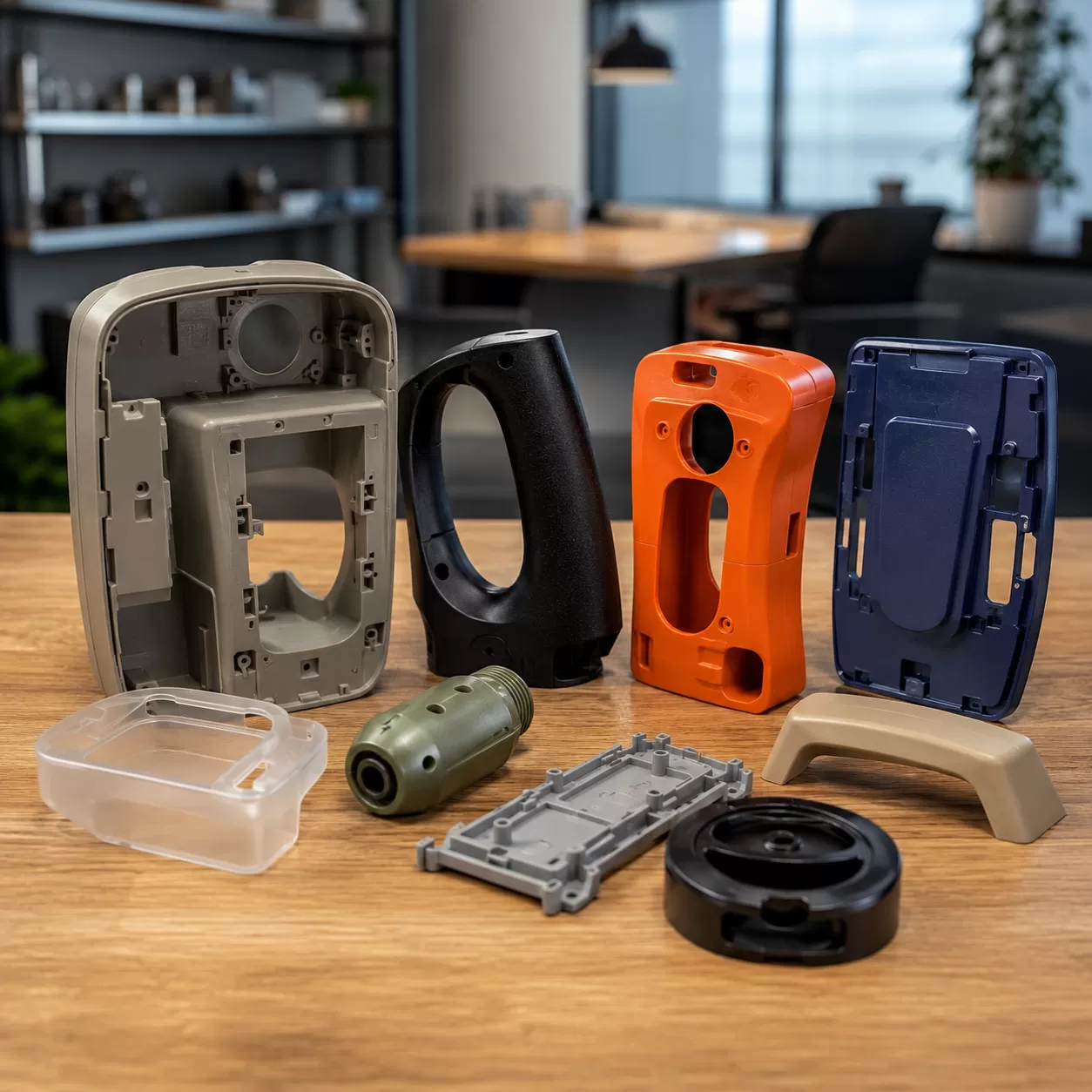
We offer a diverse selection of production-grade materials and industry-standard finishes for your low volume injection molding projects. Whether you need standard consumer plastics or specialized elastomers, we match your exact application requirements without compromising on quality.
Thermoplastic Resins & Specialty Elastomers
Our capabilities span a wide range of thermoplastic injection molding materials, from everyday commodities to high-performance engineering resins. We also provide Liquid Silicone Rubber (LSR) molding for flexible, high-durability components used in medical and aerospace applications.
| Material Category | Common Resins | Key Properties & Applications |
|---|---|---|
| Standard Plastics | ABS, PP, PE, PS | Cost-effective, excellent processability; ideal for enclosures and consumer goods. |
| Engineering Plastics | Nylon (PA), PC, POM, ASA, TPU | High strength, impact resistance, and thermal stability; perfect for mechanical parts. |
| High-Performance Resins | PEEK, Glass-filled variables | Extreme temperature and chemical resistance for demanding industrial environments. |
| Liquid Silicone Rubber (LSR) | Medical & Aerospace-grade | Flexible, biocompatible, and resilient elastomers for seals, gaskets, and medical devices. |
Surface Finishes (SPI Standards)
The right surface texture improves both the aesthetics and functionality of your custom plastic part production. We follow strict SPI standards to deliver everything from rough tactile grips to optically clear surfaces.
- As-Machined (PM-F0): Non-cosmetic, natural finish showing minor tool marks; most cost-effective for internal structural components.
- Semi-Gloss (SPI-C1): Smooth, matte appearance that hides minor imperfections and provides a clean look.
- Bead-Blast Texture (PM-T1): Uniform, textured finish that resists fingerprints and scratches while offering an enhanced grip.
- High-Gloss Diamond Polish (SPI-A2): Ultra-smooth, mirror-like finish required for clear lenses, light guides, and premium cosmetic surfaces.
Advanced Injection Molding Capabilities at precisionvast
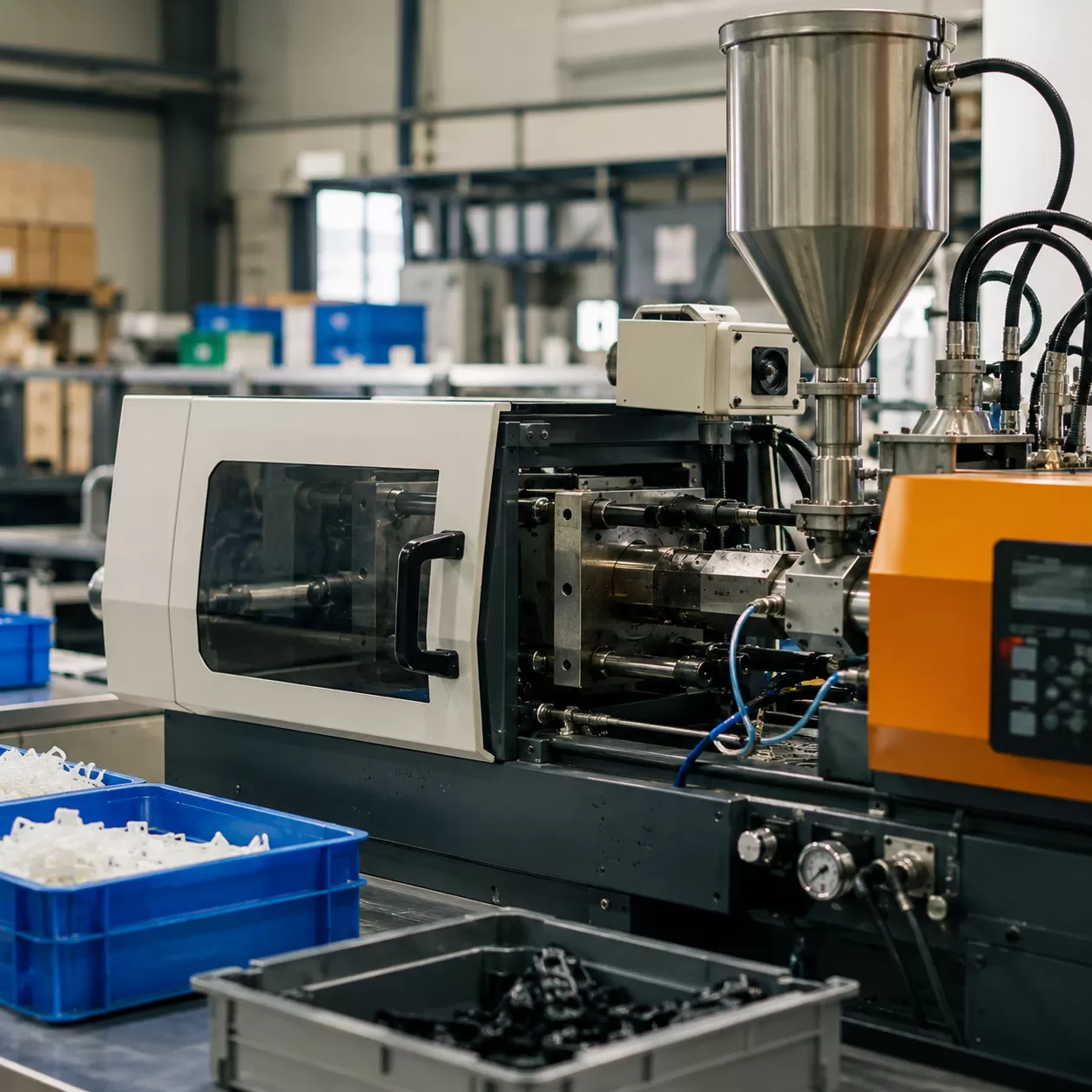
We engineered our facility to handle complex, fast-turn projects that traditional manufacturers turn down. By blending advanced master unit die (MUD) systems with automated machining, we deliver high-precision parts without the massive upfront tooling costs.
Rapid Tooling & Prototype Injection Molding
When you need to move from CAD to physical parts in days, our prototype injection molding setup is the answer. We utilize specialized single-cavity MUD mold blocks to slash fabrication time. This allows you to test real, injection-molded components in their production-grade resins before investing in hard tooling.
Overmolding & Insert Molding
We routinely produce multi-material components to upgrade part functionality and aesthetics.
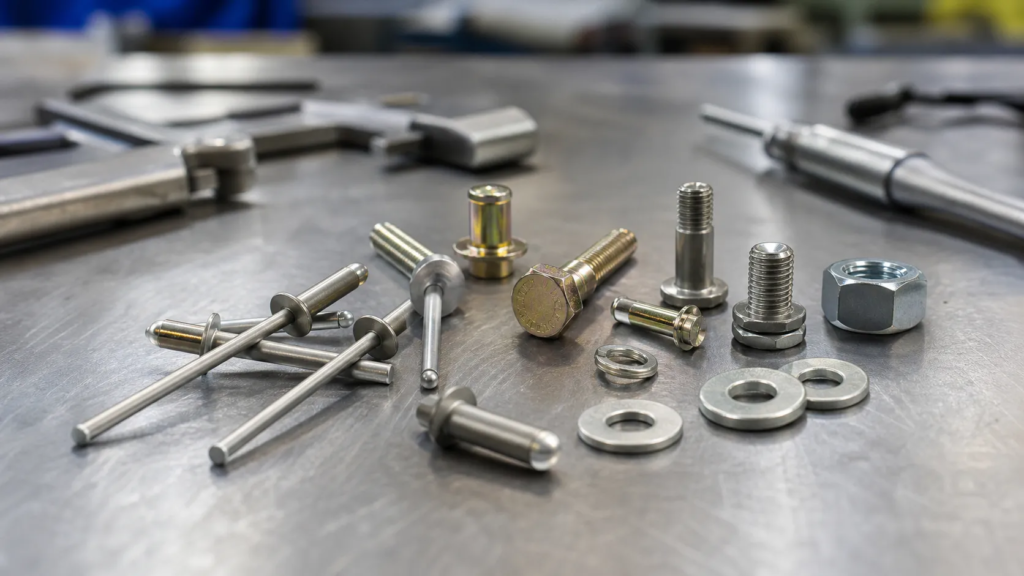
- Insert Molding: Encapsulating metal threaded inserts, bushings, or electronic components directly into the molded part for superior mechanical strength.
- Overmolding: Molding a secondary soft elastomer grip (TPU or TPE) over a rigid plastic substrate for ergonomic handles, seals, and impact protection.
High-Mix Low-Volume (HMLV) Production
Managing complex product lines with multiple unique SKUs is a core strength of our high-mix low-volume plastic molding services. We adjust molding parameters dynamically to handle frequent tool changeovers, complex part geometries, and tight dimensional tolerances. This approach keeps your inventory lean while ensuring every single variation meets exact quality standards.
Design for Manufacturability (DFM) for Low-Volume Injection Molding
Getting your parts ready for small-batch plastic molding requires a smart approach to design. By optimizing your 3D CAD files specifically for low-volume manufacturing, you can avoid costly molding defects and maximize the efficiency of your rapid tooling.
Here are the core DFM guidelines we focus on during our engineering review to ensure your project succeeds:
- Wall Thickness Consistency: Keep your nominal walls uniform, typically between 1mm and 3.5mm. Uneven walls lead to uneven cooling, which causes sink marks, voids, and part warpage.
- Draft Angles: Incorporate a proper draft angle of 1° to 2° minimum on all vertical faces. This allows for smooth part ejection during the demolding process and prevents surface scuffing or drag marks.
- Radii and Corners: Avoid sharp edges. Incorporating generous corner radii improves material flow during the injection cycle and eliminates stress concentrations, drastically increasing the structural integrity of your custom plastic part production.
- Undercuts and Demolding: High-volume production relies on complex, expensive hydraulic side-actions and sliders. For short-run production tooling, we utilize cost-effective hand-loaded cores and inserts instead. This keeps your upfront tooling budgets remarkably low while still achieving complex part geometries.
Our Step-by-Step Low-Volume Production Process
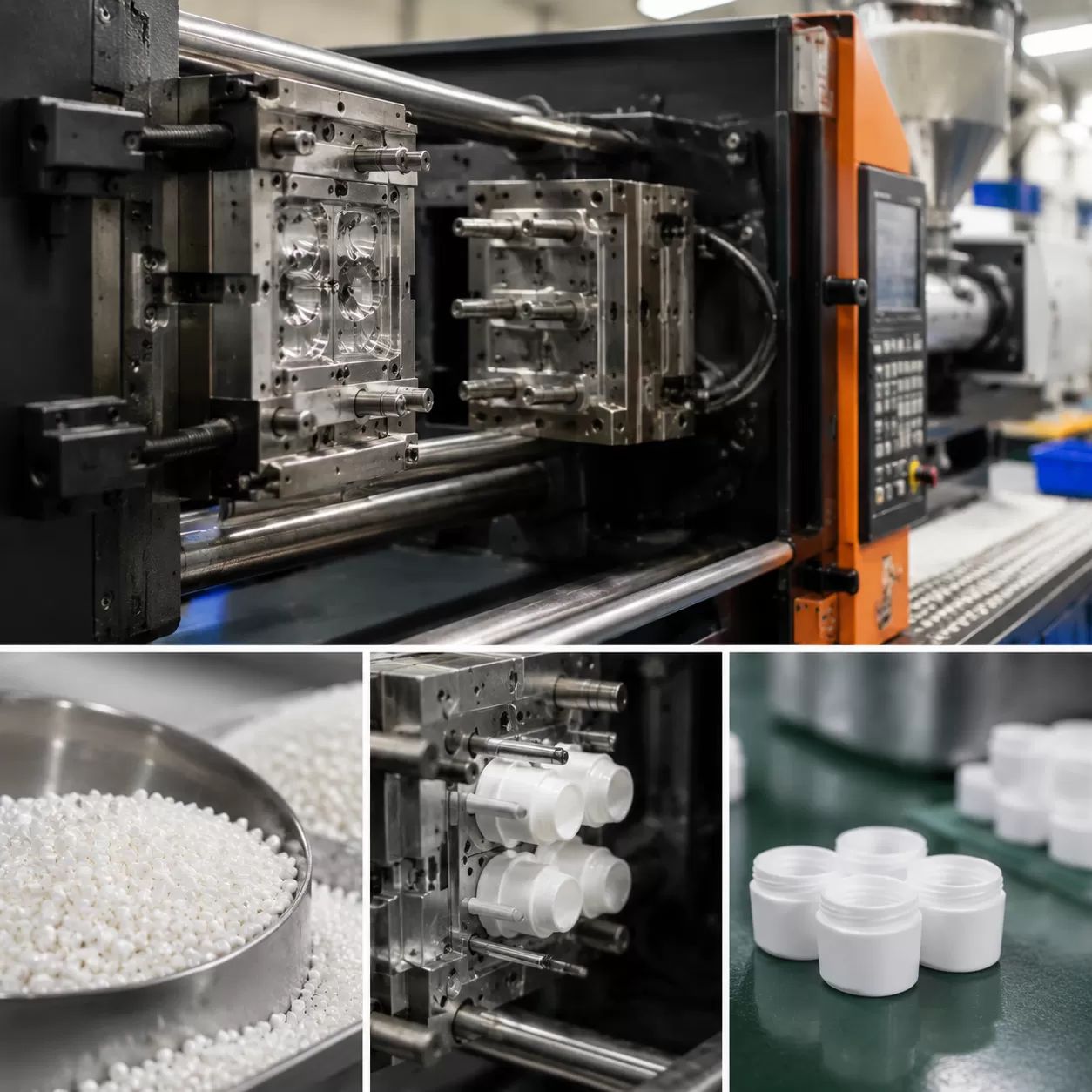
Getting your custom plastic parts to market requires a mixture of speed, precision, and reliable engineering. At precisionvast, we have streamlined our low-volume injection molding workflow into five optimized stages to ensure your project moves seamlessly from a 3D CAD model to final delivery.
Step 1: DFM Analysis & Consultation
Every project starts with a complimentary design for manufacturability (DFM) review. Our engineering team thoroughly analyzes your 3D CAD files to identify potential molding issues—such as uneven wall thickness, improper draft angles, or risky undercuts—before cutting any metal. This upfront consultation saves time, cuts costs, and ensures your part is fully optimized for small batch plastic molding.
Step 2: Tooling Design & Machining
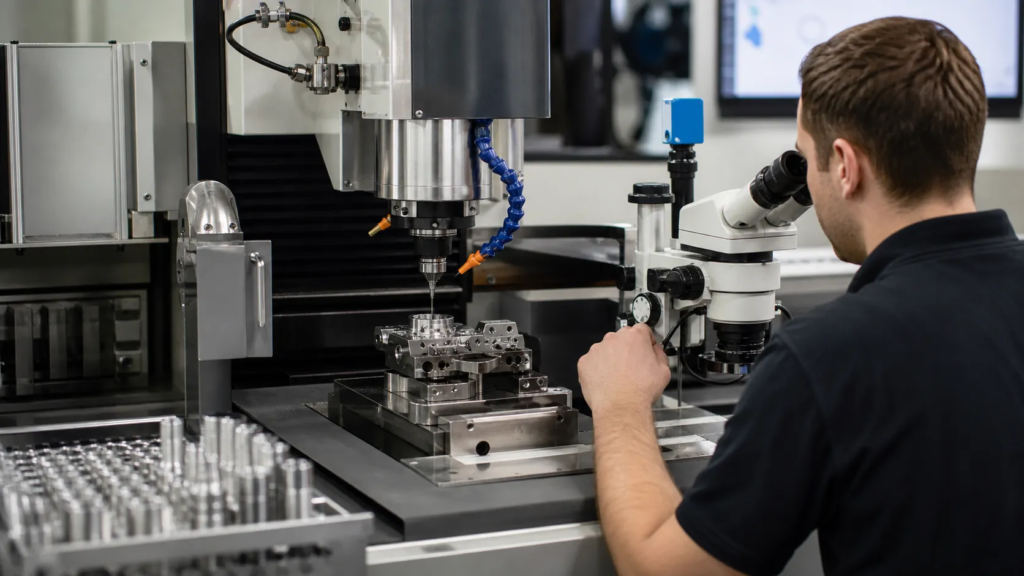
Once the design is locked in, we move to mold fabrication. Depending on your part complexity and total production volume, we utilize advanced CNC machining and EDM technology to cut your custom mold. To keep your upfront costs low and accelerate lead times, we specialize in high-grade aluminum injection molds and soft steel semi-permanent tools.
Step 3: Mold Setup & T1 Samples
We don’t just start running your parts blindly. We set up the newly machined mold on our injection presses and run initial trial shots to produce T1 samples. These prototype parts are shipped directly to you for evaluation. You can check the physical tolerances, surface aesthetics, and material performance to ensure everything aligns perfectly with your specifications before giving the green light for full production.
Step 4: Batch Production & Quality Control
With your official approval, we kick off the authorized short run injection molding production lot. Our team closely monitors real-time injection parameters—including pressure, temperature, and cycle times—to maintain absolute part-to-part consistency. We specialize in high-mix low-volume plastic molding, ensuring that even smaller runs receive the same rigorous quality control and strict tolerance tracking as high-volume automotive runs.
Step 5: Post-Processing & Shipping
After the parts exit the molding press, they undergo our final finishing and inspection workflow:
- Flash Trimming: Removing any excess material or gate vestiges cleanly.
- Surface Customization: Applying specified SPI surface textures, bead blasting, or custom colors.
- Inspection: Measuring critical dimensions and verifying material integrity against your blueprint.
- Secure Dispatch: Packaging your batch securely and arranging fast shipping directly to your facility or fulfillment center.
Frequently Asked Questions About Low Volume Injection Molding
What is the minimum order quantity (MOQ) at precisionvast?
We provide true on-demand manufacturing with no strict MOQ limits. Whether you need a short run of 100 parts for market validation or 10,000+ units for ongoing production, our small batch plastic molding services adapt directly to your schedule.
How long does it take to get my injection molded parts?
Our streamlined rapid tooling services get your projects moving fast. Standard timelines look like this:
- Rapid Tooling & Mold Fabrication: 10 to 15 days.
- Part Production & Shipping: 1 to 5 days depending on batch size.
Why use aluminum molds over steel for short runs?
Choosing aluminum for your short run production tooling offers significant structural and financial advantages for US hardware developers:
- Cost Savings: Reduces your upfront tooling investments by up to 30%.
- Faster Turnaround: Aluminum is much easier to machine, cutting weeks off the development cycle.
- Better Thermal Dynamics: Faster thermal cycle transfer allows for quicker cooling and more efficient production runs.

 English
  German