

Precisionvast aluminum anodizing services Type II and Type III hardcoat for CNC parts with MIL A 8625 corrosion and wear resistant finishes.
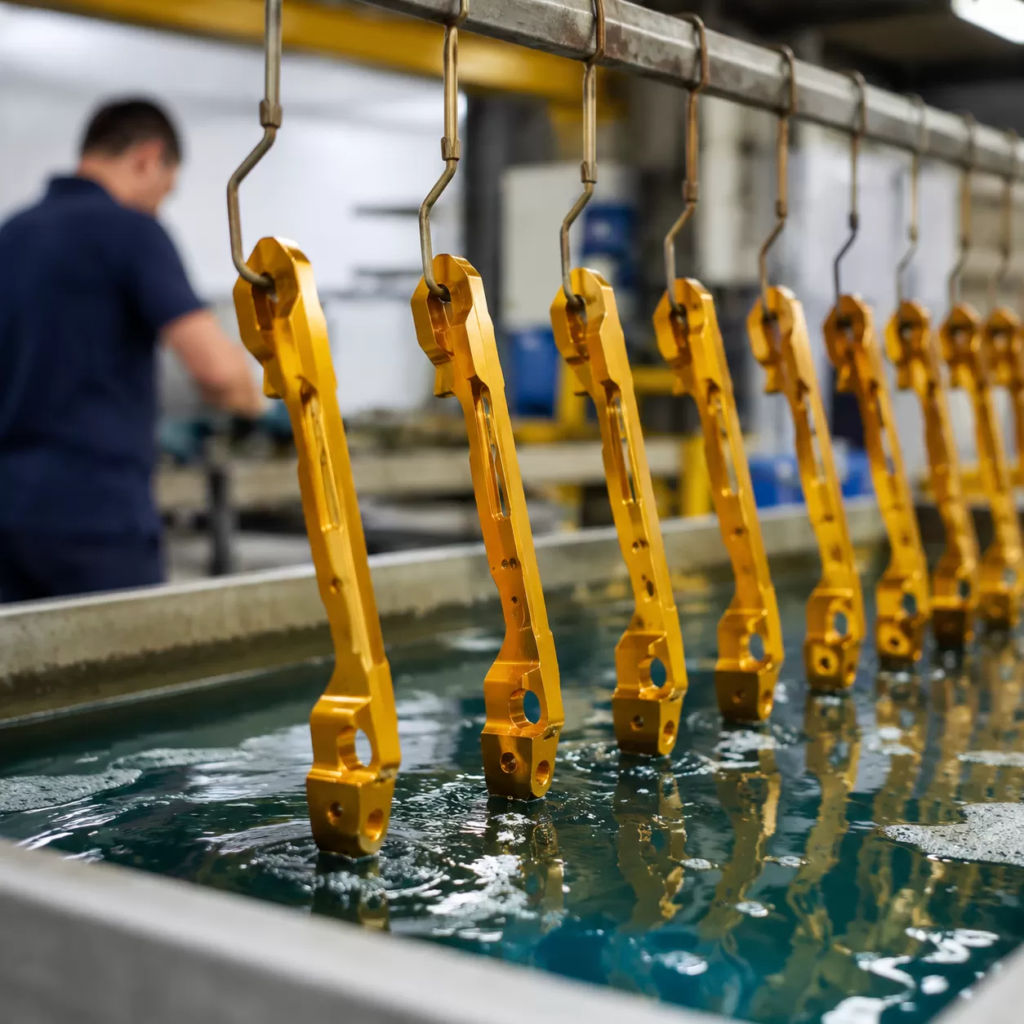
Technical Specifications & Anodizing Classes
We provide precision aluminum anodizing services designed to meet rigorous engineering standards and improve component performance. Our facilities operate in strict compliance with the MIL-A-8625F specification, ensuring controlled electrochemical oxide growth that maximizes corrosion resistance and wear properties.
Type II Sulfuric Acid Anodizing (Standard)
Type II anodizing is our standard aesthetic and protective surface finishing process. This coating provides a balance of corrosion resistance and decorative versatility, making it the industry standard for CNC machined aluminum parts.
- Coating Thickness: Typically ranges from 0.0001” to 0.0006” per side.
- Dimensional Penetration: The oxide layer grows 50% into the material and 50% above the original surface.
- Finishing Options: Available in clear anodizing or black anodizing, as well as a wide range of custom colored anodizing options.
- Primary Benefits: Exceptional corrosion resistance, excellent primer base for organic coatings, and choice of matte and glossy finish options.
Type III Hardcoat Anodizing (Industrial)
For extreme environments requiring maximum wear resistance, we utilize Type III hardcoat anodizing. This process creates a much denser, thicker anodic oxide layer engineered for functional engineering and heavy industrial applications.
- Coating Thickness: Typically ranges from 0.0005” to 0.0030” per side (0.0020” is our standard default).
- Hardness & Wear: Offers Rockwell C hardness ratings up to 60–70 HRC, matching case-hardened steel.
- Color Profile: Naturally ranges from dark gray to light bronze depending on the alloy; can also be dyed with black anodizing.
- Primary Benefits: Maximum abrasion resistance, thermal insulation, and enhanced dielectric properties.
Component Dimension and Capacity Constraints
To maintain strict dimensional tolerances, your designs must account for our tank capacities and processing limits. The table below details our current manufacturing constraints for precision metal finishing:
| Specification Parameter | Type II Sulfuric Acid | Type III Hardcoat |
|---|---|---|
| Max Part Dimensions | 120″ L × 36″ W × 48″ D | 96″ L × 24″ W × 36″ D |
| Standard Thickness Tolerance | ±0.0001″ | ±0.0003″ |
| Minimum Thread Size | #4-40 (Requires masking for tight tolerances) | M3 (Masking highly recommended) |
| Typical Surface Roughness ($R_a$) Change | Minimal change (Slight smoothing effect) | Increases $R_a$ by 10 micro-inches or more |
Material Compatibility: Choosing the Right Aluminum Alloy for Anodizing
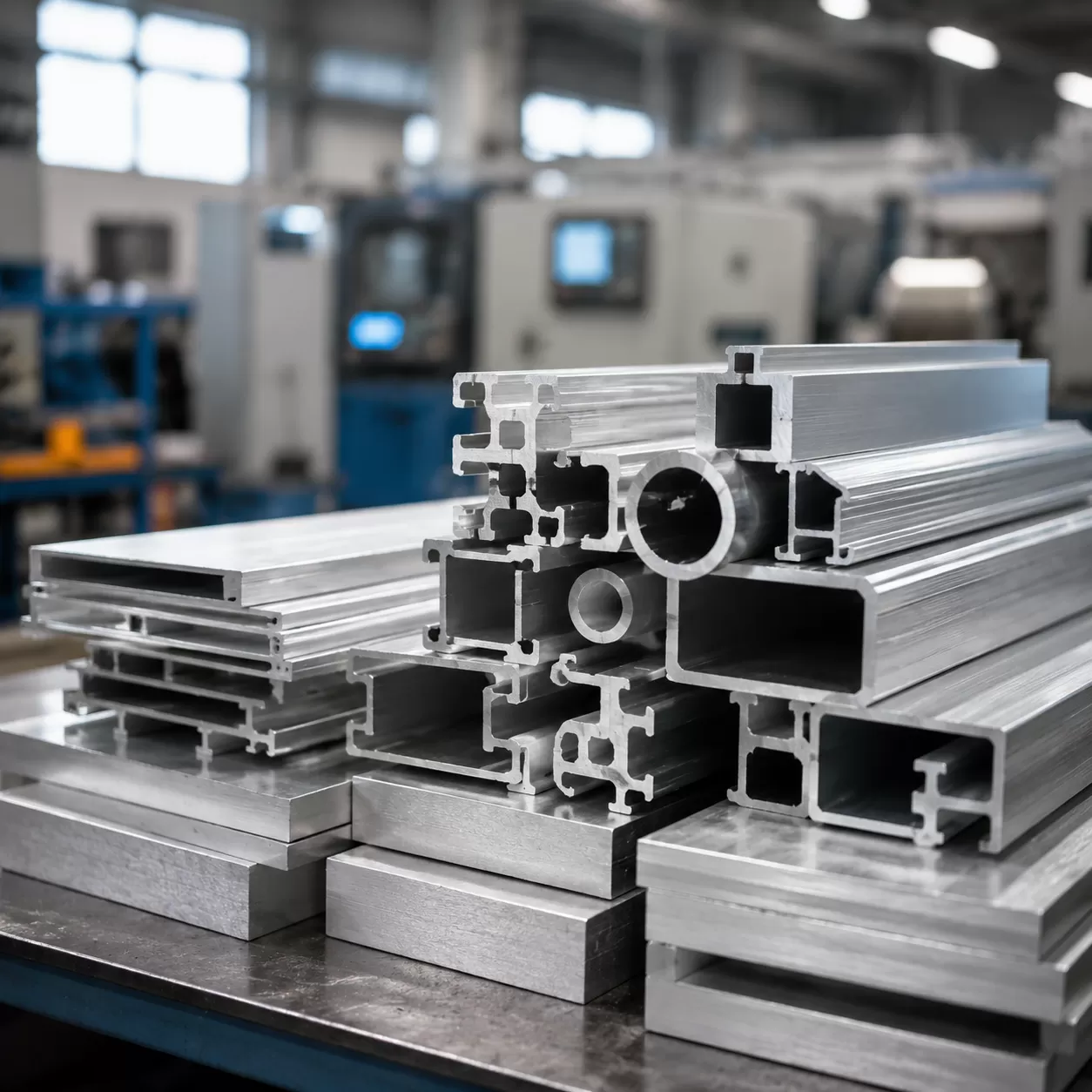
Not all aluminum alloys react the same way to the aluminum anodizing services we provide. Choosing the right grade is critical to achieving the structural integrity, coating thickness, and cosmetic finish your project requires. Many of these alloys achieve their high performance through precipitation hardening, which alters how the metal interacts with the chemical bath.
6061-T6 Aluminum
This is the most popular, versatile alloy for CNC machined aluminum parts.
- Anodizing Results: It accepts both Type II and Type III hardcoat anodizing exceptionally well.
- Finish: Yields a clean, consistent protective layer with excellent corrosion resistance and color uniformity.
7075-T6 Aluminum
Engineered for high-stress aerospace and defense applications.
- Anodizing Results: While it handles hardcoat anodizing well for enhanced wear resistance, its high zinc content can result in a slightly darker, yellowish-bronze baseline tint.
- Note: Custom colored anodizing yields darker shades; clear anodizing might look slightly olive.
5052 Aluminum
Frequently used for sheet metal fabrication and stamped components.
- Anodizing Results: Offers excellent compatibility, resulting in an exceptionally clear anodic oxide layer.
- Finish: Highly recommended for clear anodizing or matching custom colors with a uniform matte or glossy finish.
2026 Aluminum
An ultra-high-strength copper-bearing alloy widely used in aerospace.
- Anodizing Results: The high copper content makes it challenging to process. It is prone to burning in sulfuric acid anodizing baths.
- Finish: Produces a less robust coating with reduced corrosion resistance. For extreme environments, a chemical conversion coating or specialized masking strategy is often preferred over deep anodizing.
Engineering the Perfect Anodic Oxide Layer
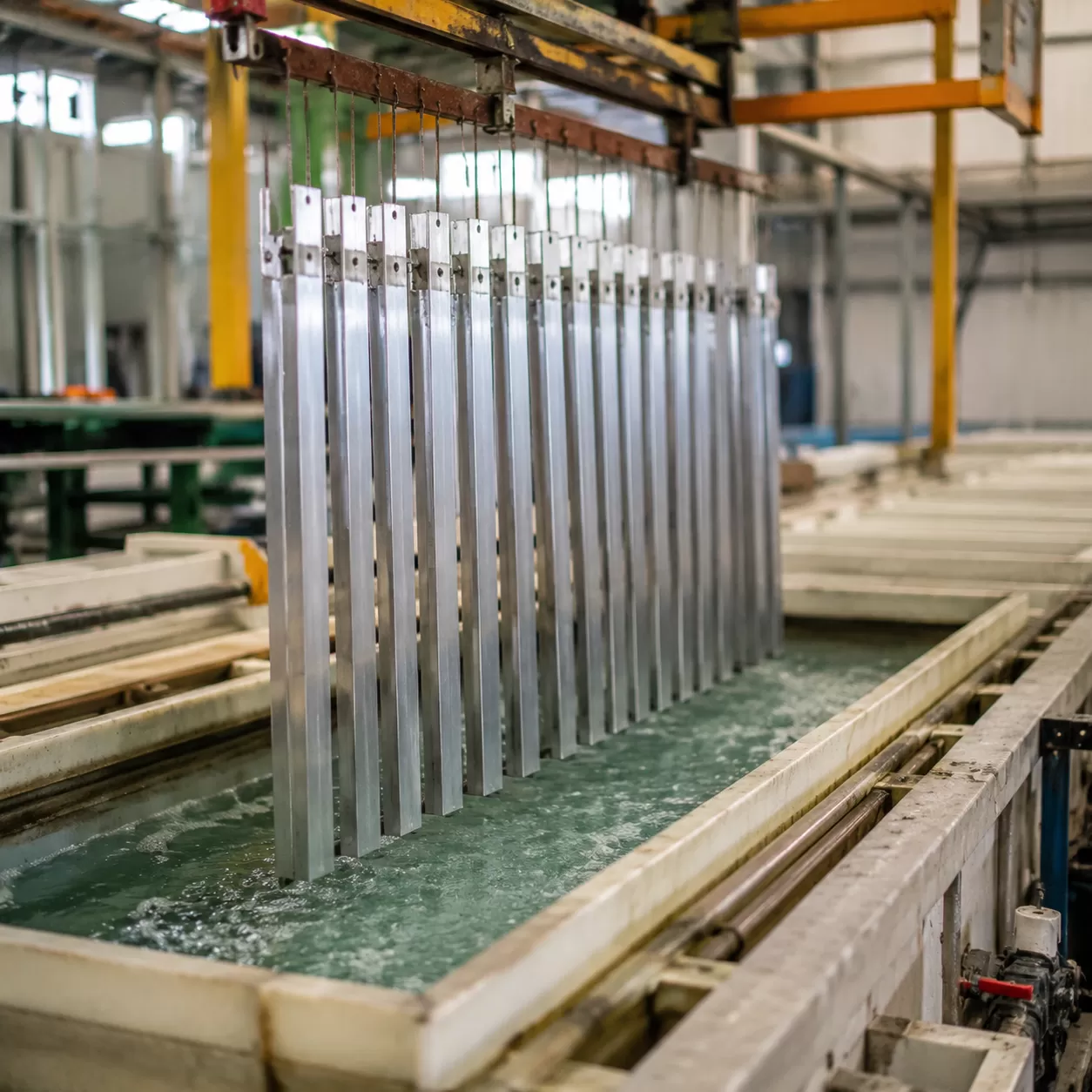
Creating a high-quality anodic oxide layer requires exact control over chemistry and electricity. We don’t just dip parts in a tank; we engineer the surface structure to balance wear resistance and corrosion resistance based on your specific application. By managing voltage, acid concentration, and temperature, we grow a controlled aluminum oxide structure that becomes an integral part of the metal, rather than a coating that can peel or flake.
[Image of anodizing process diagram]
Step-by-Step Production Sequence
To guarantee consistent results on every batch of CNC machined aluminum parts, we follow a strict, multi-stage surface finishing process:
- Degreasing & Cleaning: We remove all manufacturing oils, cutting fluids, and shop soils to ensure a completely clean metal substrate.
- Chemical Etch or Desmut: This step removes the natural, uneven ambient oxide layer and eliminates surface impurities, creating a uniform, matte, or clean surface.
- The Anodizing Tank: Parts are submerged in a temperature-controlled sulfuric acid bath. We apply a precise electrical current, causing oxygen ions to combine with the aluminum to form the porous anodic layer.
- Optional Coloring: For custom colored anodizing, the open pores of the newly formed layer absorb organic dyes or inorganic pigments. This is how we achieve vibrant architectural colors or a deep black anodizing finish.
- Sealing: The final critical step. We close the porous oxide structure using hot deionized water, nickel acetate, or mid-temperature seals. Proper sealing locks in the dye and maximizes the part’s resistance to environmental corrosion.
Understanding how these chemical changes alter the material can be as critical as knowing how to differentiate between physical and chemical properties of heat-resistant alloys during material selection. Every step in our sequence is monitored in real-time to keep your dimensional tolerances exactly where they need to be.
Engineering Guidelines & Design Considerations for Anodizing
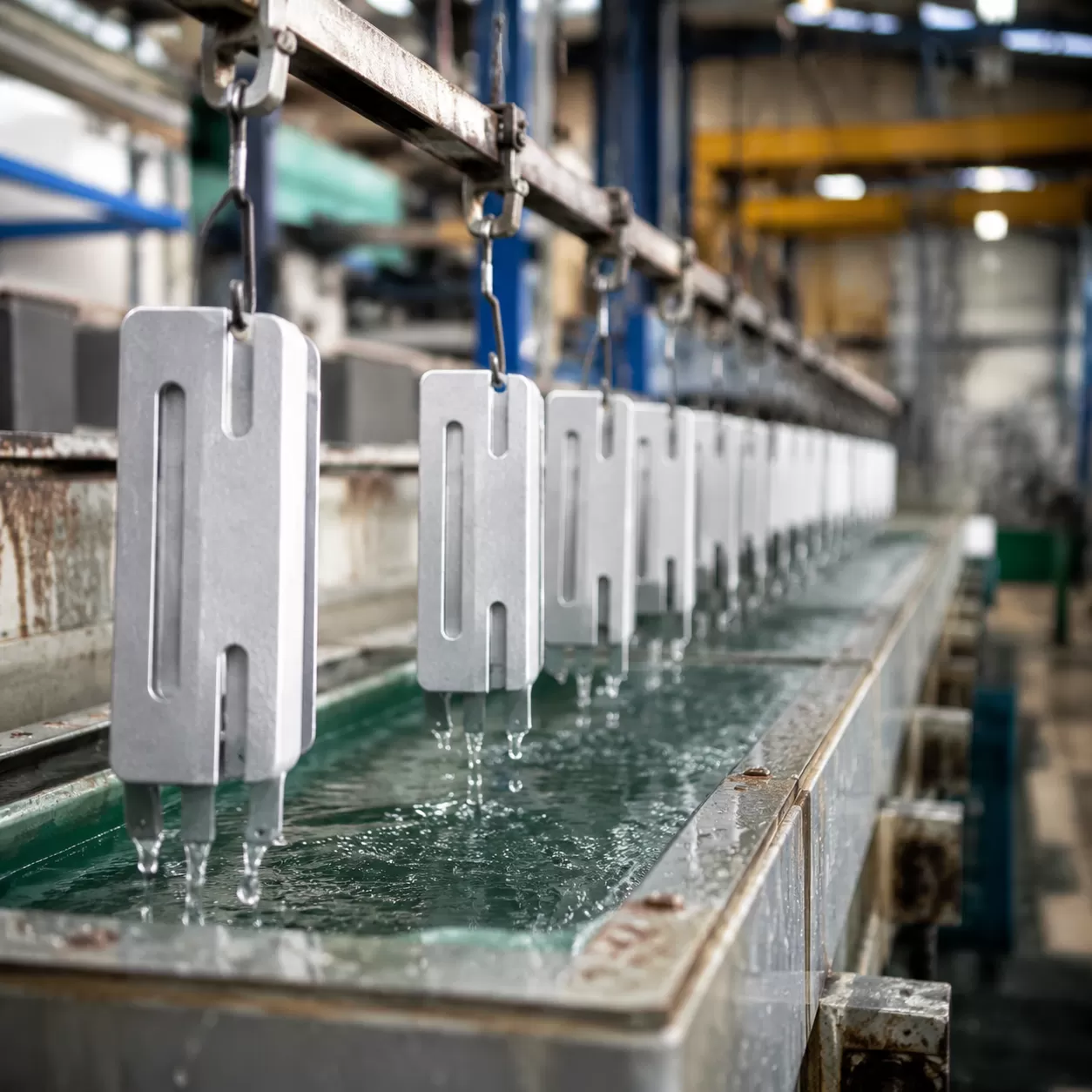
When preparing CNC machined aluminum parts for the anodizing process, successful execution relies on smart upfront design. Unlike plating, which only adds material to the surface, anodizing grows into the metal while building an outer layer. Failing to account for this physical transformation can ruin tight tolerances and compromise the finish.
Understanding Dimensional Growth
Anodizing builds an anodic oxide layer through a controlled chemical reaction. As a rule of thumb, the coating thickness is half penetration and half growth.
- Type II Sulfuric Acid Anodizing: Typically adds around 0.0002″ to 0.001″ of total thickness per surface, meaning your part’s outer dimensions will increase by half of that value.
- Type III Hardcoat Anodizing: Formulated for extreme wear resistance, this process creates a much thicker layer, typically between 0.001″ and 0.004″. The resulting dimensional growth can significantly impact critical bore diameters and thread fits.
Engineers must calculate these final dimensional tolerances during the machining stage, deliberately under-sizing or over-sizing features before the parts enter the finishing tanks.
Racking and Contact Point Planning
Every part needs a secure electrical connection to undergo the electrochemical process. This requires the use of specialized aluminum or titanium fixtures.
- Racking Marks: Where the fixture grips the component, electricity flows, but the anodizing solution cannot reach. This leaves small un-anodized spots known as jig marks.
- Strategic Placement: We always plan these contact points on non-cosmetic, internal surfaces or hidden mating faces so they do not impact the final look or function of the component.
Masking Strategy
Not every surface of a complex component should be anodized. For instance, ground planes requiring electrical conductivity or high-tolerance press-fit bores must be shielded. We apply precision liquid masking agents, plugs, or tapes to protect these critical zones from the acid baths, maintaining raw metal properties where needed.
Pre-Anodize Surface Texturing
Anodizing is a clean, transformative process, but it does not hide machining flaws. In fact, it often highlights tool marks and scratches. Choosing the right pre-treatment is essential for achieving a flawless matte and glossy finish.
| Pre-Treatment Method | Visual Result | Best For |
|---|---|---|
| Bead Blasting | Uniform, non-reflective matte finish | Hiding CNC tool paths and reducing glare |
| Chemical Etching | Soft satin texture | Standard industrial preparation |
| Mechanical Polishing | Vibrant, high-gloss color reflectivity | Premium consumer goods and decorative trim |
For projects utilizing internal components or structural frames, understanding how aluminum reacts to environmental stressors is vital. Selecting the right alloy alongside a proper texturing method ensures maximum corrosion resistance and long-term durability. To better understand how raw aluminum holds up prior to finishing, explore our detailed analysis of aluminum vs other metals a battle of corrosion resistance to optimize your material selection.
Certified Quality Assurance Standards for Anodizing
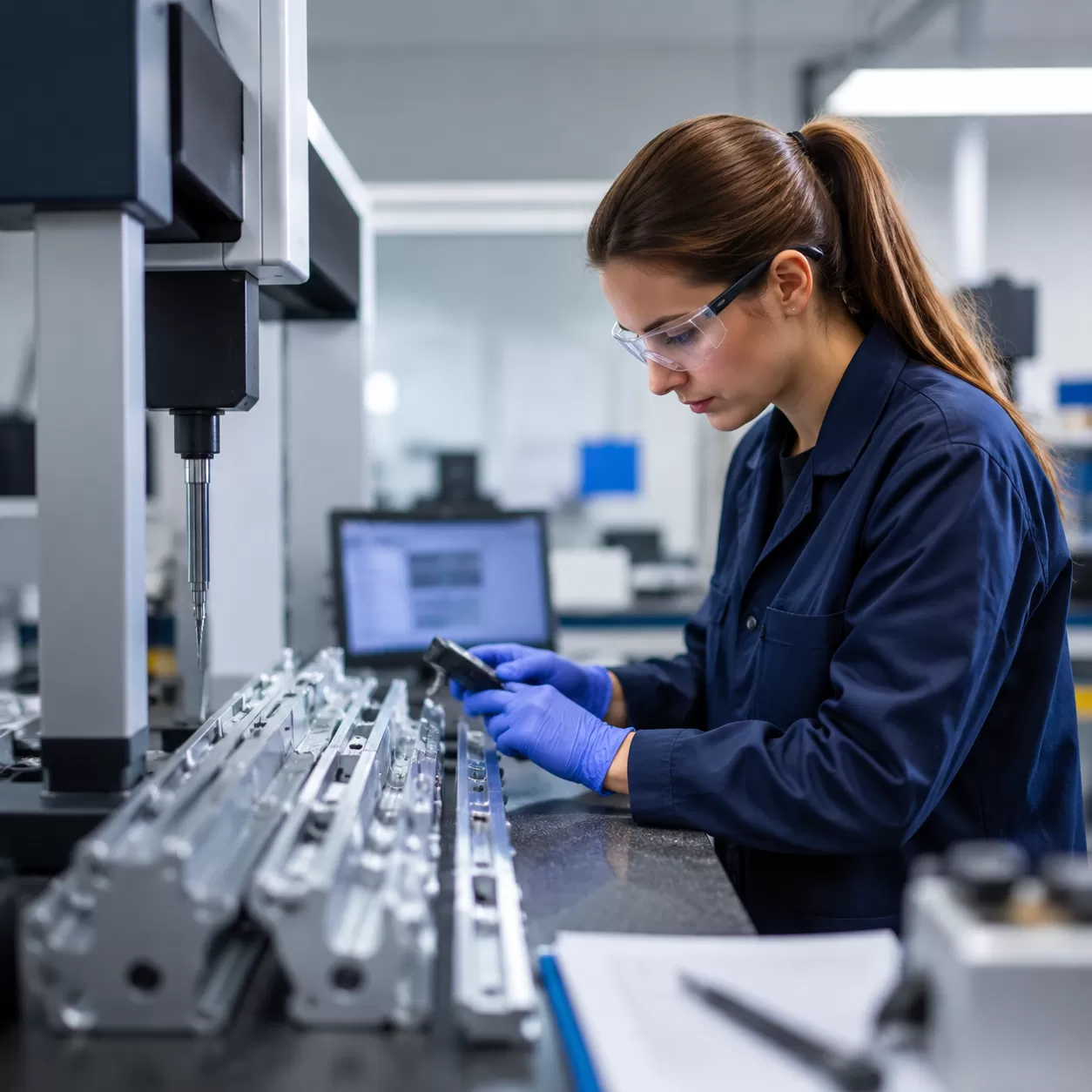
We take precision seriously. Our aluminum anodizing services adhere to the strictest industry benchmarks to guarantee that every batch meets exact engineering requirements. By maintaining rigorous control over our chemical baths and processing times, we deliver consistent, high-performance finishes that thrive in demanding applications.
Quality Compliance Matrix
To ensure total reliability, our finishing processes comply with major military and industrial specifications.
| Specification | Type / Class | Primary Benefit | Common Applications |
|---|---|---|---|
| MIL-A-8625F | Type II Sulfuric Acid Anodizing | Excellent corrosion resistance & vibrant color tinting | Aerospace components, consumer electronics, marine hardware |
| MIL-A-8625F | Type III Hardcoat Anodizing | Extreme wear resistance & increased surface hardness | Military gear, firearms, high-friction industrial machinery |
| AMS 2469 | Hardcoat Anodizing | Ultra-dense anodic oxide layer for severe environments | Heavy-duty CNC machined aluminum parts, automotive pistons |
In-Line Metrology Testing
Quality control isn’t an afterthought—it is built directly into our production line. We utilize advanced, non-destructive testing methods to verify the integrity of the anodic oxide layer before any parts leave our facility.
- Eddy Current Thickness Gauging: Non-destructive digital testing ensures the coating thickness lands precisely within your specified dimensional tolerances.
- Adhesion & Taber Abrasion Testing: Verifies the wear resistance and structural integrity of Type III hardcoat finishes under simulated abrasive conditions.
- Acid Dissolution Testing: Confirms the quality of the seal, ensuring maximum corrosion resistance against harsh environmental exposure.
We ensure that our metal finishing processes seamlessly integrate with your production standards, much like how high-quality component choices impact overall system longevity—which you can see reflected in how durable carbon steel castings are in truck parts and similar heavy-duty applications. Every part we anodize undergoes this strict verification process so your final product performs flawlessly.
Frequently Asked Questions (FAQs) About Anodizing
What is the difference between Type II and Type III anodizing?
The primary differences lie in coating thickness, temperature, and wear resistance. Type II sulfuric acid anodizing provides a standard decorative layer (0.1 to 1.0 mil) perfect for color dyeing and moderate corrosion resistance. Type III hardcoat anodizing is processed at much lower temperatures to create a dense, industrial-grade protective barrier (1.5 to 3.0+ mils) designed for extreme wear resistance and heavy mechanical abuse.
How does anodizing affect part dimensions and tolerances?
Anodizing is a conversion coating, meaning it grows both into and out of the aluminum surface. As a rule of thumb, 50% of the coating thickness penetrates below the original surface, and 50% grows outward. For precise CNC machined aluminum parts, you must account for this dimensional growth in your initial CAD designs to maintain strict dimensional tolerances, especially on tight-fitting threads and bores.
Can you match custom colors for anodized parts?
Yes. We offer custom colored anodizing, including standard clear anodizing and deep black anodizing, alongside custom vibrant palettes. Because the aluminum oxide layer acts like a porous sponge before sealing, we control dye tank variables to hit precise aesthetic targets. Keep in mind that underlying alloy composition and surface finishing processes (like bead blasting versus masking) will slightly impact final color reflectivity.
What are racking marks and where will they be located?
Racking marks (or jig marks) are tiny unanodized spots where electrical contact must be maintained during the electrochemical bath. Because electricity needs a continuous path to build the anodic oxide layer, these contact points are completely unavoidable. We work directly with your team during production planning to hide these marks on non-critical, internal, or cosmetic-hidden surfaces.
Can cast aluminum components be anodized?
Cast aluminum can be anodized, but it requires specialized handling and yields different results compared to wrought alloys. High silicon content in common castings often results in a darker, more matte finish rather than a bright, glossy finish. While you will still achieve excellent corrosion resistance, structural cast parts require tight control of the chemical tank parameters to prevent splotchy aesthetics.
 English
  German